Manohara: From stage to celluloid

By Karthik Bhatt

Tamil theatre was unarguably the biggest breeding ground for Tamil cinema, whose origin and development encouraged the easy migration and transition of actors, technicians, authors and themes from theater. It was a relationship which began in the early days of cinema and lasted right upto the 1980s. Some of the most memorable films in our industry have been remakes or adaptations of stage plays. The Tamil theater background of our greatest actors is well documented. Equally worthy of documentation is the contribution of various playwrights whose subjects were remade as films that were both critically acclaimed and commercially successful. Foremost amongst them in this regard was Pammal Sambandha Mudaliar.

Born in 1873, Sambandha Mudaliar authored nearly a hundred works comprising of plays, short stories, books on religion and of course, his extremely informative autobiography. Rightfully known as the father of Tamil theater, ten of his plays were remade as films. Undoubtedly the biggest hits amongst them were Manohara and Sabapathy. This post is about the former.

Manoharan, as the play was titled was Sambandha Mudaliar’s 6th play. In his memoirs “Naadaga Medai Ninaivugal”, he says that idea for the story was born when he attended a religious discourse on the life of Dhruva. The scene where Dhruva is grief-stricken on seeing the humiliation his mother suffers at the hands of his father’s second wife, Suruchi struck a chord with him and he decided to write a play with this scene as its fulcrum. Thus was born Manoharan, with the character of the second wife being replaced by that of a mistress. Sambandha Mudaliar played the title role of Manoharan.

The play was inaugurated on the 14th of September 1895 at the Victoria Public Hall. Sambandha Mudaliar says that though the collections on the occasion amounted to only Rs.200, it was well appreciated by those present. The songs were composed by the legendary Sankaradas Swamigal. The climax of the play was the famous “Sangili Scene” (as it came to be popularly known amongst the public), where the hero broke free from the chains with which he was tied to the pillars. Sambandha Mudaliar writes that almost inevitably after every performance, he would collapse from the exertion caused by the scene.

The play was a resounding success. Sambandha Mudaliar says that the play was staged a record 859 times (upto the year 1932) by various troupes with his permission and probably an equal number of times without his permission. Many actors who would go on to become leading stars in cinema donned various roles in the play, notable amongst them being “Nadippisai Pulavar” K.R.Ramaswami and R.S.Lakshminarasimhan, who took on the screen name Manohar after he became famous playing the role in a college performance. Interestingly, Sivaji Ganesan played the role of the queen in K.R.Ramaswamy’s play! It was also published as a book for the first time in 1907, with subsequent reprints being made even upto the 1980s.

The play was made into a movie twice. The first one, which was made in Bombay in 1936 and had Sambandha Mudaliar playing the role of the king Purushothaman sank without a trace. The second one however, made in 1954 is much remembered even today, thanks to the brilliant performance of Sivaji Ganesan. The dialogues of the original play were virtually rewritten by Mu.Karunanidhi.

Film historian Randor Guy gives us more details on the film here .

TCRC has in its vast collection the Long Play story set record of the 1954 version of the film

Manohara-Story-Set-1 Manohara-Story-Set-1A


Here is the iconic court room scene from the film showcasing the powerful performance by Sivaji Ganesan.
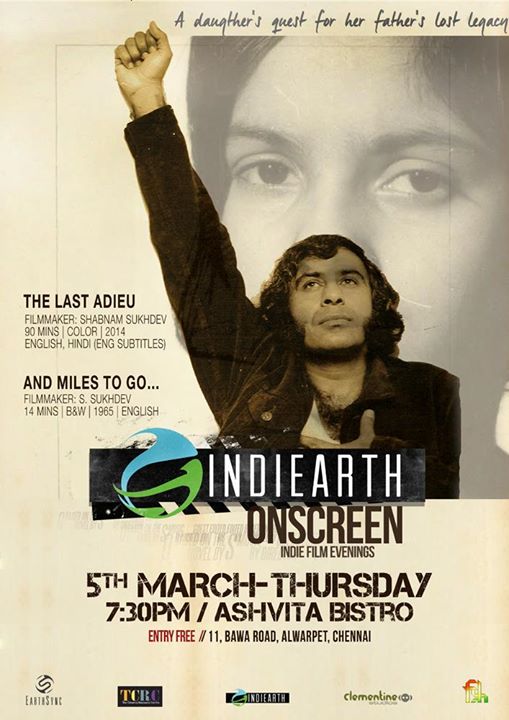


Short film screening by Indiearth in association with TCRC

As a part of our cinema retrospect series on landmark films and filmmakers, this edition of IndiEarth OnScreen in association with The Cinema Resource Centre (TCRC) will highlight one of the most complex and prolific documentary filmmakers of the ‘60s – S Sukhdev.

Date: 5th March 2015 (Thurs)
Venue: Ashvita Bistro, Bawa Road (off TTK Rd.), Alwarpet, Chennai.
Entry Free

Conversations and audience interaction after the screening to follow.

Film 1:
AND MILES TO GO…
S. Sukhdev
14 min/ B&W / 1965 / English

A scathing view on the inequalities of our young nation; Sukhdev, working within the state run Films Division went on to make a film that was far removed from propaganda.

Film 2:
The Last Adieu
Shabnam Sukhdev
90 min/ Color /2014/ English, Hindi (English subtitles)

Awards: National Film Award for Best Historical Reconstruction/Compilation Film, more
Genres: Biographical film, Historical fiction

The film is a personal quest of a filmmaker daughter to unravel the past and make a connection with her filmmaker father, S. Sukhdev, who died suddenly at the age of 46, leaving behind a huge body of work and an unresolved relationship with his daughter.

While he was an accomplished filmmaker in the public eye, his family had another story to tell. With the help of archival audio recordings, old photographs and Sukhdev’s films, Shabnam endeavours to construct a picture of her father as she struggles to love and respect him for who he was.

The film is an important record of a phase in documentary history that inspired and paved the way for the new wave in non-fiction narratives, and pays homage to S. Sukhdev, an important filmmaker who revolutionized Documentary filmmaking in India in the mid 60’s, right through the 70’s.

Trailer: https://www.youtube.com/watch?v=9IgoTwzmYYI

Producer — Films Division
Direction — Shabnam Sukhdev
Editing — Jabeen Merchant
Sound Design and Sound Mixing — Mohandas VP
Camera — Ashwin Shukla

http://www.livemint.com/Leisure/BZB0OKaBz7jIVuOcK9gbbI/Documentary–Home-and-the-world.html
11030393_795908743826080_3629659086392679415_o
Submit your film for further screening opportunities on www.IndiEarth.com& get in touch with us at support@indiearth.com / Call: 9176610467.
***

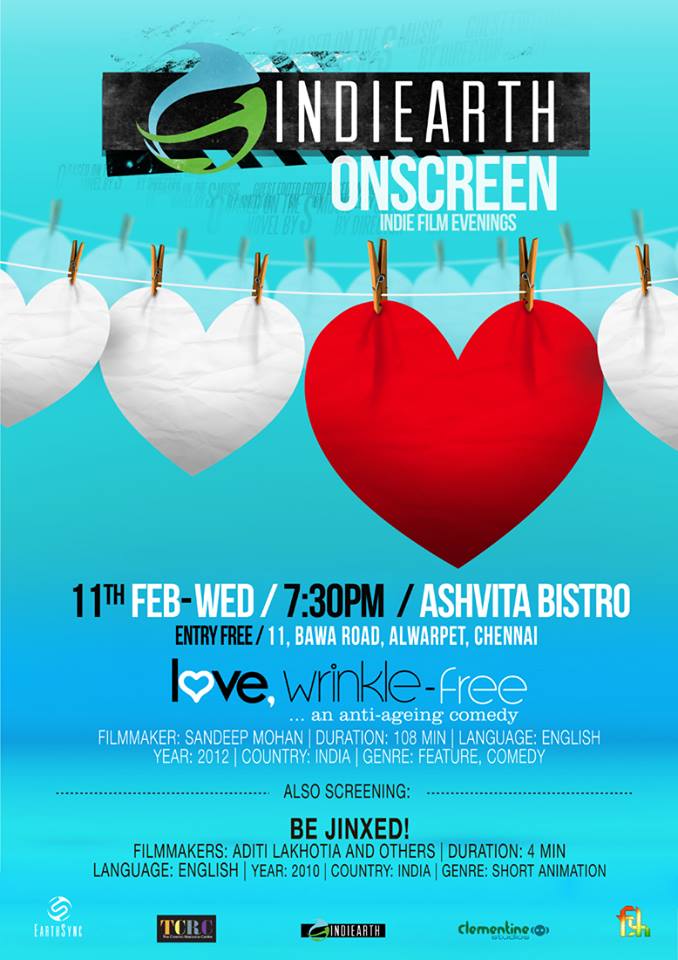
This week’s screening

10624635_602478549896654_2077785320442471829_n


Date: 11th February, 2015 – Wednesday

Venue: Ashvita Bistro
Time: 7:30PM
Address: 11 Bawa Road, Alwarpet, Chennai
ENTRY FREE
SMS ” Short film ” with your name and email id to 9791088189.

Be Jinxed!
Filmmakers: Aditi Lakhotia and others
Duration: 4 min
Language: English
Year: 2010
Country: India
Genre: Short Animation

This is a 3D animated short film made about a frog named Timmie who wakes up inside a Science Lab only to realize that he is about to be dissected by a determined biology student named Minnie. Timmie tries to escape his fate with Minnie in hot pursuit causing a series of chaotic event in the laboratory.

Love, Wrinkle-Free
Filmmaker: Sandeep Mohan
Duration: 108 min
Language: English
Year: 2012
Country: India
Genre: Feature, Comedy

Set in Goa, “Love, Wrinkle-Free” is a story about Savio, a 38 year old senior area sales manager who works in an innerwear company. Savio’s mundane life is thrown out of gear with the unplanned pregnancy of his 46 year old religious wife Annie. complicating matters further is how their adopted teenage daughter Ruth (with asian/north east indian features), reacts to this pregnancy, and a chance meeting Savio has with a sensual traveling photographer Natalie, who wants him to do something “unique” for her.

At its heart, “Love, Wrinkle-Free” is an off-beat, light-hearted story about love going beyond cosmetic barriers – a universal theme that finds resonance across the world.

Trailer & More Info: http://www.indiearth.com/ViewTrailer.aspx?TrailerID=1c971996-b76e-471e-8694-77e165fc1512

Filmmaker Sandeep Mohan wil be available for post screening Q&A and open house discussion.


End of an era: K.Balachander (1930-2014)

Indian Cinema lost one of its greatest contributors on December 23rd 2014, K.Balanchander or KB sir as he is fondly known to many. The recipient of the Dada Saheb Phalke award, his career spanned for over 45 years. Besides directing over 100 films, he has also donned the role as writer, producer and even an actor. Each of his films were ahead of its times with radical offbeat themes and with strong women characters. The same was true with the many serials that he had directed and produced for the small screen. He is known for launching and mentoring several top actors and technicians in Indian Cinema including Kamal Hassan, Rajnikanth and Sri Devi.

Here is what the national newspaper The Hindu  has to say about this great man.

http://http://www.thehindu.com/entertainment/he-took-tamil-cinema-beyond-herocentric-creations/article6719996.ece?homepage=true&theme=true

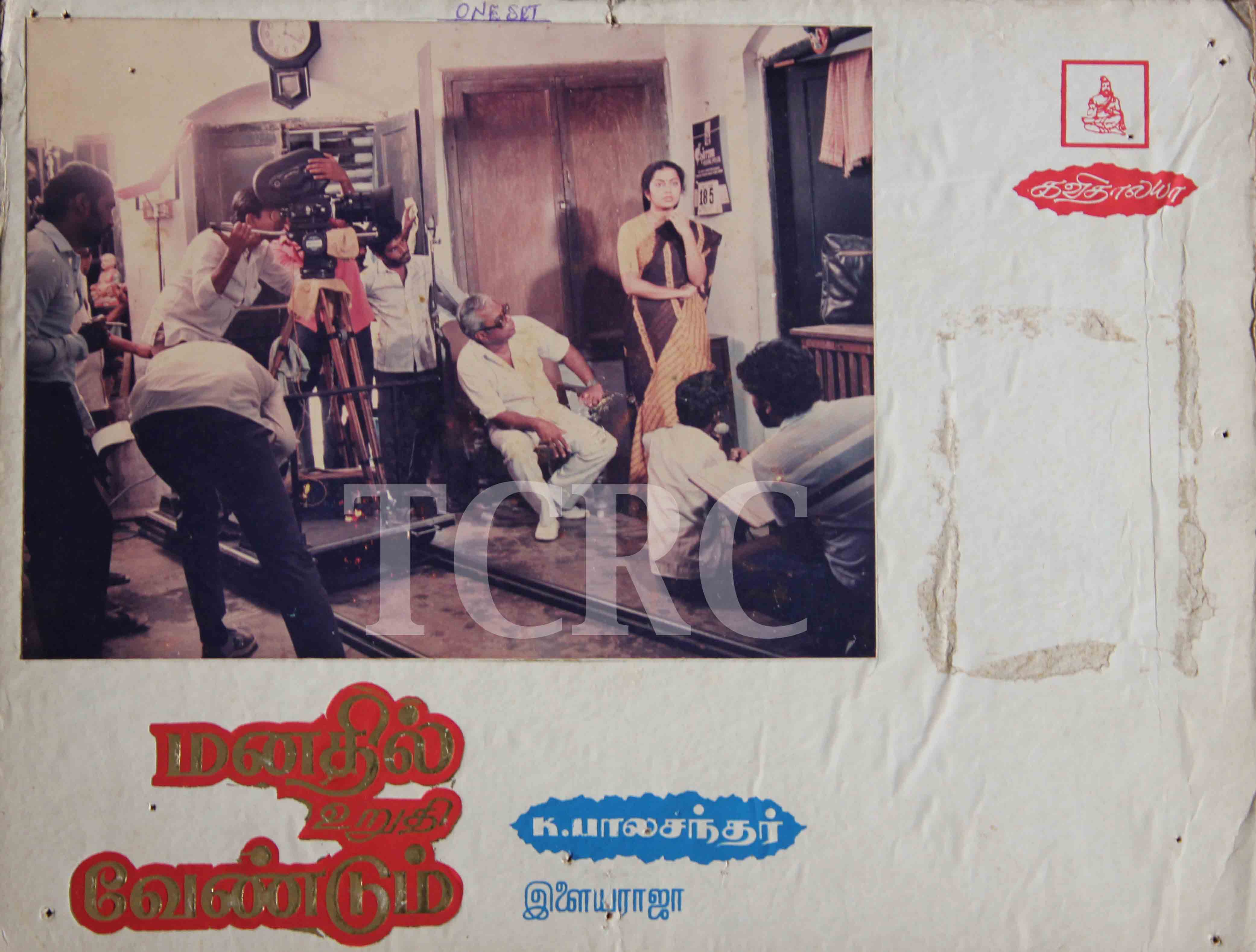
As our small tribute to KB sir we would like to share a lobby card from our collection. It is from the film Manadhil Uridhi Vendum (1987). The film revolves around the strong willed female protagonist Nandhini (played by Suhasini) who over comes many hurdles  and finally dedicates her life to her profession as a nurse.

The lobby card in itself is unique with the working still from the shoot as its image. We get to see the crew and the man himself directing the female lead Suhasini in this picture.

manadhi-urudhi-vendumTCRC


Happy Birthday Superstar


On this special day we would like to release a special image from our collection, a lobby card from the iconic film Baasha (1995) (Tamil)

Baasha-4
Suresh Krishna’s Baasha is an action thriller starring Rajnikanth, Nagma, and Raghuvaran. A loose adaptation of Amitabh Bahchan’s Hum, Baasha is the story of a man who becomes a mafia don and later tries to escape that life by adopting the identity of an autorickshaw driver. Needless to say, his past catches up with him. The film enjoyed a positive box office response and is considered one of Rajnikanth’s most commercially successful films. This movie won him multiple acting awards. 20 years on, Baasha’s autodriver character has been elevated to patron saint status by auto drivers in Chennai and elsewhere in Tamilnadu.


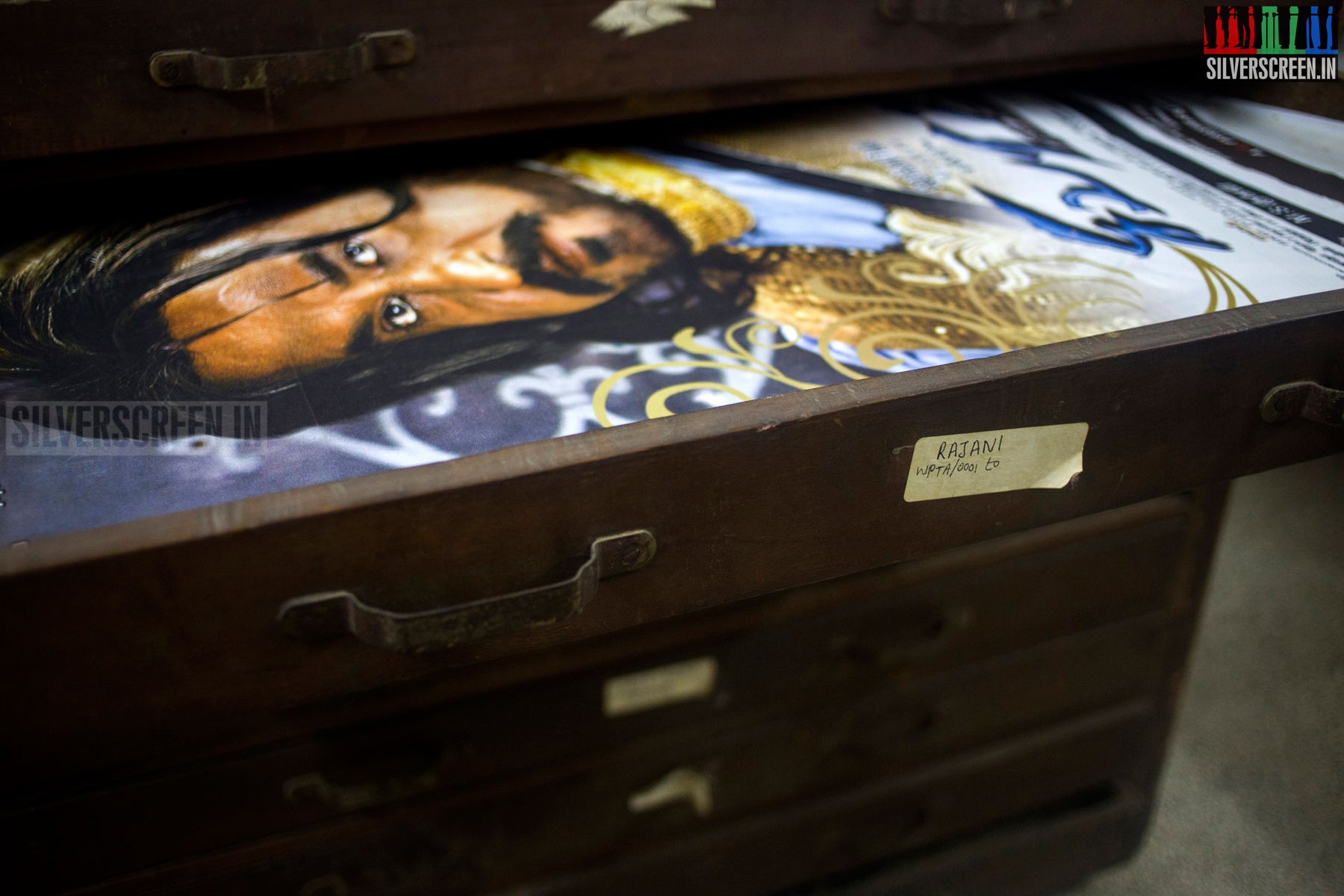
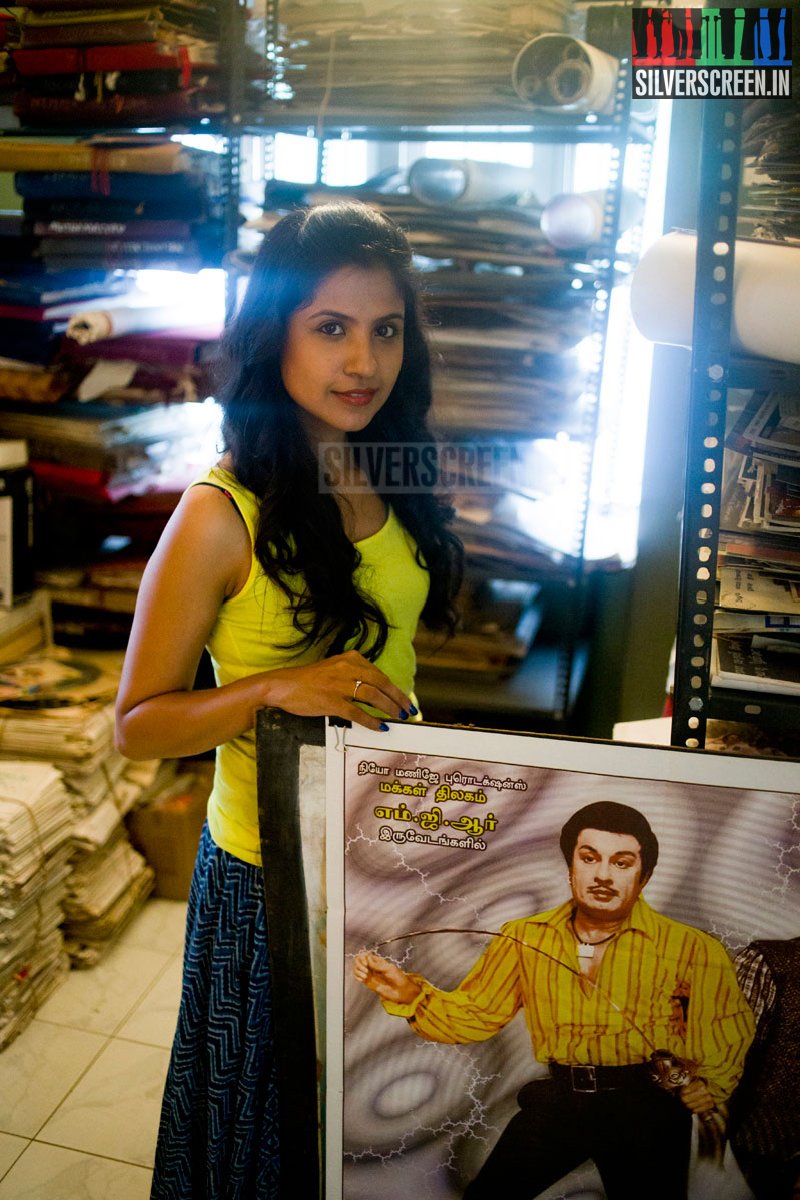
The TCRC story featured in silverscreen.in

The Cinema Resource Centre featured in the popular Tamil film website silverscreen.in. Read the article  The Keeper of Memories :The TCRC story

The Cinema Resource Centre Artifacts

The Cinema Resource Centre Artifacts

Sruti Harihara Subramanian, founder of The Cinema Resource Centre

Mani Ratnam’s Magic

The article below gives a great insight into one of Mani Ratnam’s gems – Iruvar

http://http://madaboutmoviez.com/2012/04/05/iruvar-the-doomed-masterpiece/


Ray’s 21st Death Anniversary: Revisiting ABP’s “No Ads, Please!” Tribute & The Films That Ray Would’ve Liked To Make

Reblogging an article we wrote last year on the occasion of Satajit Ray’s death anniversary. This year it will be 22 years since he left us.

tcrcindia's avatarThe Cinema Resource Centre (TCRC)

On 23rd April 1992, Satyajit Ray, one of India’s most celebrated personalities from the world of cinema, passed away in Calcutta. Twenty one years later, we at TCRC revisit some material on the illustrious life of the iconic Bengali filmmaker.

Satyajit Ray's funeral. Photo from the newspaper Anandabazar Patrika dated 24th April 1992.  Photography by Tarapada Bandopadhyay. Courtesy: Riddhi Goswami (found on the Facebook page "FeludaSeries" Satyajit Ray’s funeral. Photo from the newspaper Anandabazar Patrika dated 24th April 1992. Photograph shot by Tarapada Bandopadhyay. Reproduction Courtesy: Riddhi Goswami (found on the Facebook page “FeludaSeries”)

The New York Times published a glowing obituary of Ray, the day after his demise (click here to read the entire obit).  The obituary, penned by Peter Flint, recounts how a three-member Oscar committee visited him at Belle Vue Hospital in Calcutta, a month before his death, to present him with the golden statuette for lifetime achievement in cinema. The presentation of the Oscar was filmed and his acceptance speech was screened two weeks later at the Oscars ceremony at the end…

View original post 413 more words

Celebrating Balu Mahendra

balumahendra

On February 13th 2014 we lost a man who has changed the language of Indian Cinema. Born Balanathan Benjamin Mahendran, Balu Mahendra started out as a cinematographer after graduating from the Film and Television Institute of India, Pune. He created a visual revolution with his unique style of cinematography. As a director, Balu Mahendra created a new wave in South Indian cinema by making films close to reality and handling them with sensitiveness that no other filmmakers could at that time. Handling the camera for every film that he directed added an element of poetry in every frame.

Here is an article by Kamal Hassan celebrating this great auteur’s life. http://www.thehindubusinessline.com/opinion/kamal-haasans-tribute-to-balu-mahendra/article5688417.ece

We, at TCRC will like to pay our tribute by highlighting the many ‘firsts’ that Balu Mahendra was associated with:

Kokila – Balu Mahendra debuts as a director. See a trailer of this path breaking film.

Mullum Malarum – Balu Mahendra handle’s the camera for yet another great film maker, Mahendran. Here is a very popular song from this film.

Pallavi Anu Pallavi – This Kannada film was Maniratnam’s debut. Balu Mahendra’s cinematography played a vital role in this film.

Sadma – Balu Mahendra’s first Hindi film which was the remake of his own super hit Tamil film Moondram Pirai. See the heart wrenching climax of this film which is still talked about even today.

Thalaimuraigal – Released on December 20 2013, this was the last film directed by the stalwart. It was, at the same time, the first  film that he completely shot in digital and also the first time he faced the camera by playing one of the lead characters. By playing the grandfather in the film it could have also probably been the first time that the world would have seen him without his trademark cap. Here is a trailer from of the film.

The first film festival in India

Sixty- two years ago India organised its first film festival.  It was a six weeks long affair where the festival travelled to various cities in India. To know more about it read the  article below that appeared in The Hindu’s supplement yesterday.

http://www.thehindu.com/features/magazine/a-world-of-cinema-in-india/article5614287.ece


Here is a clipping from the movie ‘The American in Paris’, a movie that was screened during this festival.