Films and Music

It isn’t uncommon, especially in Indian Cinema, to see other forms of art, like music, modified to supplement film. When initially dance performances, short plays, and boxing matches were added in between to make films more attractive, these turned into modern dance numbers and fight sequences incorporated into the story as films evolved. Traditional art forms were altered with changing media and the advent of new forms of media in the early 20th century, first with silent films and later with talkies. Performance mediums like music and dance now had the opportunity to be displayed to a larger audience, and films had the chance to use existing art forms to aid their storytelling. Taking music and film’s evolution together, they formed a new genre of film songs and later opened up playback singing, which involves recording audio tracks of one person singing and substituting it for the actor’s voice, as a new profession. 

Sound first came to Tamil cinema as the four-reeler(the length of a film was indicated by the number of reels long it was), which consisted of sequences of semi-classical songs and dances. With sound came music, and Papanasam Sivan is said to be the maestro who made film music popular in South India in the 1930s.
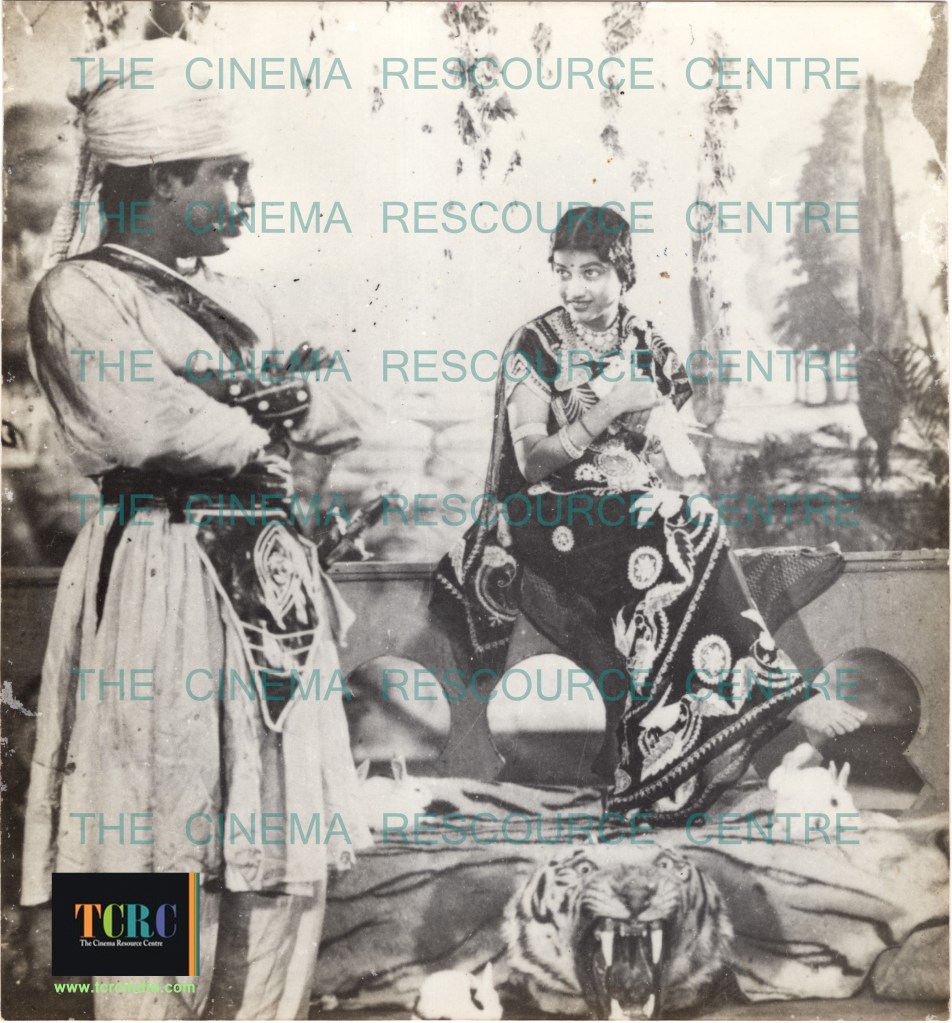
Working Still from the Film Naveena Sarangadhara Featuring S.D.Subbulakshmi
Naveena Sarngadhara was directed by K.Subramaniam had the songs composed by Papanasam Sivan
PC: From the archives of TCRC

The songs in most of the early talkies were songs adapted from drama companies for film, which brought singers to the cinema rather than actors who couldn’t sing. Since early film musicians were drawn from the stage, stage performers clearly brought an influence, but most classical compositions had to adapt for the screen. To make films socially acceptable to the upper classes, they looked for a change through the use of Carnatic music to make it a more “respectable” medium. Since the advent of talkies, the world of cinema was seen as vulgar to the extent that barely anyone wanted to be associated with the industry. Sambur Vadagarai Subbaiah Bhagavathar was the first from the classical music scene to enter cinema along with Mahajapuram Viswanatha Iyer in Nandanur in the 30s. However, the film didn’t do well despite having two Carnatic music personalities when the negative caught fire and the filmmakers were accused by an insurer of sabotage. The star-singing era stretched from the 1930s into the 40s, when actors had to be able to sing as well as act, and the songs were recorded with an overhead mic while orchestras played behind the mic; at the same time, the ‘Tamizh Isai’ movement was born which contended that musicians from Tamil Nadu were only to sing in Tamil and not Telugu. The movement had ties to the Dravidian Self-Respect movement as well. 

Working Still from the Film KAMBAR (also called KALVIYIN VETTRI)
A film that S. V. S. Bhagavathar acted and sung in
PC: From the archives of TCRC

During the 1940s, cinema-centred music culture was created from the emergence of film songs. The songs were shorter and had influences from multiple music genres, and only the features of a raga that made it identifiable as such were maintained.  For a while, since Tamil talkies were made in studios in Calcutta, the influence of Western music that had seeped into Calcutta started affecting Tamil and Telugu films as well. The resulting South Indian film songs were a blend of traditional Carnatic and Hindustani music, Folk music, and Western pop. With music being mass-produced in South India for films and making it more accessible, the new genre of film music threatened traditional hierarchies. It marginalised the standing of Carnatic music and musical drama that had so far maintained a position at the top of the “hierarchy” of music in society. 

Working Still from the Film Nandhakumar, 
Featuring T.P. RAJALAKSHMI and T.R.Mahalingam from the magazine Cine Art Review 1937

A.V. Meyyappan, who was accredited to introducing playback singing, has also been attributed to bringing about dubbing in different languages and shooting on-location. Playback singing in South India started with Meyyappan’s decision to replace the voice of the actress who played Devaki voice in Nanda Kumar, which he found lacking, with Lalitha Venkataraman’s voice. By the end of the 1940s, playback singing had become common. Playback singers have been given considerable importance and recognition in Indian Films considering the contrasting amount of discourse in Hollywood from the fact that Christopher Plummer’s original vocals were cut from ‘The Sound of Music’ to more recently (in the 21st Century) when Zac Efron’s vocals in ‘High School Musical’ were replaced. Indian Playback singing has widely been given its due, and playback singers are openly credited for their work. With new technology in music production, some producers are using tech instead of the “traditional” method of recording and producing music and though this has received some backlash, as change usually does, it opened up film music to incorporate new genres and attract new audiences. Despite this use of technology, traditional methods are still an irreplaceable part of South Indian film music seeing that they are still used in conjunction by highly-regarded Music Directors like A.R. Rahman, Ilayaraja, and Santhosh Narayanan. To this day, playback continues to be prevalent in South Indian Film Industries, with singers like  K.S. Chithra, K.J. Yesudas, S.P. Balasubramanyam, S. Janaki, and countless others, the sheer number of which should indicate the importance of this profession in South Indian Cinema. However, there has been a new trend of actors doing their vocals more recently with actors like Dhanush, Kamal Haasan, Shruti Haasan, and Nithya Menen.

About the Author: Sarayu Sankriti Kaushik:

Sarayu is an undergraduate student currently interning at TCRC. Having always been interested in all forms of art, she is currently pursuing a B.A. degree in Literature and Arts.
Directing Sexy Durga – An Interview with Sanal Kumar Sasidharan

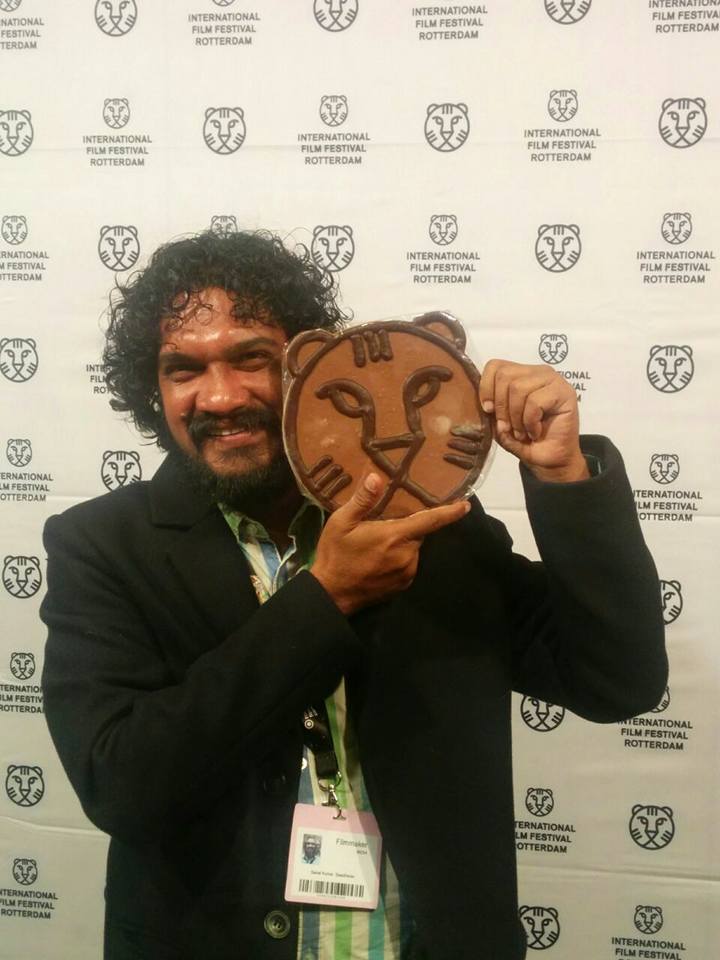
Sanal Kumar Sasidharan is back in India after his glorious win of The Hivos Tiger Award at the International Film Festival of Rotterdam 2017 for his latest film Sexy Durga. The director of Oraalppokkam and Ozhivudivasathe Kali takes time to interact with us at The Cinema Resource Centre (TCRC).

sanal-with-tiger

PC: Sanal Kumar Sasidharan FB page

Firstly, congratulations on this wonderful win! Was this kind of international recognition something that you had expected for Sexy Durga?

Thank you. I never expect anything except a good movie, while making it. But once it is made in the way I want to make it, I don’t hesitate to dream about its success. For me, film is not a local art. It has universal readability, so I naturally dream of international success. A dream is an expectation too.

How important are film festivals and these recognitions for an independent film maker?

Independent film makers are really very fragile in many respects. We have no stars, no money, no market and no popularity gimmicks. We have only a few openings through which we hope to reach audiences. One of the most important openings is film festivals. Film festivals play a great roles in bringing art house movies and indie film makers to the limelight. They are also important as they serve as forums for serious discussions about such films.

Tell us more about Sexy Durga and the team behind it.

Sexy Durga is an art-house movie that has many layers to it. It is very simple, yet complex. There is no ‘story’ in it. But you can attribute one to it though your experience of the movie.

Prathap Joseph, the cameraman did a good job with the many difficult camera movements the movie demanded. Murukan was the Art director, Harikumar Madhavan Nair was the sound recordist, and music was by Basil CJ.  Editing was done by me. Murukan and Basil CJ have been working with me since my first film.

For the role of ‘Durga’  I wanted an actress who was fearless about using her body and was comfortable with her physicality. Rajshree Deshpande seemed the perfect fit for the part., and was sold on our idea of her character and thus, became part of the movie.

All other artistes are mostly new faces or non-established actors. The main artists are Kannan Nayar, Vedh, Bilas Nair, Arunsol, Sujeesh KS. Byju Neto and Nistar Ahammed, who acted in Ozhivudivasathe Kali, also essayed roles in the movie.

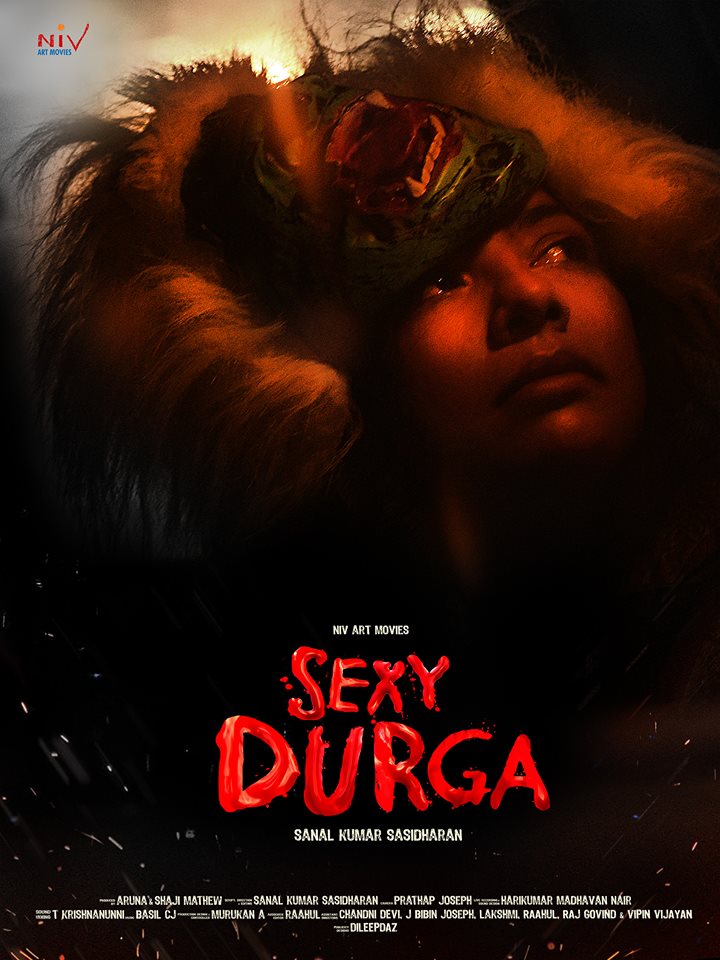
sexy-durga

PC: Sexy Durga FB page

How is Sexy Durga similar to and /or different from your earlier films?

Sexy Durga is totally different in approach and the making from my earlier films. But all the films are socially rooted in the Malayali psyche.

Sexy Durga had no storyline or script. Most of the portions of the film were shot in midnight, in available light. The tough decisions involved in the making of the film gives it a unique feel.

From a lawyer to a film maker. How did this journey and the discovery happen?

I really only wanted to become a film maker since my childhood. But my family had a problem with my dream of becoming a film maker. My father was dead against my desire to apply to a film institute. So I was thinking about ways to infiltrate the film industry through the back doors. I approached several directors to take me on as an assistant director. Nobody was willing because I had no one to recommend me. Then I thought that if I had a professional degree and the kind of dignity that comes from it, people may accept my passion. But I was wrong. After my Law degree, I was forced to remain a lawyer. But I dropped the profession and escaped. I formed a film society named Kazhcha Film Forum and started making short films. In between, I worked other jobs, some of which I don’t even remember properly. In 2013, I made my first feature Oraalppokkam, produced by Kazhcha Film Forum, and that was the turning point

What is your typical pre-production process for your films?

Actually my films are simple for me. I don’t like much production set-ups, technical extravaganza and too many big artists in my film. I always wanted to keep the freedom and possibility to evolve even at a later stage of making. I don’t even like a concrete scripting process. The main part of my pre-production is dreaming and meditation. I think about the making pattern a lot. I rethink and rethink and keep all the options open. It may have its own drawbacks but I love it. Identifying location is the most important thing for me. Once I find a comfortable location, I feel relaxed. Finding actors is the next important step for me. If both are properly and satisfactorily done, I am sure that my film is done.

How much do you depend on your actors to take a scene forward and to decide the pace of the film?

I depend upon my actors a lot. Actually, I love to play with them. I put them in the location and let them freely do something. I only casually explain to them, so they may not even get a clear idea of what I have told them. In fact, I don’t even ask if they understand properly. But I make sure that they clearly know the situation and the political emotion behind the scene they are about to enact. Then I retreat and become a spectator. I get ideas as I see them acting out the given situation. I just shape it with gentle suggestions. It is like watching the movie while making it. I have a feeling that without my actors actively and freely engaged in the making, I can’t make a film properly

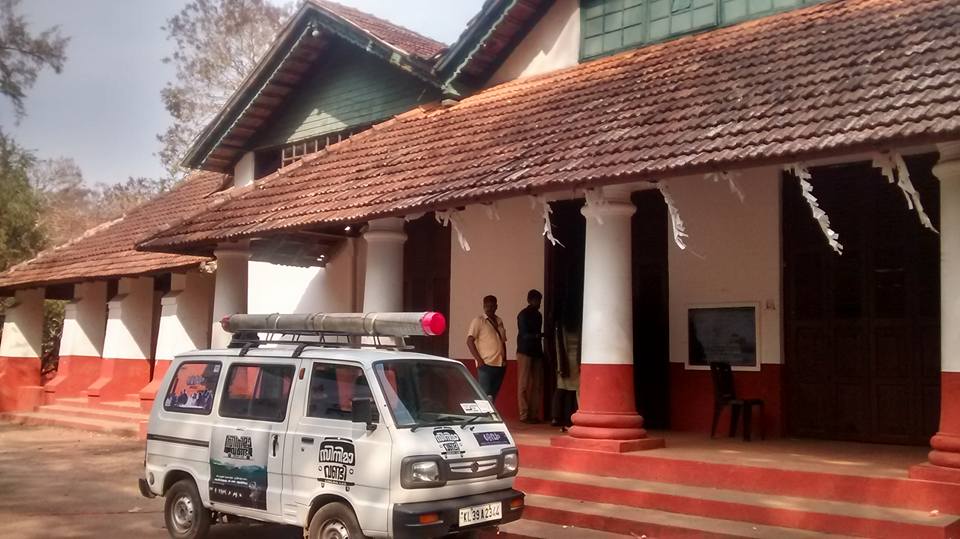
What are the release plan for Sexy Durga, or is it too early to talk about it? You and your team behind Kazhcha Film Forum took independent cinema to the masses with the concept of Cinema Vandi. You think Sexy Durga will also soon travel in the Cinema Vandi?

Sexy Durga is travelling all around the world now. It has just started leaving its footprints. Let it travel and come back. We will talk about the Indian release only after the censor board approves it without much harm. I want to release ‘my’ film, not the censor board’s film.

cinema-vandi

Cinema Vandi at a venue at Kottayam, Kerala. PC: Kazhcha Film Forum FB page

What is your take on independent cinema in India?

Indian independent cinema is establishing its presence very fast. The world has started recognizing it. As more and more people started thinking about this alternative space, more and more films will start coming out  soon. I hope that we have a bright future.

Thank you for talking with TCRC. Before we sign off please let us know your opinion about the importance of preserving and archiving cinema heritage.

Cinema is history. It has importance not only in terms of art or commercial product. It has cultural importance also. It is very important to preserve our pathways to see how long we travelled and how difficult it was. It is very important that one look back to where  one came from. Thank you