“Elphinstone Elphinstone Everywhere”: The story of Elphinstone Theatre in Madras, the first with a balcony!

The Indian Express carried a PTI (Press Trust of India) story yesterday about tent cinemas returning to Delhi as a part of the ongoing “100 years of cinema” celebrations. We found a couple of paragraphs at the end of the story rather interesting (click here to read the entire piece):

In India, among the pioneers of tent cinema, the most important name is that of J F Madan, a Parsi businessman who started ‘Elphinstone Bioscope Company’ in early 20th century in Calcutta (now Kolkata) and would do tent shows in the Maidan there. He later started the cinema halls by the name of ‘Elphinstone Picture Palaces’.

His ‘Elphinstone’ was also one of the few Indian companies, among other European production houses, which filmed the historic 1911 Delhi Durbar attended by King George V and Queen Mary.

His legend has survived today in the form of various ‘Elphinstone’ theatres spread across India.”

Now, we were aware that a New Elphinstone Theatre was operational up till sometime in the 1970s, off Mount Road. So, we did some searching and it turns out that there was indeed an Elphinstone in Madras as well. Manish Raj, writing for the Times of India, mentions the cinema hall in his piece of theatres in Madras of the yore (click here to read his entire story):

New Elphinstone Theatre in 1916 was inaugurated by the governor general of Madras and it was one of the first theatres in India to raise funds for the World War I through its shows. It housed the most unusual indoor sport — a boxing ring where amateurs sparred. When the film bubble burst, it later became Elphinstone Soda fountain, which sold beverages.

Given that there was a New Elphinstone, we realised that an Old Elphinstone had to be a part of this history. Historian S Muthiah, in his lovely piece titled “Cinema at Round Tana”, fills the gaps:

A New Elphinstone meant there had to be an old Elphinstone – and there was one, rooted in almost the beginnings of cinema-screening in Madras. The Elphinstone was located across Round Tana from the New Elphinstone on the site of Misquith Building, just west of the old Hindu building at the junction of Ellis Road and Wallajah Road. (Wallace) Misquith & Co., established in 1842 built itself a magnificent brick-exposed Indo-Saracenic building to house on the ground floor its showroom for musical instruments and, on the first floor, music salons which could be rented by the hour for anyone wanting to play any instrument.In time, Misquith’s’ became Musee Musicals and moved further down Mount Road, but in its heyday it housed the Lyric, a hall of entertainment that a man named Cohen established on the first floor when he took over Misquith’s in 1907.

In 1913, the Lyric began screening films, calling itself the Empire Cinema, but a fire in March 1914 closed it down. Later that year, J F Madan of Calcutta, owner of India’s biggest cinema chain at the time, took over the Empire and renamed it with that of his flagship, the Elphinstone. In 1915, Madan bought the Misquith Building and made the Elphinstone a permanent cinema theatre, the biggest and the first with a balcony in Madras.

Given that Dadasaheb Phalke’s “Raja Harishchandra,” the first feature length Indian film was released at around the same time that Empire Cinema was started (1913), we at TCRC were thrilled to find the various strands of our cinematic history crisscrossing. Unfortunately, we weren’t able to find a single image or photographs of the Elphinstone Theatre and this only served to remind us of the importance of archiving  images of our cinemas’ golden past. Interested in helping this sort of archival effort? Volunteer at TCRC!
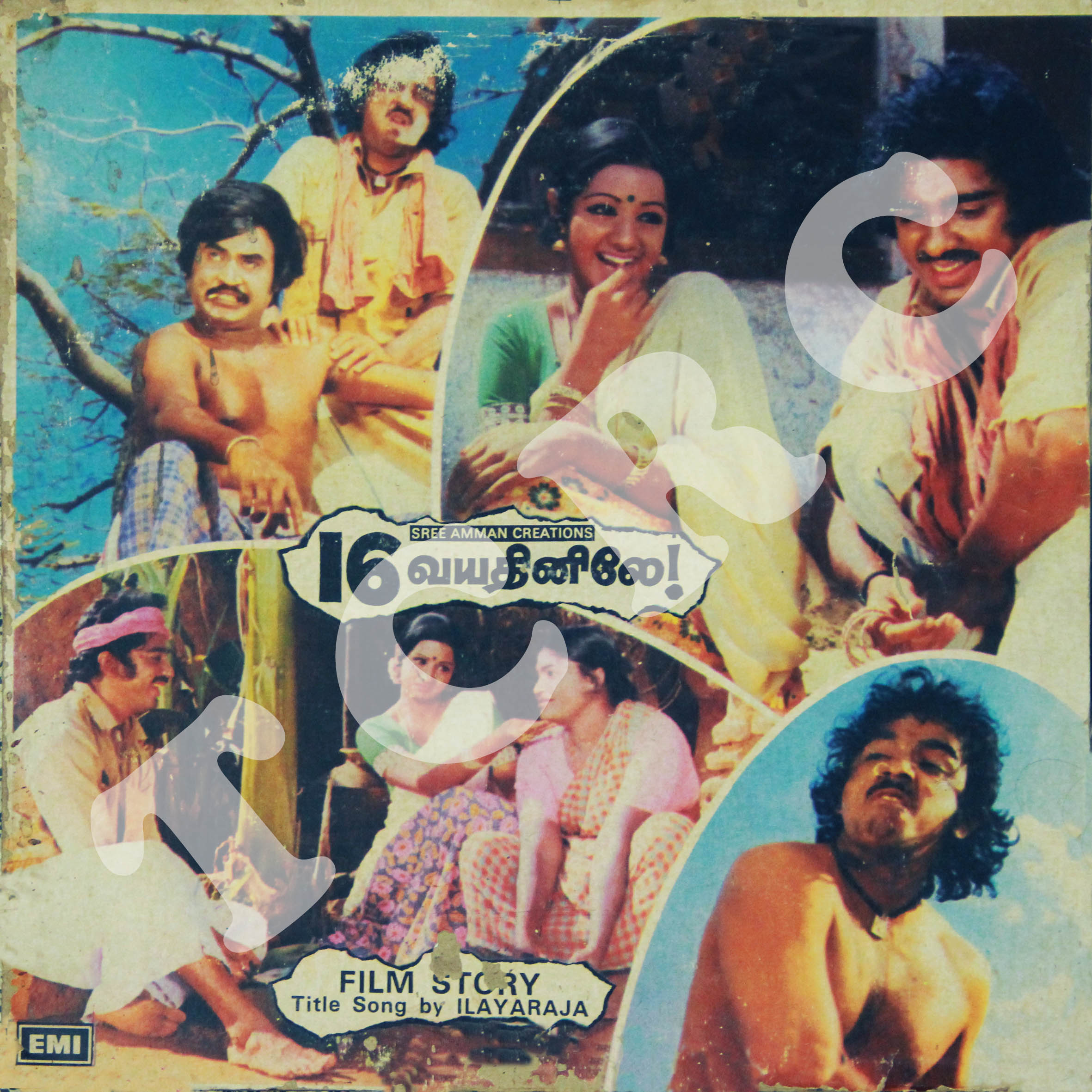
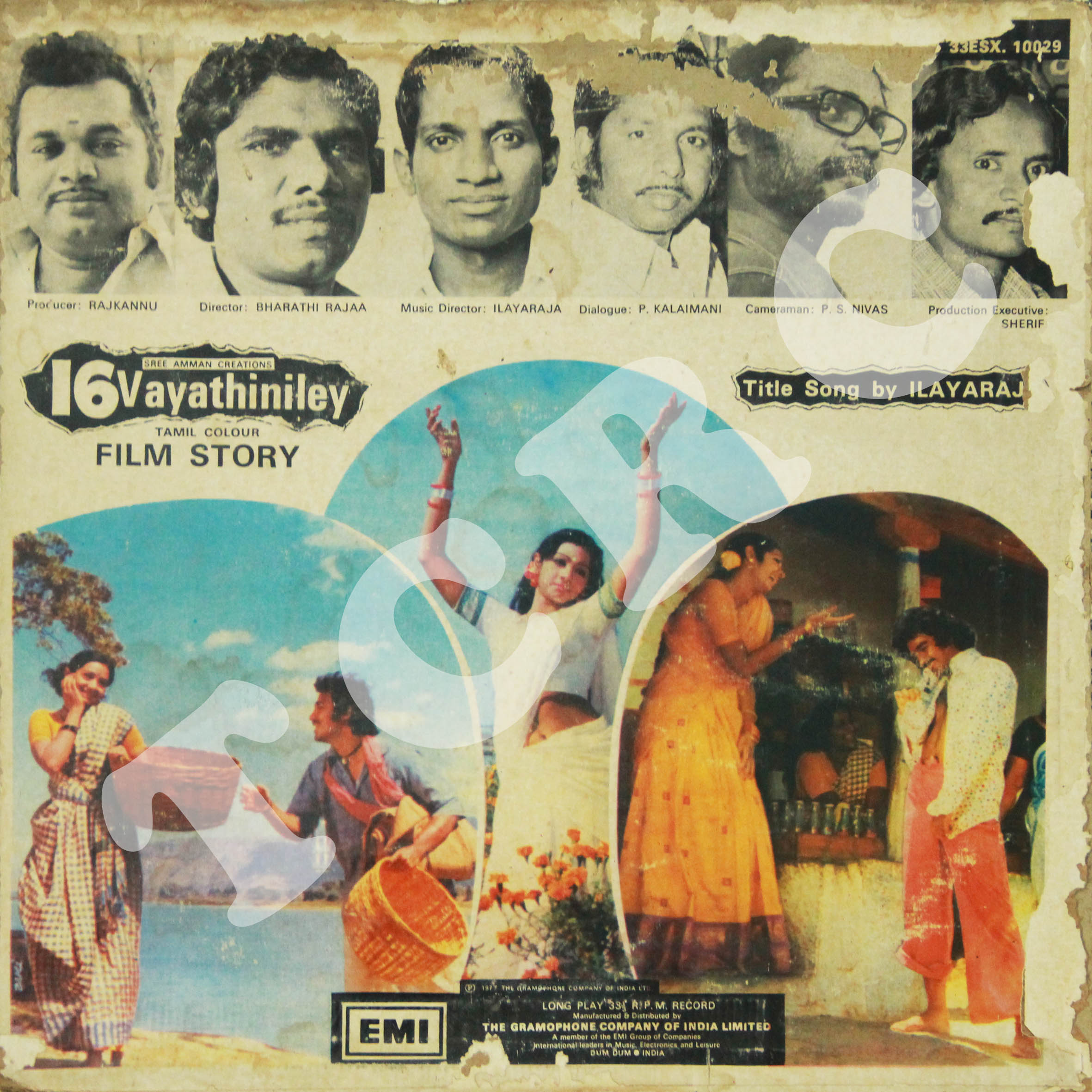
RARE: Original LP record of Bharathiraja’s “16 Vayathinile,” the first Tamil film to be shot completely outdoors

On 16th September 1977, Tamil film audiences watched their cinema change with the release of Bharathiraja’s debut feature film “16 Vayathinile” starring Kamal Hassan, Sridevi, Rajnikanth, Kanthimathi and Goundamani. The film is now considered to be a landmark venture in Tamil cinema, as it spurred numerous filmmakers to return to their roots and base their stories in the villages of Tamilnadu. At a time when films meant sets and studios, Bharathiraja is said to have shot all of “16 Vayathinile” outdoors. The movie also marked the debut of veteran comedian Goundamani and was Superstar Rajnikanth’s first colour film. It went on to win 4 Tamilnadu State Film Awards, 1 South Filmfare Award and 1 National Film Award, across various categories. Bharathiraja’s powerful depiction of village life was the highlight of his directorial debut, which is still remembered for Rajnikanth’s stylish portrayal of  the character Parattai, Kamal’s heartwrenching potrayal of the character Chappani and Sridevi’s delicate performance as Mayil.

The film had a musical score composed by Ilaiyaraaja and singer S Janaki won a National Award for Best Female Playback Singer for her rendition of Ilaiyaraaja’s evergreen classic “Senthoora Poove.” Given below are the photographs of the original LP record of “16 Vayathinile.”

LP Record cover (front) of "16 Vayathinile"   | Tamil | 1977

LP Record cover (front) of “16 Vayathinile” | Tamil | 1977

LP record cover (back) of "16 Vayathinile" | Tamil | 1977

LP record cover (back) of “16 Vayathinile” | Tamil | 1977

In 1979, Bharathiraja remade the film in Hindi. The Hindi version was titled “Solva Sawan” and starred Sridevi, Amol Palekar and Kulbhushan Kharbanda.

Kamal Hassan, The Singer: “Paneer Pushpangale” in “Aval Appadithan” (Tamil, 1978)

We at TCRC have a large number of still photographs shot during the production of various films that have been made by Tamil filmmakers across the years. We are in the process of digitizing, sorting and cataloguing them. One of the films for which most of this work has been completed is C Rudhraiya’s “Aval Appadithan” starring Kamal Hassan, Rajnikanth, Sripriya and Saritha. In fact, the header image that you see at the top of this page is a production photograph from “Aval Appadithan,” which was released in 1978.

The movie, praised by many for being far ahead of its times in terms of both treatment and technique, had numerous English dialogues and frequently employed jump cuts (two or more shots taken from only slightly different angles being placed sequentially, so as to communicate the passing of time in an abrupt manner). Shot in black and white, “Aval Appadithan” had only three songs, all of which were composed by Ilaiyaraaja.

One of the songs, titled “Paneer Pushpangale,” was written by Gangai Amaren and was sung by Kamal Hassan himself. Now, we’re used to Kamal singing his own songs. But it’s quite refreshing to hear Kamal croon a ‘Raaja Sir’ (as Ilaiyaraaja is known in the Tamil film industry) number from that era. In fact, when we heard the song for first time, we couldn’t even identify Kamal’s voice. Check it for yourself. Here is “Paneer Pushpangale” from “Aval Appadithan”:

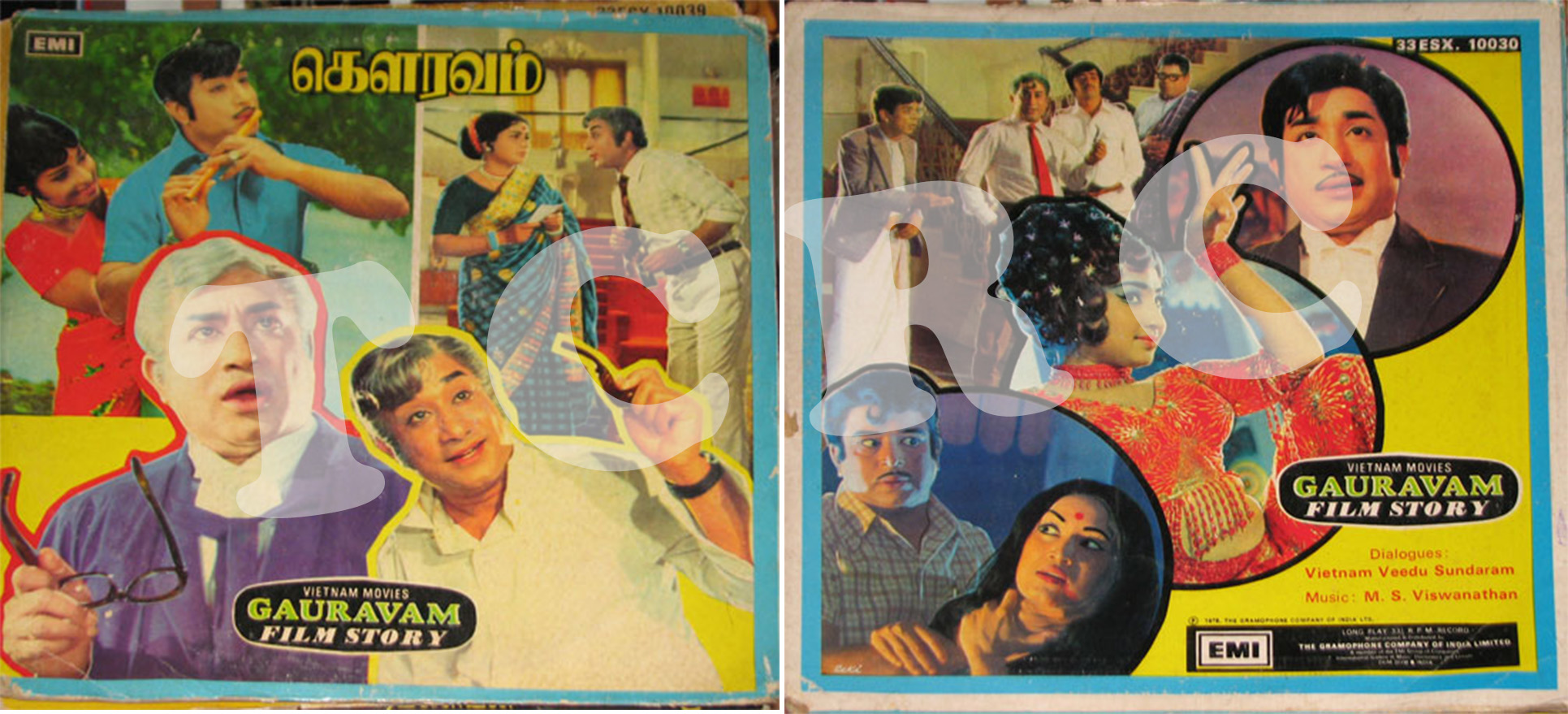
RARE: Original LP of Sivaji Ganesan’s “Gauravam” (1973), in which he plays a character called Rajnikanth!

This week, we bring from you yet another gem from the TCRC archives. Given that the Prakash Raj-produced, Radha Mohan-directed “Gouravam” has just released, we thought it would be fun to revisit the original “Gauravam” starring Sivaji Ganesan, Nagesh and ‘Major’ Sundarrajan, which was released in 1973. Interestingly, in the old “Gauravam,” Sivaji plays the role of Rajnikanth, a senior lawyer. When seen against that fact that superstar Rajnikanth’s original name is Shivaji (Shivaji Rao Gaikwad), the nomenclature system seems to come fulls circle! Given below is the photograph of the original LP set of Sivaji Ganesan’s “Gauravam”:

"Gauravam"  |  LP Record  |  Tamil  |  1973

“Gauravam” | LP Record | Tamil | 1973

“Gauravam” was directed by ‘Vietnam Veedu’ Sundaram and the music was scored by MS Vishwanathan. “Vietnam Veedu” was Sundaram’s first  stage play for Sivaji Ganesan’s theatre company Sivaji Nataka Mandram. The play was staged for the first time in 1965 and was a massive hit. It was later turned into a movie as well.

The incredible story of PK Nair, India’s most respected film archivist, has now been documented!

On the 3rd of May later this year, an anniversary of epic proportions will occur. For it was on that day in 1913, one hundred years ago, that “Raja Harishchandra”, the silent film produced and directed by Dadasaheb Phalke which is widely accepted as the first Indian full-length feature film, was released. In effect, the day marks the existence of one hundred years of Indian cinema. And what a glorious century it has been!

Of the many ways in which this anniversary is likely to be commemorated, we at TCRC are particularly excited about the release of Shivendra Singh Dungarpur’s National Award-winning documentary “Celluloid Man” on 3rd May 2013. The film showcases the life and work of legendary Indian archivist and founder of National Film Archive of India (NFAI), PK Nair.  Given below is an excerpt from the film:

The film is said to feature interviews with many leading film personalities including including Krzysztof Zanussi, Lester James Peries, Vidhu Vinod Chopra, Saeed Akhtar Mirza, Gulzar, Basu Chatterjee, Naseeruddin Shah, Kamal Haasan, Girish Kasaravalli, Jahnu Barua, Jaya Bachchan, Dilip Kumar, Saira Banu, Sitara Devi, Santosh Sivan, Rajkumar Hirani, Shyam Benegal, Mahesh Bhatt, Yash Chopra, Ramesh Sippy and Mrinal Sen, all of whom share their reflections on the influence of PK Nair on the films that they watched and loved. In the 2012 National Film Awards, “Celluloid Man” won accolades for Best Editing and Best Biographical/Historical Reconstruction.

PK Nair, now 80 years old, has meanwhile spoken about how the prints of films such as “Raja Harishchandra,” “Alam Ara,” etc are not available at all and has lamented the loss of many important films made before the 1950s (click here to read that whole story).

We at TCRC salute PK Nair, or Nair Saab as he is known, for his commitment to archiving the early days of Indian cinema. May his tribe only grow.

RARE: Original LP record of Sivaji Ganesan’s “Thiruvarutselvar” (Tamil, 1967)

"Thiruvarutselvar"  |  LP Record - Front  |  Tamil  |  1967

“Thiruvarutselvar” | LP Record – Front | Tamil | 1967

"Thiruvarutselvar"  |  LP Record - Back  |  Tamil  |  1967

“Thiruvarutselvar” | LP Record – Back | Tamil | 1967

In our archives here at TCRC, we have the original LP records of numerous Indian films, right from the 50s to the 80s. Today, we share with you the photos of the LP record of “Thiruvarutselvar”, a Tamil film starring Sivaji Ganesan, Savitri, Muthuraman, KR Vijaya and others. It was released in 1967 and was directed by AP Nagarajan, the veteran filmmaker whose other hits include “Thiruvilayadal,” “Saraswathi Sabatham,” and “Thillana Mohanambal.” The music for “Thiruvarutselvar” was scored by KV Mahadevan and the lyrics were written by Kannadasan. Even today, one remembers P Susheela’s mellifluous rendition of “Mannavan Vanthanadi,” one of the most popular songs of the album.

In an interview with Mohan V Raman for The Hindu in April 2012, CN Paramasivan, the son of director AP Nagarajan had said that the overwhelming response to the re-release of “Karnan” was encouraging him to look into the restoration of some of his father’s films (click here to read that story). We at TCRC hope to see that happen.

Also, it must be mentioned here that the same team, i.e., actor Sivaji Ganesan, director AP Nagarajan and music director KV Mahadevan, came together for “Kandan Karunai,” which won KV Mahadevan the National Award for Best Music Direction in 1967, the same year in which “Thiruvarutselvar” was released. This was the first time that a National Award was constituted for the category of Music Direction. Since then, the most number of National Awards for Best Music Direction have been won by Ilaiyaraja and AR Rahman, i.e., 4 each.

T K Ramamoorthy of the Vishwanathan-Ramamoorthy duo passes away!

We at TCRC deeply mourn the demise of veteran violinist-composer TK Ramamoorthy. Along with MS Vishwanathan, he was responsible for some of the greatest songs produced by Tamil cinema, scoring music for evergreen classics such as “Kadhalikka Neramillai,” “Padagotti,” “Bale Pandiya,” “Karnan” and many others. The picture below is from an interview that he gave to The Hindu in November last year (click on the image to read that interview).

Violinist-composer TK Ramamoorthy. Photo Courtesy: The Hindu

May his soul rest in peace.

Missing PBS. Wishing Pran.

We at TCRC deeply mourn the demise of veteran playback singer PB Sreenivas. PBS’ lilting melodies, however, shall live on. Our favorite is “Kalangalil Aval Vasantham” from the 1961 Tamil film “Paava Mannippu,” which incidentally was the first South Indian film to win the National Award for the Second Best Feature Film.

At the same time, we at TCRC are glad to know that the Dadasaheb Phalke Award for Cinematic Excellence is being conferred on actor Pran this year and we extend our heartiest congratulations to one of Indian cinema’s finest villains. Given below is a compilation of some of Pran’s best moments on screen.


RARE: Production Stills from Mani Ratnam’s “Thalapathi”

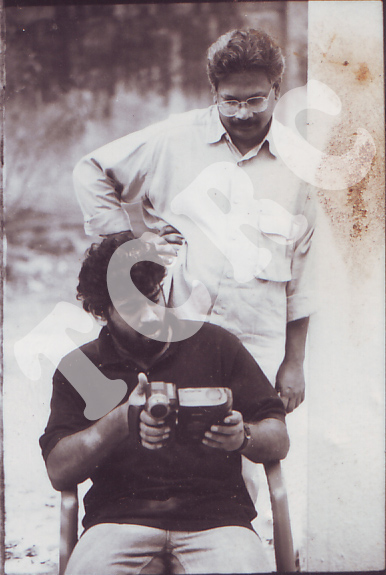
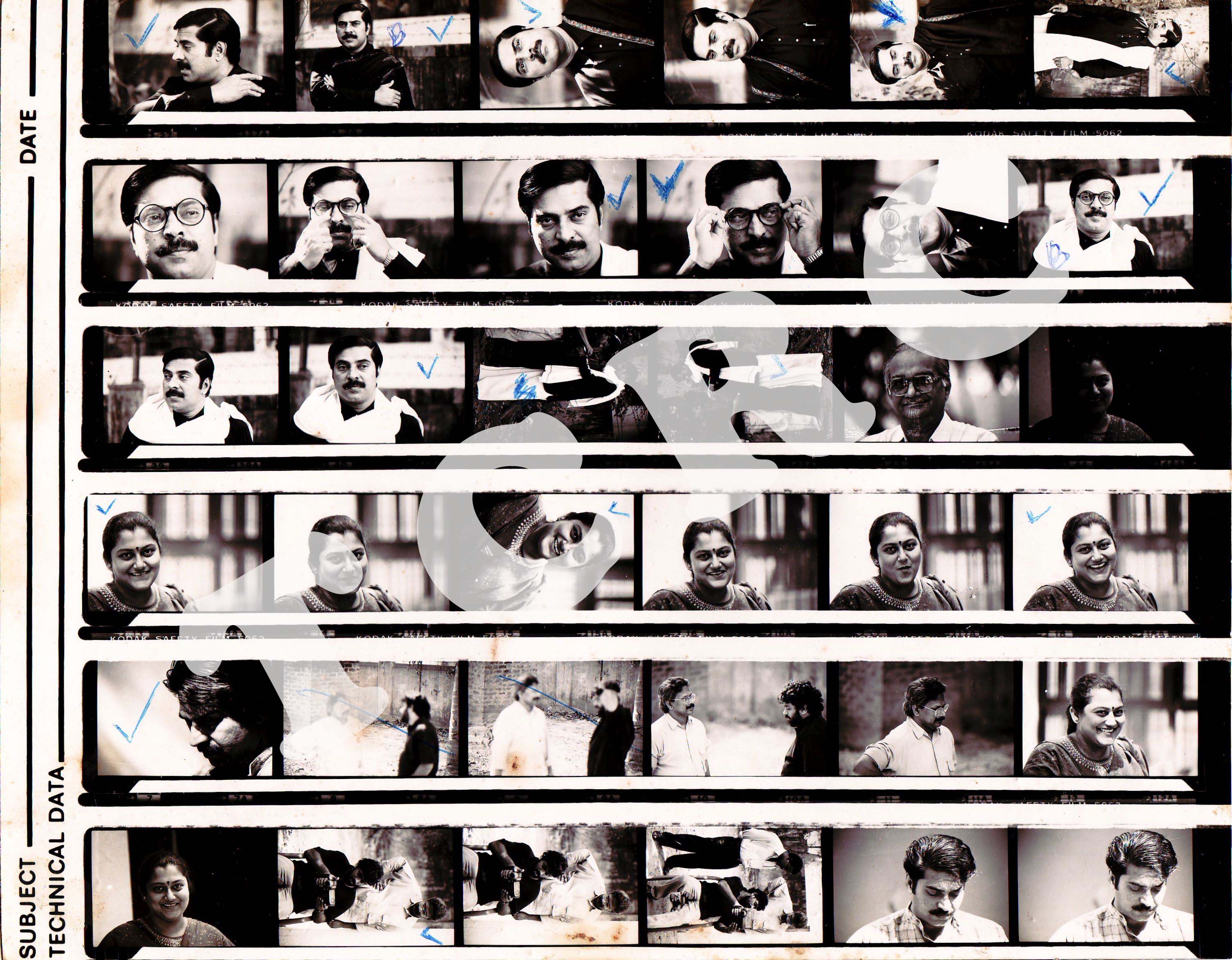
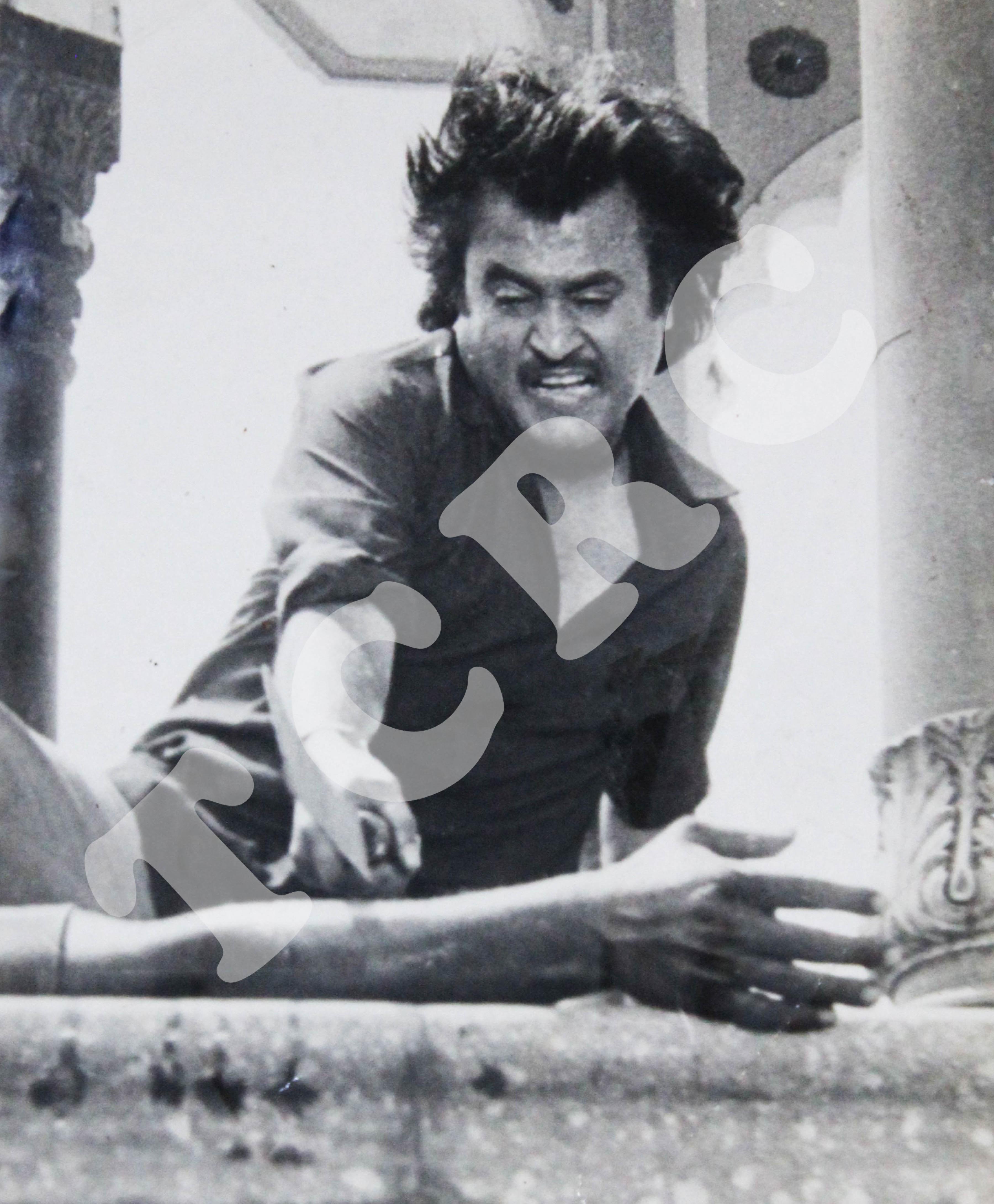
Last week, we at TCRC had posted Arul Mani’s review of Baradwaj Rangan’s “Conversations with Mani Ratnam” and had promised to bring you some behind-the-scenes photos of the Rajnikanth-Mammootty starrer “Thalapathi.” So, here we go.

"Thalapathi" - Mani Ratnam with Santosh Sivan

Cinematographer Santosh Sivan with director Mani Ratnam on the sets of “Thalapathi.”

"Thalapathi" - Contact Sheet of Mamootty's Look Test

Contact sheet featuring Mamootty’s look test for Mani Ratnam’s “Thalapathi.”

Rajnikanth in an action sequence from Mani Ratnam's "Thalapathi."

Rajnikanth in an action sequence from Mani Ratnam’s “Thalapathi.”

Arul Mani on Baradwaj Rangan’s “Conversations with Mani Ratnam”

Mani Ratnam with Rajnikanth on the sets of “Thalapathi.” Photo Courtesy: Indian Express Archives

Today, we revisit Arul Mani’s rather balanced review of Baradwaj Rangan’s book “Conversations with Mani Ratnam” for Tehelka (click on the image to read the full story).

We at TCRC happen to have, in our archives, contact sheets of Mammootty’s look tests for Mani Ratnam’s “Thalapathi.” We’re working on digitizing this absolutely gorgeous piece of film memorabilia, which also features director Mani Ratnam and cinematographer Santosh Sivan in some candid shots. So, do watch this space for updates!