Ray’s 21st Death Anniversary: Revisiting ABP’s “No Ads, Please!” Tribute & The Films That Ray Would’ve Liked To Make

On 23rd April 1992, Satyajit Ray, one of India’s most celebrated personalities from the world of cinema, passed away in Calcutta. Twenty one years later, we at TCRC revisit some material on the illustrious life of the iconic Bengali filmmaker.
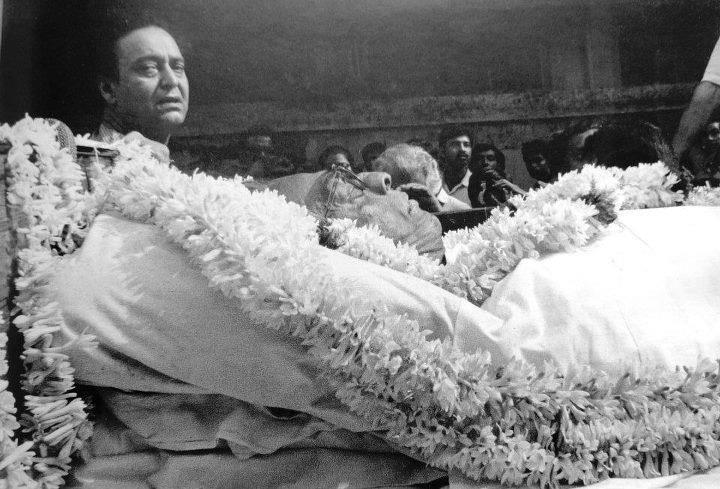
Satyajit Ray's funeral. Photo from the newspaper Anandabazar Patrika dated 24th April 1992.  Photography by Tarapada Bandopadhyay. Courtesy: Riddhi Goswami (found on the Facebook page "FeludaSeries"

Satyajit Ray’s funeral. Photo from the newspaper Anandabazar Patrika dated 24th April 1992. Photograph shot by Tarapada Bandopadhyay. Reproduction Courtesy: Riddhi Goswami (found on the Facebook page “FeludaSeries”)

The New York Times published a glowing obituary of Ray, the day after his demise (click here to read the entire obit).  The obituary, penned by Peter Flint, recounts how a three-member Oscar committee visited him at Belle Vue Hospital in Calcutta, a month before his death, to present him with the golden statuette for lifetime achievement in cinema. The presentation of the Oscar was filmed and his acceptance speech was screened two weeks later at the Oscars ceremony at the end of March that year.

The NYT obit also showcases a quote from Ray (given below), which beautifully captures how the auteur’s approach to mise-en-scene:

You had to find out yourself how to catch the hushed stillness of dusk in a Bengali village,” he said, “when the wind drops and turns the ponds into sheets of glass dappled by the leaves of the trees, and the smoke from ovens settles in wispy trails over the landscape, and the plaintive blows on conch shells from homes far and wide are joined by the chorus of crickets, which rises as the light falls, until all one sees are the stars in the sky, and the stars blink and swirl in the thickets.”

Interestingly, the Bengali newspaper Anandabazar Patrika didn’t carry a single advertisement on the day after Ray’s death as a mark of respect to the master filmmaker. Well, from where we see it, very few filmmakers today would even be considered worthy of such a tribute and fewer media outlets would be willing to pay such a tribute!

We also loved Dilip Basu’s biography of Ray for the Satyajit Ray Film and Study Center at the University of Southern California, Santa Cruz. Here’s an excerpt (click here to read the entire biography):

How he managed to make the film, pawning his rare music albums, his wife Bijoya’s jewelry and his mother, Suprabha’s networking in the Government circles in Calcutta, has now become a by-word in the annals of Indian film history. It also provides a paradigm on the “modes of production” in the kind of world cinema that stubbornly refuses to kowtow to commercial pressure. The paradigm required a perennial search for the elusive producer; an essential routine of most of Ray’s movie-making career. If he had access to funds for the kind of films he wanted to make on his fiercely independent and nonnegotiable artistic terms, the world would have seen more diversity and many more period pieces in Ray’s oeuvre: films based on ancient epics, the Mughals and the British Colonials. Instead, he limited himself to what was locally available and possible, refusing to stop or give in to commercial presuures. By 1992, the year he passed on, he had made forty films including shorts and documentaries. Some of these are all-time classics, great and near-great films. Unlike his illustrious contemporaries Antonioni, Bergman, Fellini and Kurosawa, for example he never made a film that can qualify as “bad” from the filmmaker’s standpoint.”
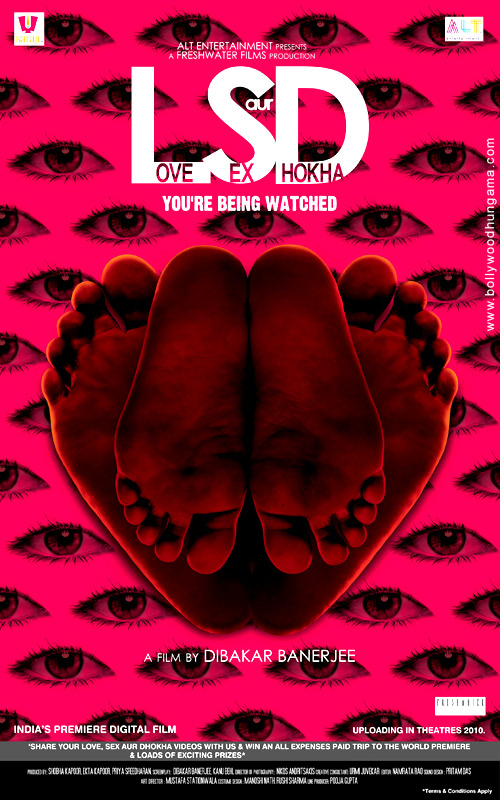
Dibakar Banerjee: Discovering “good” international cinema through a search for porn!

We at TCRC are always looking for fabulous written material on films and their makers, and it is during one such search that we found Jai Arjun Singh‘s absolutely delightful piece on Dibakar Banerjee, the director of films such as “Khosla Ka Ghosla,” “Oye Lucky Lucky Oye,” “Love, Sex Aur Dhokha” and “Shanghai.” All too often, we find directors giving interviews about their latest film and such interviews invariably end up including a couple of stock questions about the process of writing and making films. But Jai Arjun’s story for The Caravan magazine focuses entirely on Dibakar Banerjee – the man, his influences and his creative process. Discursive and detailed, the piece builds a fascinating, multi-dimensional picture of the filmmaker who has made some truly path-breaking yet commercially successful films. Sample this:

For the young Dibakar, “getting his hands dirty” meant being part of a street-smart lifestyle that was far removed from the cliché of the armchair intellectual. And that early life is inseparable from what he is today. Even “good” international cinema came into his personal orbit through what was an adolescent’s rite of passage: at age 17, he and four friends rented what they thought would be a porn film called Confessions of a Taxi Driver to watch in a darkened room in Jhandewalan—and ended up with Martin Scorsese’s Taxi Driver instead. “We closed the drapes, waited for the obligatory hardcore moment but nothing happened—and by the end, here were five guys from a typical Karol Bagh setting, riveted by what they were seeing.”

Love Sex Aur Dhokha (LSD)  |  Hindi  |  2010

Love Sex Aur Dhokha (LSD) | Hindi | 2010

Truth be told, this profile of Dibakar Banerjee is easily one of the best (and longest) pieces of writing about a filmmaker that we’ve come across in the recent past (click on the image above to read the full story). We at TCRC would like to doff our hats in salute to both filmmaker Dibakar Banerjee and writer Jai Arjun Singh.

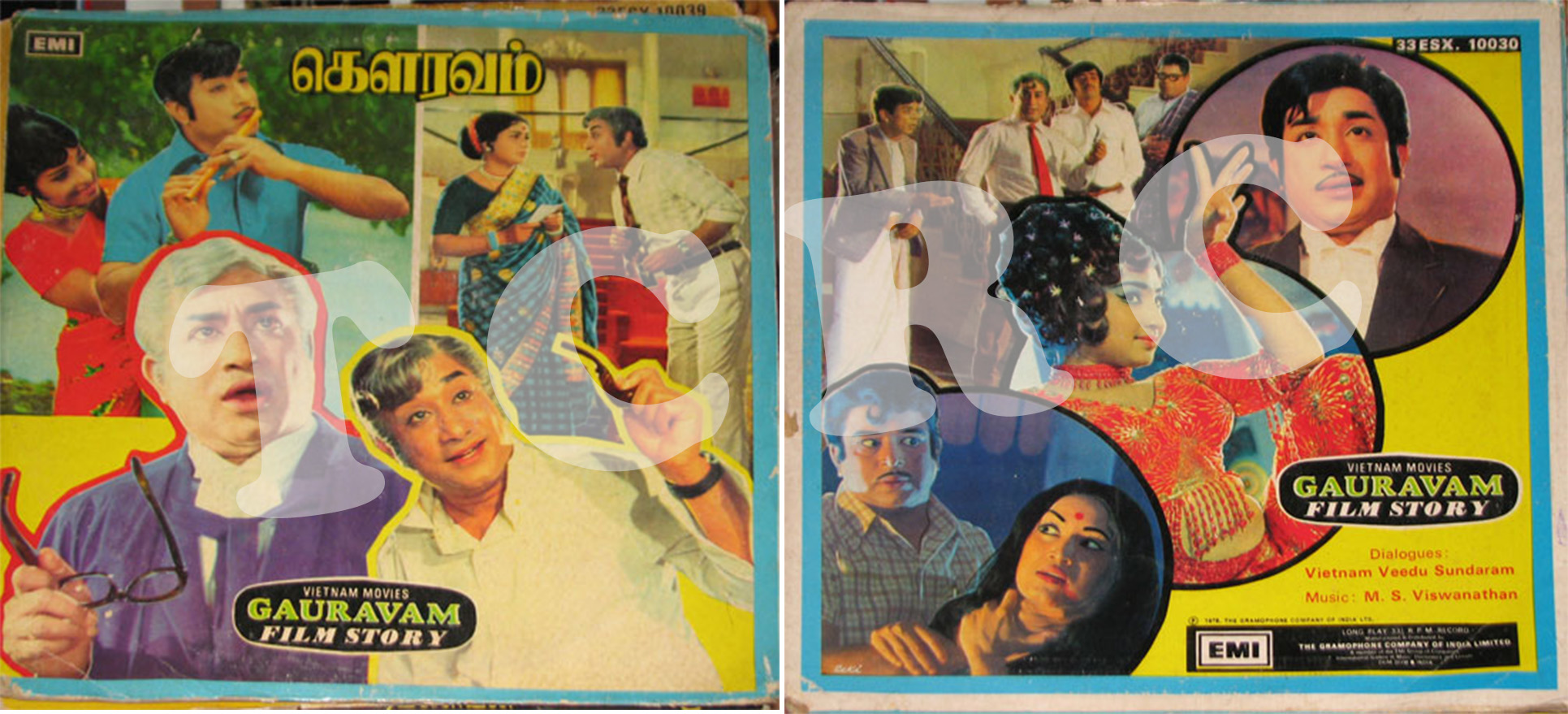
RARE: Original LP of Sivaji Ganesan’s “Gauravam” (1973), in which he plays a character called Rajnikanth!

This week, we bring from you yet another gem from the TCRC archives. Given that the Prakash Raj-produced, Radha Mohan-directed “Gouravam” has just released, we thought it would be fun to revisit the original “Gauravam” starring Sivaji Ganesan, Nagesh and ‘Major’ Sundarrajan, which was released in 1973. Interestingly, in the old “Gauravam,” Sivaji plays the role of Rajnikanth, a senior lawyer. When seen against that fact that superstar Rajnikanth’s original name is Shivaji (Shivaji Rao Gaikwad), the nomenclature system seems to come fulls circle! Given below is the photograph of the original LP set of Sivaji Ganesan’s “Gauravam”:

"Gauravam"  |  LP Record  |  Tamil  |  1973

“Gauravam” | LP Record | Tamil | 1973

“Gauravam” was directed by ‘Vietnam Veedu’ Sundaram and the music was scored by MS Vishwanathan. “Vietnam Veedu” was Sundaram’s first  stage play for Sivaji Ganesan’s theatre company Sivaji Nataka Mandram. The play was staged for the first time in 1965 and was a massive hit. It was later turned into a movie as well.

The incredible story of PK Nair, India’s most respected film archivist, has now been documented!

On the 3rd of May later this year, an anniversary of epic proportions will occur. For it was on that day in 1913, one hundred years ago, that “Raja Harishchandra”, the silent film produced and directed by Dadasaheb Phalke which is widely accepted as the first Indian full-length feature film, was released. In effect, the day marks the existence of one hundred years of Indian cinema. And what a glorious century it has been!

Of the many ways in which this anniversary is likely to be commemorated, we at TCRC are particularly excited about the release of Shivendra Singh Dungarpur’s National Award-winning documentary “Celluloid Man” on 3rd May 2013. The film showcases the life and work of legendary Indian archivist and founder of National Film Archive of India (NFAI), PK Nair.  Given below is an excerpt from the film:

The film is said to feature interviews with many leading film personalities including including Krzysztof Zanussi, Lester James Peries, Vidhu Vinod Chopra, Saeed Akhtar Mirza, Gulzar, Basu Chatterjee, Naseeruddin Shah, Kamal Haasan, Girish Kasaravalli, Jahnu Barua, Jaya Bachchan, Dilip Kumar, Saira Banu, Sitara Devi, Santosh Sivan, Rajkumar Hirani, Shyam Benegal, Mahesh Bhatt, Yash Chopra, Ramesh Sippy and Mrinal Sen, all of whom share their reflections on the influence of PK Nair on the films that they watched and loved. In the 2012 National Film Awards, “Celluloid Man” won accolades for Best Editing and Best Biographical/Historical Reconstruction.

PK Nair, now 80 years old, has meanwhile spoken about how the prints of films such as “Raja Harishchandra,” “Alam Ara,” etc are not available at all and has lamented the loss of many important films made before the 1950s (click here to read that whole story).

We at TCRC salute PK Nair, or Nair Saab as he is known, for his commitment to archiving the early days of Indian cinema. May his tribe only grow.

RARE: Original LP record of Sivaji Ganesan’s “Thiruvarutselvar” (Tamil, 1967)

"Thiruvarutselvar"  |  LP Record - Front  |  Tamil  |  1967

“Thiruvarutselvar” | LP Record – Front | Tamil | 1967

"Thiruvarutselvar"  |  LP Record - Back  |  Tamil  |  1967

“Thiruvarutselvar” | LP Record – Back | Tamil | 1967

In our archives here at TCRC, we have the original LP records of numerous Indian films, right from the 50s to the 80s. Today, we share with you the photos of the LP record of “Thiruvarutselvar”, a Tamil film starring Sivaji Ganesan, Savitri, Muthuraman, KR Vijaya and others. It was released in 1967 and was directed by AP Nagarajan, the veteran filmmaker whose other hits include “Thiruvilayadal,” “Saraswathi Sabatham,” and “Thillana Mohanambal.” The music for “Thiruvarutselvar” was scored by KV Mahadevan and the lyrics were written by Kannadasan. Even today, one remembers P Susheela’s mellifluous rendition of “Mannavan Vanthanadi,” one of the most popular songs of the album.

In an interview with Mohan V Raman for The Hindu in April 2012, CN Paramasivan, the son of director AP Nagarajan had said that the overwhelming response to the re-release of “Karnan” was encouraging him to look into the restoration of some of his father’s films (click here to read that story). We at TCRC hope to see that happen.

Also, it must be mentioned here that the same team, i.e., actor Sivaji Ganesan, director AP Nagarajan and music director KV Mahadevan, came together for “Kandan Karunai,” which won KV Mahadevan the National Award for Best Music Direction in 1967, the same year in which “Thiruvarutselvar” was released. This was the first time that a National Award was constituted for the category of Music Direction. Since then, the most number of National Awards for Best Music Direction have been won by Ilaiyaraja and AR Rahman, i.e., 4 each.

T K Ramamoorthy of the Vishwanathan-Ramamoorthy duo passes away!

We at TCRC deeply mourn the demise of veteran violinist-composer TK Ramamoorthy. Along with MS Vishwanathan, he was responsible for some of the greatest songs produced by Tamil cinema, scoring music for evergreen classics such as “Kadhalikka Neramillai,” “Padagotti,” “Bale Pandiya,” “Karnan” and many others. The picture below is from an interview that he gave to The Hindu in November last year (click on the image to read that interview).

Violinist-composer TK Ramamoorthy. Photo Courtesy: The Hindu

May his soul rest in peace.

Happy b’day, Charlie Chaplin!

Wear a shabby suit,
And a bowler hat.
Swing a cane,
And sport a toothbrush ‘stache.
Turn into Chaplin, 
for he was a comic genius.
He taught us how to laugh,
and made the business of comedy, serious.” 

Comedy king Charlie Chaplin was born this very day back in 1889. He may have passed away in 1977. But he lives on through his movies, which have spread joy and cheer while making us reflect on the vagaries of life.

One of the best tributes to Chaplin that we at TCRC are aware of is the permanent show titled “Charlie Chaplin – The Great Londoner” that has been set up for him at the London Film Museum (click image below to know more).

“Charlie Chaplin – The Great Londoner” | London Film Museum

Also, our favorite Chaplin film has got to be “The Kid.” Incidentally, The Kid has been preserved in the United States National Film Registry by the Library of Congress for being “culturally, historically, or aesthetically significant.”

Here’s wishing the comic genius a very happy b’day!

First Telugu film to have a 200-day run in the theatres: “Pathalabhairavi” (1951)

NT Rama Rao with Malathi in “Pathalabhairavi” (Telugu, 1951)

For last week’s ‘Blast From the Past’ column in The Hindu, ML Narasimham wrote a lovely piece on the 1951 Telugu film “Pathalabhairavi” starring NT Rama Rao, SV Ranga Rao, Malathi and others. We particularly loved the anecdote featuring the then-Union Home Minister, C Rajagopalachari (click on the image to read the full story).

We at TCRC have, in our archives, various memorabilia from Telugu films that have been made over the years. We are currently in the process of digitizing those artifacts. So, do follow our blog for updates.

JC Daniel: Father of Malayalam Cinema

We at TCRC are always scouring the internet for interesting material on the origins of the regional cinemas of South India. And the internet never ceases to surprise us. Recently, we chanced upon CinemaofMalayalam.net, a website that had a separate page on JC Daniel, the man who wrote, directed and produced the first ever Malayalam feature film.

The movie, titled “Vigathakumaran,” was a silent film and was released in November 1928. In fact, the Kerala state government’s award for lifetime achievement in Malayalam cinema is called the JC Daniel Award, recognizing his efforts in starting up what is today one of India’s most interesting film industries. Interestingly, Daniel was a dentist who showed keen interest in martial arts. He is said to have been an expert at Kalarippayattu and is reported to have written a book about Indian martial arts in English before he ventured into cinema.

English: A short note on Vigathakumaran

A still from “Vigathakumaran,” the first ever Malayalam feature film (released in 1928). Photo Courtesy: Wikimedia Commons

Given below is a Malayalam documentary on the life of the director JC Daniel.

There has also been quite a bit of controversy over when “Vigathakumaran” was released. While many acknowledge it to be 1928 (including those such as noted Malayalam film journalist Chelangatt Gopalakrishnan and Yves Thoraval, author of “The Cinemas of India”), a photocopied version of a handbill announcing the release of “Vigathakumaran” in 1930 by producers Travancore National Pictures has been circulating on the internet of late, an artifact whose source is yet to be confirmed. Blogger CineMatters has written a detailed post about the 1928 v/s 1930 controversy here for the blog Old Malayalam Cinema. However, there is no dispute over the fact that “Vigathakumaran” by JC Daniel was the first ever Malayalam feature film.

TCRC has, in its archives, memorabilia from various Malayalam films that have been released over the years. Seeing this page on JC Daniel compelled us to revisit some of the old material and we’re working on the digitization of the same. So, do revisit the TCRC blog for updates.

RARE: Production Stills from Mani Ratnam’s “Thalapathi”

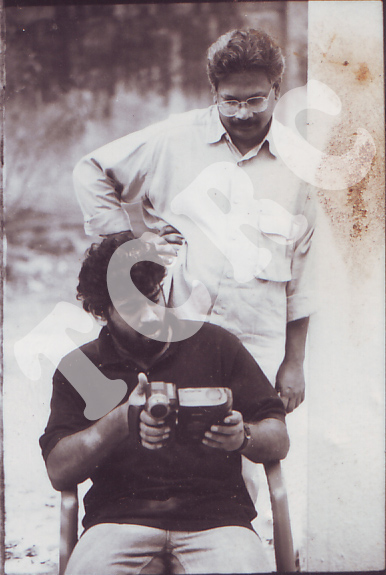
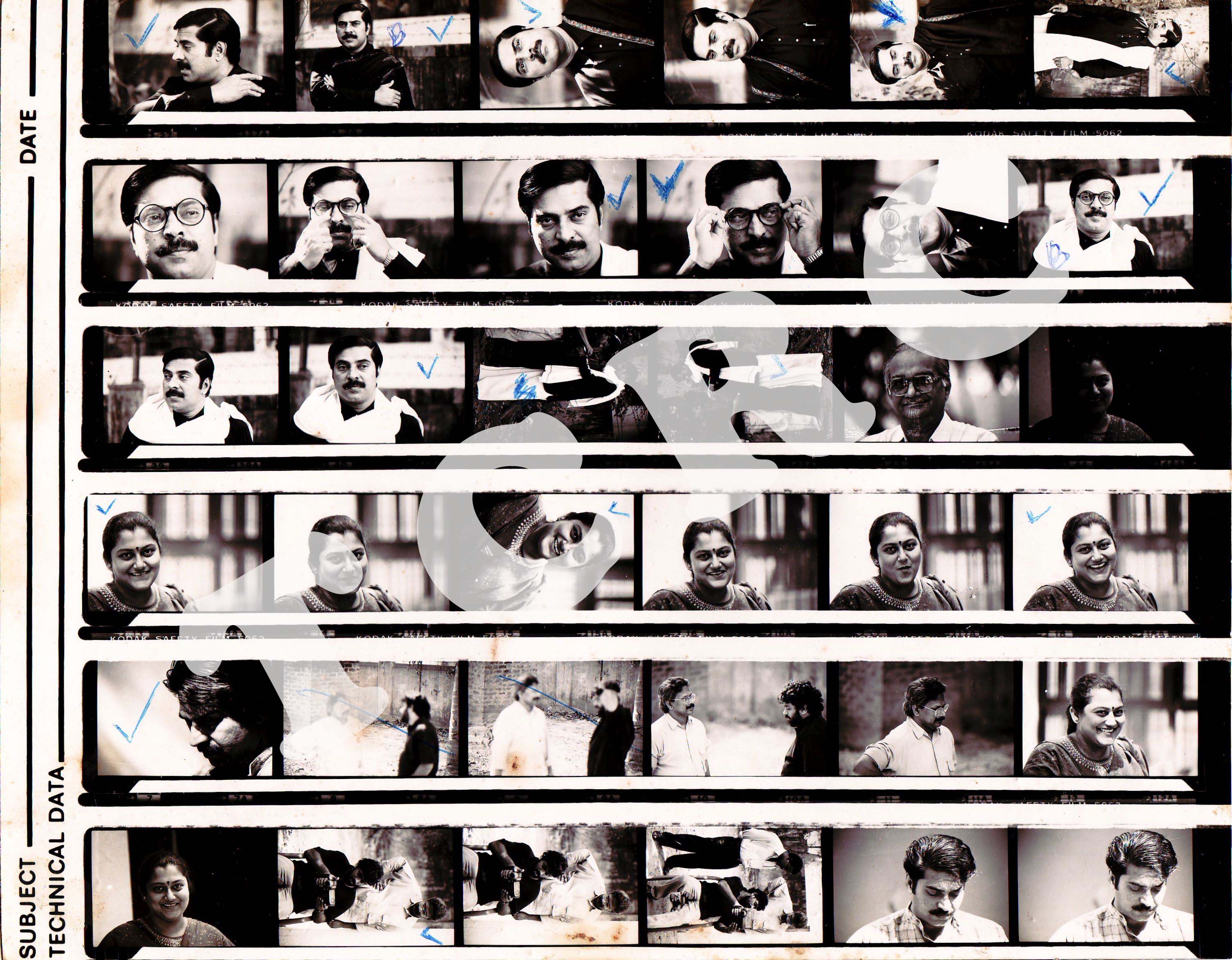
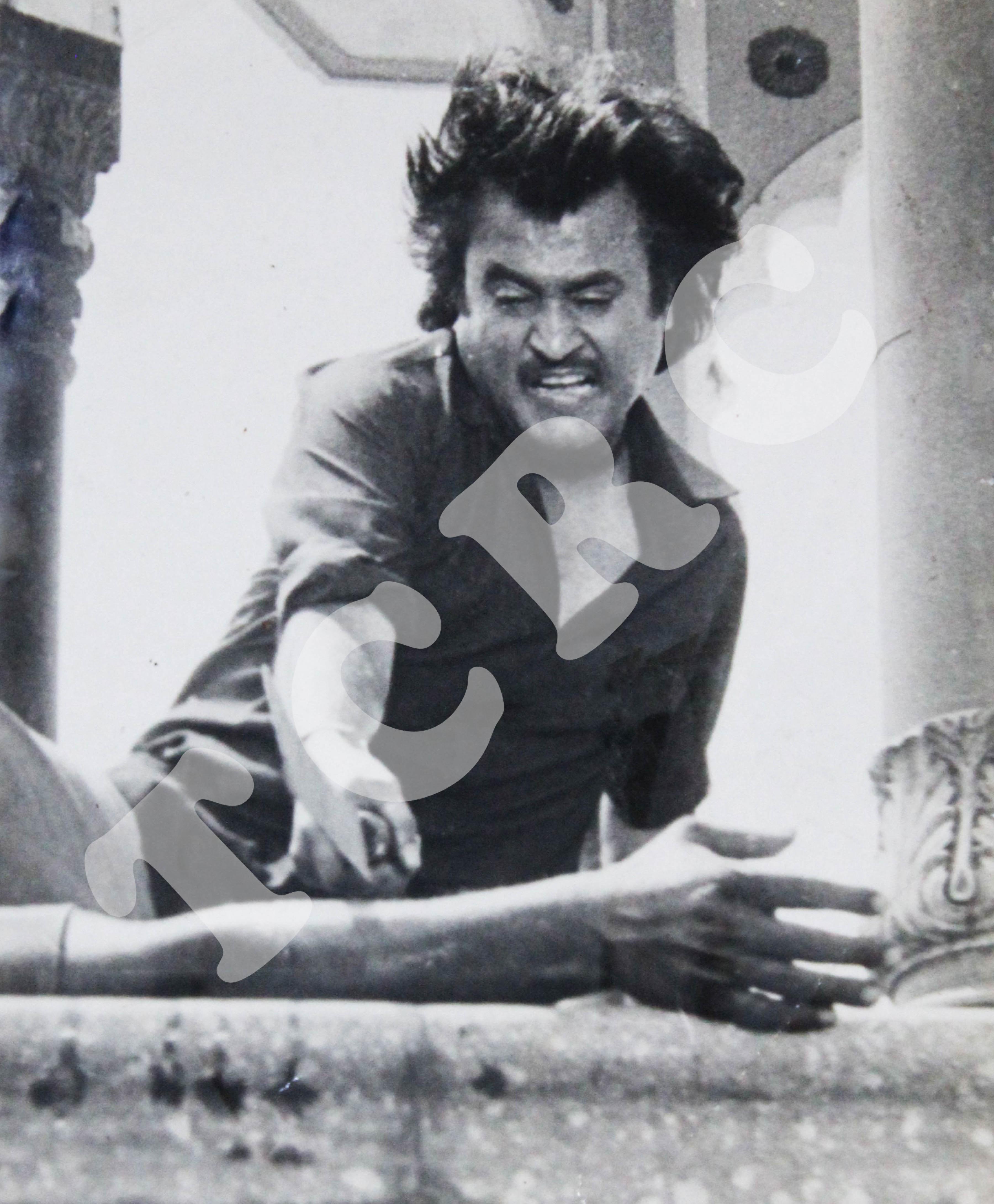
Last week, we at TCRC had posted Arul Mani’s review of Baradwaj Rangan’s “Conversations with Mani Ratnam” and had promised to bring you some behind-the-scenes photos of the Rajnikanth-Mammootty starrer “Thalapathi.” So, here we go.

"Thalapathi" - Mani Ratnam with Santosh Sivan

Cinematographer Santosh Sivan with director Mani Ratnam on the sets of “Thalapathi.”

"Thalapathi" - Contact Sheet of Mamootty's Look Test

Contact sheet featuring Mamootty’s look test for Mani Ratnam’s “Thalapathi.”

Rajnikanth in an action sequence from Mani Ratnam's "Thalapathi."

Rajnikanth in an action sequence from Mani Ratnam’s “Thalapathi.”