Sabapathy: From stage to celluloid

By Karthik Bhatt

The next in our series from ‘stage to celluloid’ we discuss one of Tamil cinema’s earliest full length comedies, Sabapathy.

The film, which was released in 1941 was produced by A.V.Meiyappa Chettiar and directed by A.T.Krishnaswamy. The plot was based on Pammal Sambandha Mudaliar’s play by the same name.

In his autobiography Naadaga Medai Ninaivugal, Sambandha Mudaliar says that Sabapathy was the first farce that he wrote. The story, which revolved around a young, rich (and not so intelligent) zamindar and his foolish servant (both named Sabapathy) was first written in 1906. Sambandha Mudaliar writes that the inspiration for the servant was derived from observing the man Fridays of a few friends. In particular, he credits Narasimhan, the personal assistant of his close friend V.V.Srinivasa Iyengar, the noted lawyer for having served as the base to building the character! He also acknowledges the influence of Handy Andy, the famous book written by Samuel Lover where the character could do nothing right.

The story was written in eight parts, each of which was capable of being staged as a separate stage play. Pammal Sambandha Mudaliar himself played the role of the zamindar, while many of his troupe members donned the role of the servant. So popular was the play that it continued to be staged even after the movie had released and had become a huge success. Pammal Sambandha Mudaliar writes of an interesting incident in 1944, where he, aged 71 years at that time had to appear in the role of zamindar for a scene during a staging to raise funds for the Thondaimandala Thuluva Vellalar School on Mint Street.

The movie had T.R.Ramachandran and Kali N.Ratnam (both of them from stage backgrounds) playing the roles of the zamindar and the servant respectively. Having zeroed in on the choice of T.R.Ramachandran to play the role of zamindar, A.V.Meiyappa Chettiar brought him to Sambandha Mudaliar for his approval, which was given after a brief test of his capability to do justice to the role. Kali N.Ratnam was a well-known actor and vaadhyar who served with the Madurai Original Boys Company, earning the prefix of Kali thanks to his portrayal of the Goddess in a play about Kannagi. Amongst those who trained under him were P.U.Chinnappa and M.G.Ramachandran. The female lead was played by R.Padma (a Lux soap model!) while C.T.Rajakantham was paired opposite Kali N.Ratnam. The Kali N.Ratnam-Rajakantham partnership was a successful one and featured in several movies. C.T.Rajakantham was alive until the 1990s and even acted in the popular Marmadesam (Vidaadha Karuppu) serial.

The movie is a delight to watch even a good seven decades after its release thanks to the simple comedy and great characterisation of the actors.

Randor Guy’s article on the movie can be accessed here

Here is a popular 9 minute segment from the film.

Short film screening by Indiearth in association with TCRC

short film screening

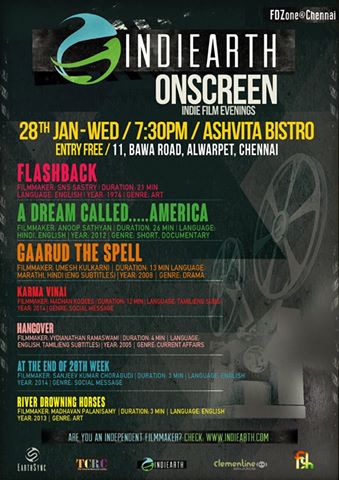
The next screening of short films by Indiearth in association with TCRC is happening at Ashvita Bistro,Chennai on the 28th of january 2015. Post screening, we will have a discussion on various styles and techniques involved in short film making with the filmmakers – Madhavan Palanisamy, Arun Mritunjay, Sanjeev Kumar, Madhan Kodees and Vydianathan Ramaswami who would be attending the screening.

ENTRY FREE!

SMS ” Short film ” with your name and email id to 9791088189.

The Short films to be screened are as follows:

1. FlashBack
Filmmaker: SNS Sastry
Duration: 21 min
Language: English
Year: 1974
Genre: Art

The film is a survey of the documentary film movement in India . We hear views of Films Division filmmakers S. Sukhdev and S N S Sastry before the Emergency and close to the end of their lives talking about documentary.

2. Gaarud The Spell
Filmmaker: Umesh Kulkarni
Duration: 13 min
Language: Marathi, Hindi (English Subtitles)
Year: 2008
Genre: Drama

The Spell gives us, in the form of a long tracking shot, a fascinating insight into what happens behind the doors of a block of tenements near the station in a small Indian town inhabited by people of differing backgrounds but all on the seamy side of life. Very briefly, we share their very personal lives. The camera takes us to the kitchens, the living rooms and even the toilets and the bedrooms of the inhabitants. The film won two national awards, one for best cinematography, and the other for best sound design. It received the best film award, the Golden Conch at MIFF, 2010.The film was also awarded the PATTON award for Best Indian Film at the 7th Kalpanirjhar International Short Fiction Film Festival, Kolkata.’Gaarud’ has been screened at more than 25 international film festivals, including the prestigious Rotterdam, and Vila de condo.

3. A Dream called……..America
Filmmaker: Anoop Sathyan
Duration: 26 min
Language: Hindi, English
Year: 2012
Genre: Short, Documentary

‘A Dream called America’ is a documentary made on Shahbaz, a 15 year old boy from Gujarat, India. He is the third among the five children of his father Aftab who makes a living by repairing cycles on a footpath. Shahbaz had studied in the US for a year on a scholarship, where he was hosted by an American couple. The one year he spent in US changed his attitude as he experienced a very comfortable and carefree life than his real home. After reaching India, he badly wants to go back and settle in US, leaving his parents in a dilemma.

Trailer & info: http://www.anoopsathyan.com/

Awards
– Best student film, Mumbai International Film Festival, India 2012
– Best documentary film, 4th International Children Film Festival – Lucknow, India 2012
– Silver award for Best student documentary, Indian Documentary Producers’ Association(IDPA) 2011
– Silver Owl for best documentary, CUT.IN Film Festival, Tata Institute of Social Sciences, Mumbai 2011

Official Selection
– Jeevika: Asia Livelihood Documentary Festival 2011 – NewDelhi, India
– Open St. Petersburg Student Film Festival ‘Beginning’ 2011 – Russia
– CHAGRIN Documentary Film Fest 2011 – USA
– OAXACA International Film Fest 2011 – Mexico
– Mumbai International Film Festival 2012 – India
– Al Jazeera International Documentary Film Fest 2012 – Qatar
– Globians DOC FEST 2012 – Germany

4. Hangover
Filmmaker: Vydianathan Ramaswami
Duration: 4 min
Language: English, Tamil (English subtitles)
Year: 2005
Genre: Current Affairs

This short film deals with the flip side of college festivals in terms of excess inflow of sponsorship revenue leaving behind a trail of unwarranted usage of plastic and other environmentally hazardous waste.

5. Karma Vinai
Filmmaker: Madhan Kodees
Duration: 12 min
Language: Tamil (English subs)
Year: 2014
Genre: Social Message

Two drunk friends meet a couple while passing through a bus stop at mid night. they drop them at bus stand, driver doesn’t care who are they as he was busy drinking while driving. when he sees both when they get down he gets disturbed.

http://www.indiearth.com/ViewTrailer.aspx?TrailerID=b10fd7dc-3d4a-40a9-9dbf-e1f5fae447f9

6. At the End of 20th Week
Filmmaker: Sanjeev Kumar Choragudi
Duration: 3 min
Language: English
Year: 2014
Genre: Social Message

‘At the End of 20th Week’ is a short film aimed at social awareness about Abortions and Female Infanticide. It portrays the pain of unborn female children. Our intention was not to get applauded or acclaimed by critics. Our intention was to take the veil of discrimination off the faces of people those who prefer sons over a daughters and who doesn’t accept life as a gift but choose to end it because it took a female form.

A beautiful young girl who is peacefully enjoying the warmth and love from an unknown person gets tortured by also another unknown person in different ways. The girl cannot escape the wrath and stays there suffering. The bed which she assumed as a safe place suddenly turns into an Inferno. The person who shared the love and warmth is no more protecting her. She dies in the end and then we identify that it’s not just another girl but she is the representation of a female fetus. And all the different methods are nothing but methods of Abortion. In the end the young girl being pulled out of the bed symbolizes the delivery method of taking a baby out of the womb. She is killed and then we see the statement “Hell begins for women in India ‘At the End of 20th Week’” It is at the end of 20th week one can identify the gender of the foetus. In most of the cases it can be easily identified at the end of 13th week which on the other hand depends on the position of the fetus. Hence the title was decided as 20th week because irrespective of the position of foetus.

7. River Drowning Horses
Filmmaker: Madhavan Palanisamy
Duration: 3 min
Language: English
Year: 2013
Genre: Art

This film blends elements of fashion and theatre to narrate a complex-relationship situation.


Indie Film Screenings by Indiearth in association with TCRC in Chennai

Indiearth


Indiearth and TCRC brings an Evening of Short Films:
A collection of freshly picked award winning films from the Films Division that speak of the various interesting nuances of short film making and documentary cinema; generating profound interest in captive audiences who are either new or seasoned non-mainstream film buffs.

Also included are 2 latest shorts by upcoming filmmakers of today. The screening will be followed up by a discussion led by IndiEarth on “Why short films and documentaries are important; to be made and screened to audiences”.

THROUGH A LENS STARKLY
Kuldeep Sinha
Genre: Arts, Cinema
Year: 1992
Duration: 33 minutes
Language: English

During the 100 years of cinema in India, the documentary films have acheived a tremendous growth and Film Division has played a major role in the movement of documentary films in India. The film details the systematic growth of documentary filmmaking.

YES WE MAKE THEM SHORT
Baba Mazgavkar
Genre: Mass Communication Media, Cinema
Year: 1990
Duration: 13 minutes
Language: English

A film emphasising the importance of short films which generallyare not seen by the general audience. Short films can also beinterestingly made. It is through short films that cinema has undergone various innovations and experiments.

INDIA THROUGH THE LOOKING GLASS
Siddharth Kak
Genre: Arts, Cinema
Year: 1990
Duration: 33 minutes
Language: English

Here is a history of the Indian documentary film – from thecoming of cinema to India at the turn of the century to its present development. Excerpts of numerous documentaries areincluded. This is was the opening film at the Bombay International Film Festival

ALFIYA
Satyarth Shaurya Singh
Genre: Shorts, Social Awareness
Year: 2014
Duration: 15 minutes
Language: English, Hindi (English Subtitles)

This is a film that explores a single day in the life of it’s protagonist, Alfiya. The film follows an indefinite progression: an oscillation between the social world and the inner life. Alfiya, a young girl in her twenties, grapples with blurred lines of perception which as likely stem from a ‘ delusional disorder’, or a phobia, to an unshakable dream state.

SILENT NIGHT
Rajdip Ray
Genre: Short, Social Awareness
Year: 2014
Duration: 3 minutes
Language: English

Christmas is the season of joy and giving. But amidst all the happiness and brightly coloured lights are the hidden pangs faced by more than 11 million street children in the largest democracy of the world. Silent Night takes the viewer on a trip around the streets of Calcutta, with one such child, on Christmas eve.

End of an era: K.Balachander (1930-2014)

Indian Cinema lost one of its greatest contributors on December 23rd 2014, K.Balanchander or KB sir as he is fondly known to many. The recipient of the Dada Saheb Phalke award, his career spanned for over 45 years. Besides directing over 100 films, he has also donned the role as writer, producer and even an actor. Each of his films were ahead of its times with radical offbeat themes and with strong women characters. The same was true with the many serials that he had directed and produced for the small screen. He is known for launching and mentoring several top actors and technicians in Indian Cinema including Kamal Hassan, Rajnikanth and Sri Devi.

Here is what the national newspaper The Hindu  has to say about this great man.

http://http://www.thehindu.com/entertainment/he-took-tamil-cinema-beyond-herocentric-creations/article6719996.ece?homepage=true&theme=true

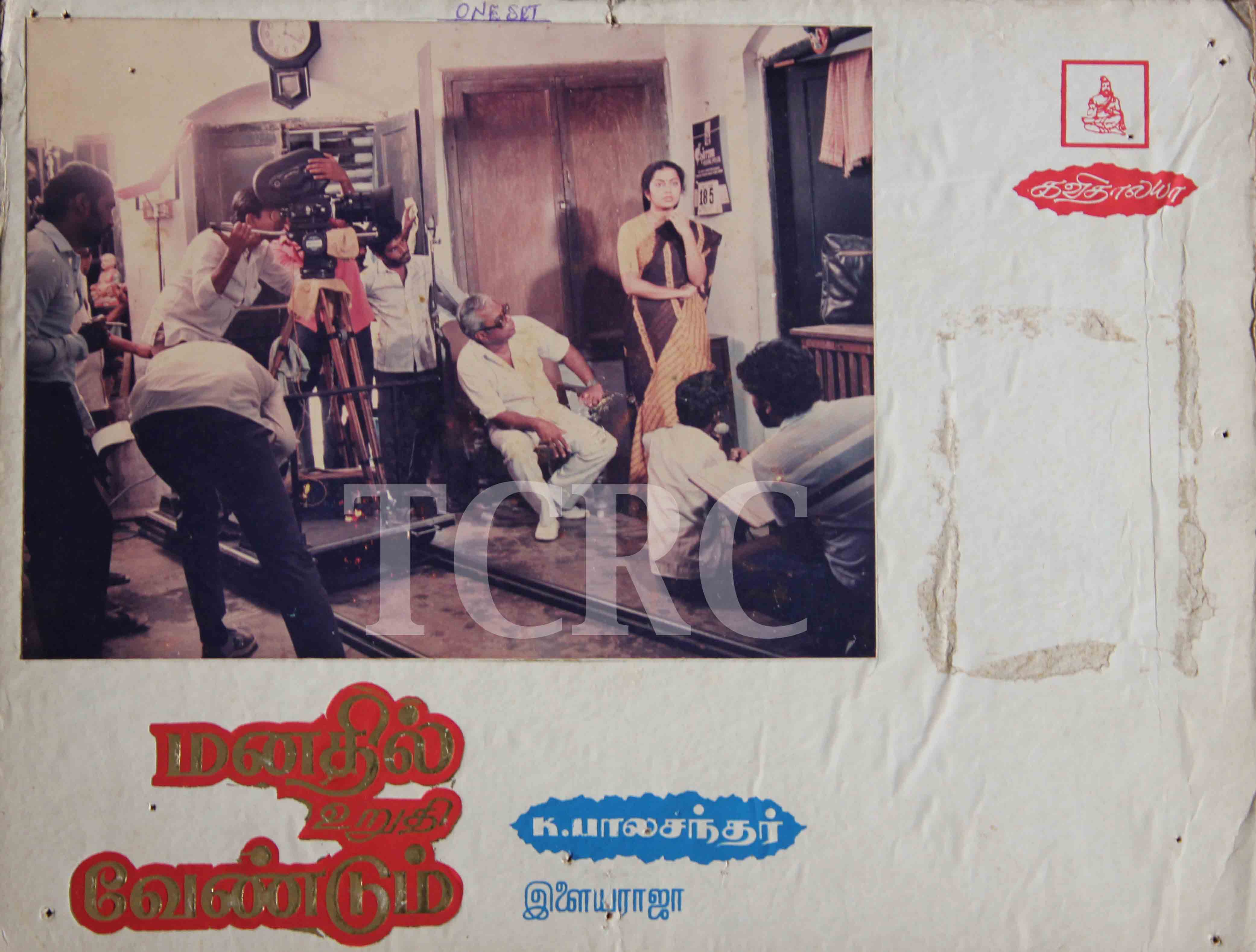
As our small tribute to KB sir we would like to share a lobby card from our collection. It is from the film Manadhil Uridhi Vendum (1987). The film revolves around the strong willed female protagonist Nandhini (played by Suhasini) who over comes many hurdles  and finally dedicates her life to her profession as a nurse.

The lobby card in itself is unique with the working still from the shoot as its image. We get to see the crew and the man himself directing the female lead Suhasini in this picture.

manadhi-urudhi-vendumTCRC


Sir Richard Attenborough on working with Satyajit Ray in “Shatranj Ke Khilari”: Old DD Bangla interview

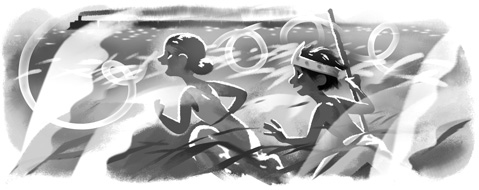
Today is master filmmaker Satyajit Ray’s 92nd birthday and Google’s paid a lovely tribute through a doodle based on his film “Pather Panchali.” For those who missed it, here’s what the doodle is all about:

Google doodle on the occasion of Satyajit Ray’s 92nd birthday (2nd May 2013).

We at TCRC also chanced upon a YouTube video of an old show on DD Bangla where Sir Richard Attenborough, director of “Gandhi,” talks about the experience of working with Ray on “Shatranj Ke Khilari.” The film, released in 1977, was based on Munshi Premchand’s short story of the same name and was narrated by  Amitabh Bachchan. The cast included actors such as Sanjeev Kumar, Saeed Jaffrey, Shabana Azmi, Farida Jalal, Amjad Khan, Richard Attenborough, Victor Banerjee, Farooq Shaikh and Tom Alter. Do look out for Sir Attenborough’s views on cinema as an art form and Ray’s soundbites!

Dibakar Banerjee: Discovering “good” international cinema through a search for porn!

We at TCRC are always looking for fabulous written material on films and their makers, and it is during one such search that we found Jai Arjun Singh‘s absolutely delightful piece on Dibakar Banerjee, the director of films such as “Khosla Ka Ghosla,” “Oye Lucky Lucky Oye,” “Love, Sex Aur Dhokha” and “Shanghai.” All too often, we find directors giving interviews about their latest film and such interviews invariably end up including a couple of stock questions about the process of writing and making films. But Jai Arjun’s story for The Caravan magazine focuses entirely on Dibakar Banerjee – the man, his influences and his creative process. Discursive and detailed, the piece builds a fascinating, multi-dimensional picture of the filmmaker who has made some truly path-breaking yet commercially successful films. Sample this:

For the young Dibakar, “getting his hands dirty” meant being part of a street-smart lifestyle that was far removed from the cliché of the armchair intellectual. And that early life is inseparable from what he is today. Even “good” international cinema came into his personal orbit through what was an adolescent’s rite of passage: at age 17, he and four friends rented what they thought would be a porn film called Confessions of a Taxi Driver to watch in a darkened room in Jhandewalan—and ended up with Martin Scorsese’s Taxi Driver instead. “We closed the drapes, waited for the obligatory hardcore moment but nothing happened—and by the end, here were five guys from a typical Karol Bagh setting, riveted by what they were seeing.”

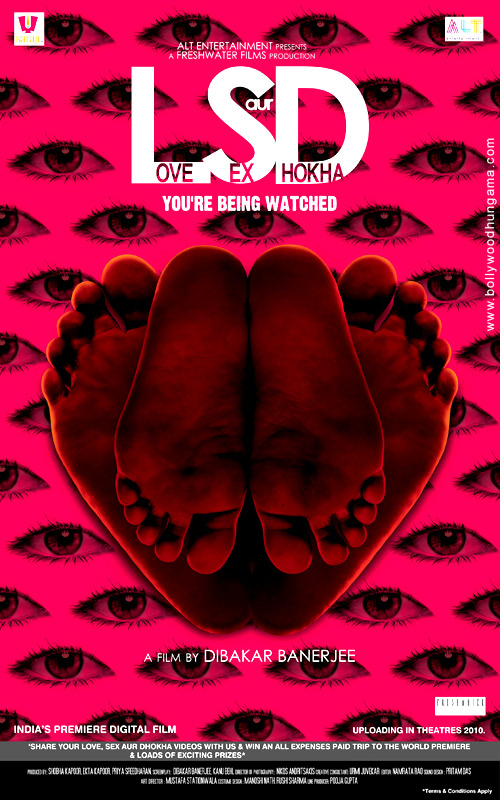
Love Sex Aur Dhokha (LSD)  |  Hindi  |  2010

Love Sex Aur Dhokha (LSD) | Hindi | 2010

Truth be told, this profile of Dibakar Banerjee is easily one of the best (and longest) pieces of writing about a filmmaker that we’ve come across in the recent past (click on the image above to read the full story). We at TCRC would like to doff our hats in salute to both filmmaker Dibakar Banerjee and writer Jai Arjun Singh.

The Changing Face of Film Distribution & The 50 Best Undistributed Films of 2012

The current model of distributing movies (i.e., the use of “release windows” to ensure that films don’t eat into each others’ businesses and the staggering of the release of material across cinema, TV, home video, etc) is repeatedly dissed as archaic and incongruent to present day trends where people live their lives, shuffling from one screen to another. Chris Jones, who runs the London Screenwriters’ Festival, has an interesting blog post about the same topic, in which he lists down the key problems plaguing film distribution today:

1.    The high impact life of your film is 14 days, max. Any buzz you create, any momentum you build, is now created on a global scale. Social media does not know boundaries – posters, trailers, interviews, articles – all go global in a moment, and ideally viral. I believe that you can only get REAL buzz for your project for a few weeks… After those two weeks, internet dies back considerably.

2.    It follows then that you need to get your movie out as quickly as possible, and in as many territories as you can, and finally on all devices (TV, web, phone etc.). Ideally this would happen on the same day too.

3.    If we create buzz and then fail to deliver an easy way for people to legally watch our films, we are simply begging people to rip and upload our films to share. I don’t believe these people think of themselves as pirates. This isn’t about money, it’s about us promising something amazing and then failing to deliver a way to watch the film legally and easily.

4.    No single platform, aside from iTunes, seems to work well as yet. And iTunes being Apple owned, is housed a ridiculous walled garden.

5.    Forget theatres, they are operating in a different century.

As a film maker, all this means that I will get very little back from current distribution methods and my film will get seen mostly via illegal downloads.”

Given that film distribution is a complicated quagmire, some great films don’t end up getting distributed at all. For instance, late last year, the Film Society of Lincoln Center’s blog FilmComment had put together a list of the 50 best undistributed movies in 2012. The list (click here to see the entire list) features movies from across the world and is an eye-opener in many ways.

“Gebo and the Shadow” | Manoel de Oliveira | Portugal/France

We at TCRC are huge fans of anything cinema and it’s always a joy to see the internet ensuring that we hear of such little-known (or distributed) gems. Follow this space, for we intend to showcase many more of these undiscovered beauties!


Understanding Devdas

The story of Devdas has got to be one of the most popular tales to have been embraced by Indian cinema. There have been a number of versions in a variety of languages. Some movie versions have remained largely faithful to Sarat Chandra Chattopadhyay’s original novella, while others have added their own twists and turns, reinterpreting the original story to suit the demands of the time period in which they were set.

Dilip Kumar & Shahrukh Khan as Devdas. Photo Courtesy: IBN Live.

This week, we at TCRC bring you a couple of pieces of academic writing on Devdas. The first is “The Devdas Phenomenon” by Corey K Creekmur, who is the head of Film Studies at the University of Iowa. He writes about the three versions of Devdas in Hindi cinema and also, discusses the original book on which these interpretations were based (click here to read his paper).

The second is “Devdas: India’s Emasculated Hero, Sado-masochism and Colonialism” by Poonam Arora, who is a professor of English at the University of Michigan – Dearborn. She writes about how the “Devdas narrative discursively construct a prototypical colonial male subjectivity.” (click here to read her paper).

And here’s a clip from PC Barua’s “Devdas”. This was released in 1935.