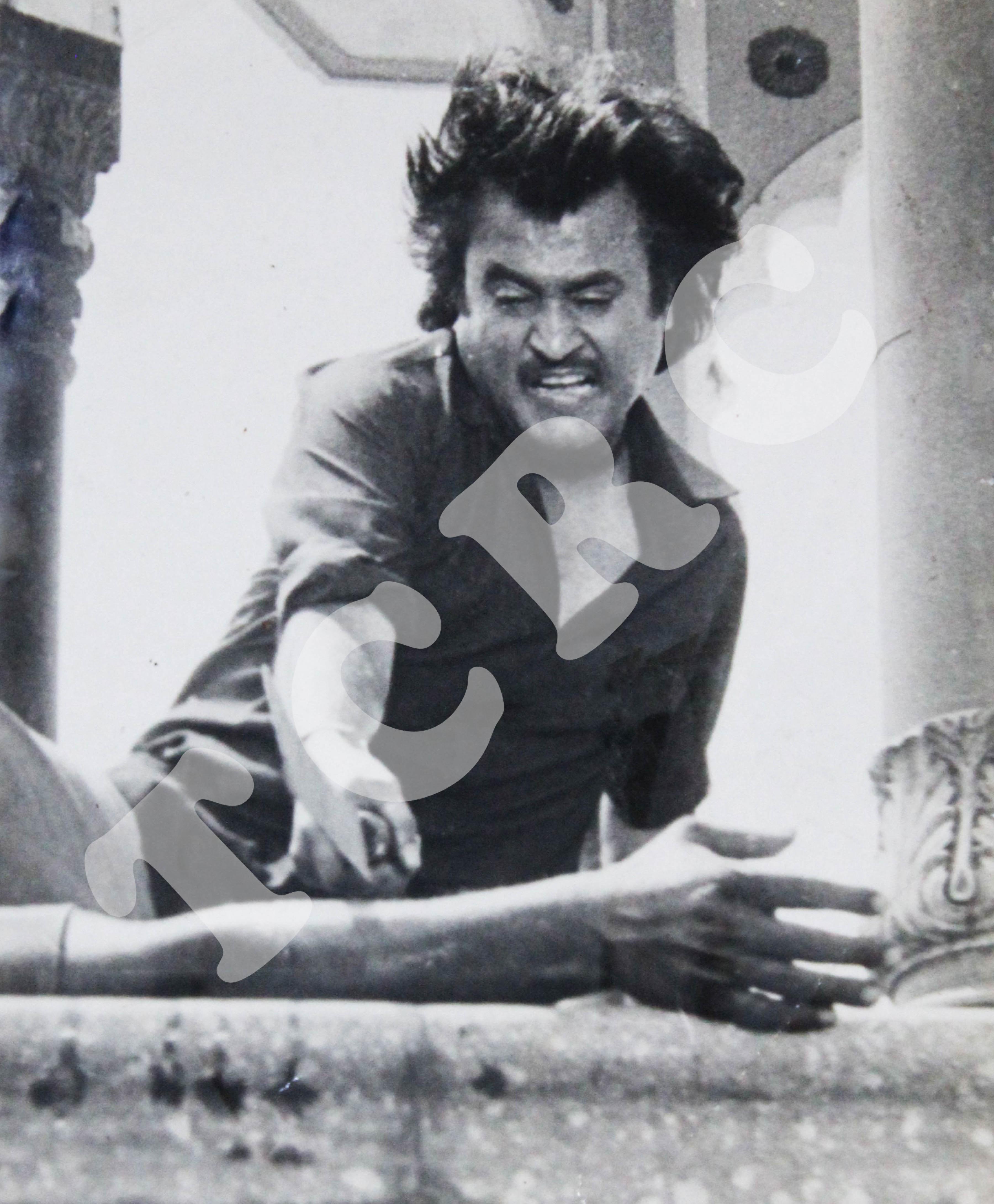
The Madras Film Industry in the 1960s: On the sets of “Thillaanaa Mohanambal” in a French documentary!

Today, we bring to you a clip from “L’inde Fantôme” (Phantom India), a documentary film made by Academy Award-winning French filmmaker Louis Malle. This is an excerpt from “Choses Vues A Madras,” which was the second episode of the documentary. Focusing on the Madras film industry in the late 1960s, the excerpt features footage shot on the sets of the 1968-released, classic Tamil film “Thillaanaa Mohanambal,” starring Sivaji Ganesan, Padmini, Balaiah, Manorama and others. Directed by AP Nagarajan and written by Kothamangalam Subbu, the film and its songs continue to be remembered even today.

What we found most interesting was the commentary in French (you can turn on the English subtitles by clicking on the “Captions” button in the bottom bar on the YouTube video). The commentator, at one point, refers to Sivaji Ganesan as the “Indian Belmondo.” “Belmondo” here is a reference to Jean Paul Belmondo, the French actor who was a prominent face in the New Wave films that were made in France in the 1960s. He continues to be remembered for his portrayal of the character Michel Poiccard in Jean Luc Godard’s extremely influential film “Breathless” (“À bout de souffle” in French). “Breathless” was a path-breaking film that inspired many filmmakers through its brilliant use of the jump cut. So, while the comparison to Belmondo is flattering, it’s important to remember that Sivaji Ganesan had made his mark with “Parasakthi” in 1952, a good eight years before Belmondo broke out with “Breathless” (1960).
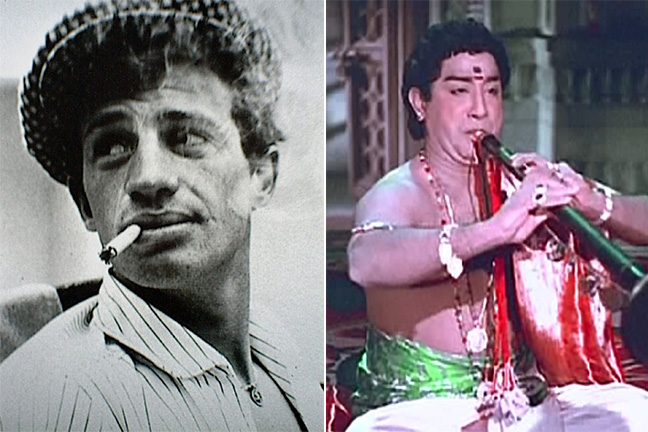
Jean Paul Belmondo in "Breathless" | Sivaji Ganesan in "Thillaanaa Mohanambal"

Jean Paul Belmondo in “Breathless”   |    Sivaji Ganesan in “Thillaanaa Mohanambal”

Do watch the clip and let us know about your thoughts on Louis Malle’s commentary and his take on Indian films. You can leave a comment or write to us at tcrc.india[at]gmail[dot]com.

The story of Lena Chettiar, the used-car dealer who turned into a film producer!

We at TCRC are always looking out for interesting trivia about yesteryear film personalities. Also, given that our search analytics told us that people were looking into the TCRC blog for information on one of Tamil cinema’s earliest superstars, actor-singer M K Thyagaraja Bhagavathar, we thought of putting together a separate post about him. We started looking for information about his 1934-released debut film “Pavalakodi.” But it was one of the producers of “Pavalakodi”, one Mr. Lena Chettiar, who ended up piquing our curiosity.

“Prabhavathi” (Tamil, 1942) was produced under the Krishna Pictures banner promoted by Lena Chettiar. Photo Courtesy: The Hindu.

Writing about the film “Prabhavathi” (Tamil, 1942) in The Hindu’s Blast From The Past column, Randor Guy profiles Lena Chettiar (click here to read the post about “Prabhavathi”):

S. M. Letchumanan Chettiar, popularly known as Lena Chettiar, was a powerful figure in the world of Tamil Cinema. A native of Chettinad, he was a ‘drama contractor’ in his early days, staging plays in various southern parts of the state by hiring freelancing actors and selling tickets for their plays. He also dealt in used cars and was the first man in this part of the world to print and circulate handbills about used cars in Tamil. Most of the Naattukottai Chettiars were wealthy, but did not know English. They found these handbills a novelty and encouraged Lena Chettiar.”

Randor Guy also reports that it was Lena Chettiar who convinced M K Thyagaraja Bhagavathar to not venture into production himself and stepped in to produce it for him:

M. K. Thyagaraja Bhagavathar’s (a top-ranking freelancing stage actor then) play with another stage actress S. D. Subbulakshmi, ‘Pavalakodi’, was a raving hit not only in the Tamil-speaking areas of South India but also in Ceylon. Bhagavathar was seriously planning to enter movies with Pavalakodi and Lena advised him against venturing into production on his own and convinced Bhagavathar to team up with him. With his rich pals, Lena produced Pavalakodi in 1934, which marked Bhagavathar’s film debut and proved to be a major hit.”

Lena Chettiar produced numerous films under various labels and eventually, started promoting the ‘Krishna Pictures’ banner in the early part of the 1940s under which he produced films in Tamil and Telugu for nearly 15 years. The last film that he produced, before the founding of Krishna Pictures, was “Krishnan Thoothu,” which was the Tamil debut of Telugu film star Kannamba. In his post about “Krishnan Thoothu,” Randor Guy mentions Lena again:

 He wielded enormous influence beyond the confines of the movie business in official and political circles. Soon after this film, he promoted his own unit, Krishna Pictures, in T. Nagar. His office on Thanikachalam Chetti Road (named after the noted Justice Party leader O.T. Chetti) was indeed a landmark of that area with its Krishna temple besides the building put up by Lena.”

Producers seldom get mentioned in serious writing about cinema. But in the early days of cinema in India, we at TCRC have noticed that often it was the producers who  moved mountains to fuel innovation and creativity. Lena Chettiar seems to be one such gentleman and we at TCRC are glad to bring back to public memory, stories of such film entrepreneurs.

RARE: Original LP record of Bharathiraja’s “16 Vayathinile,” the first Tamil film to be shot completely outdoors

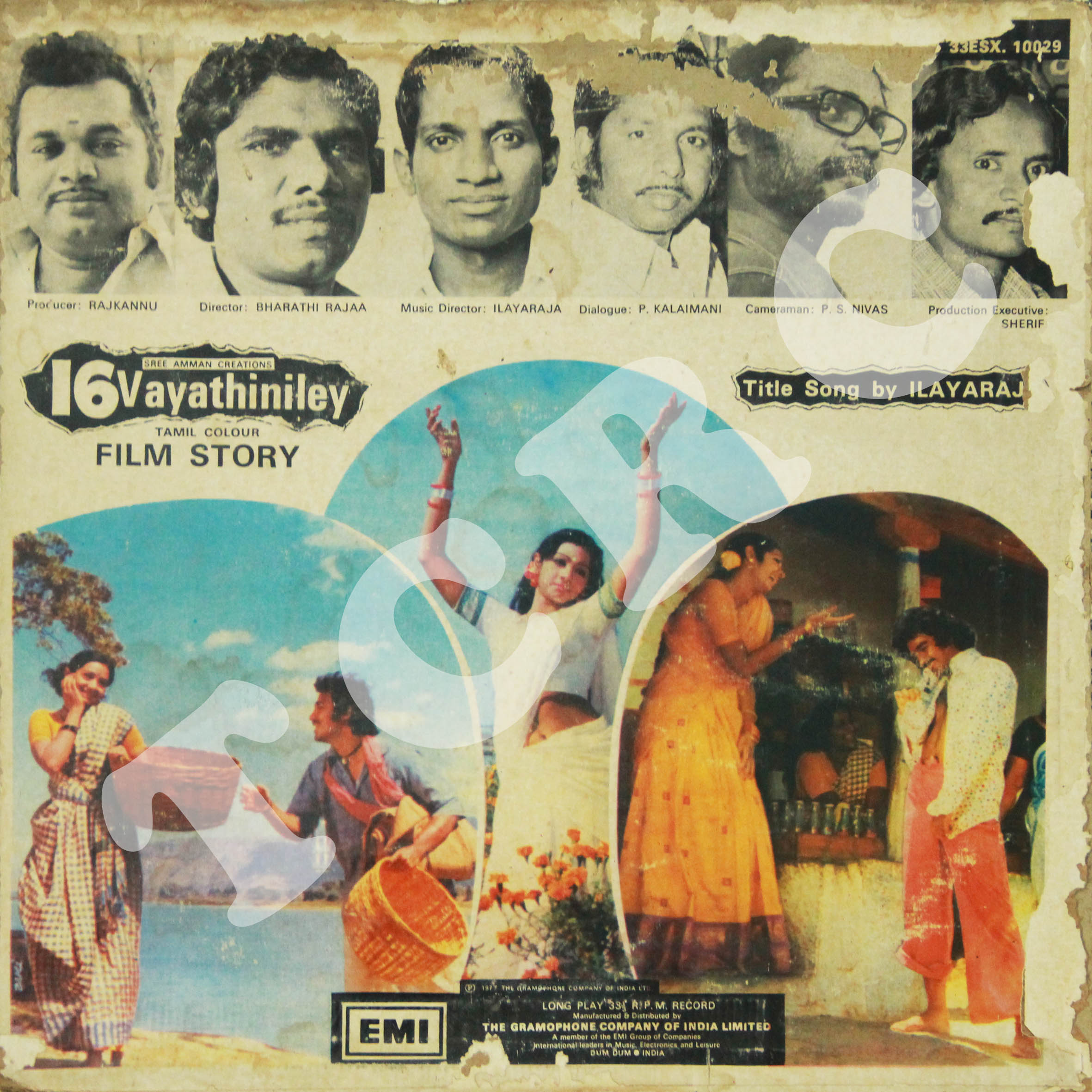
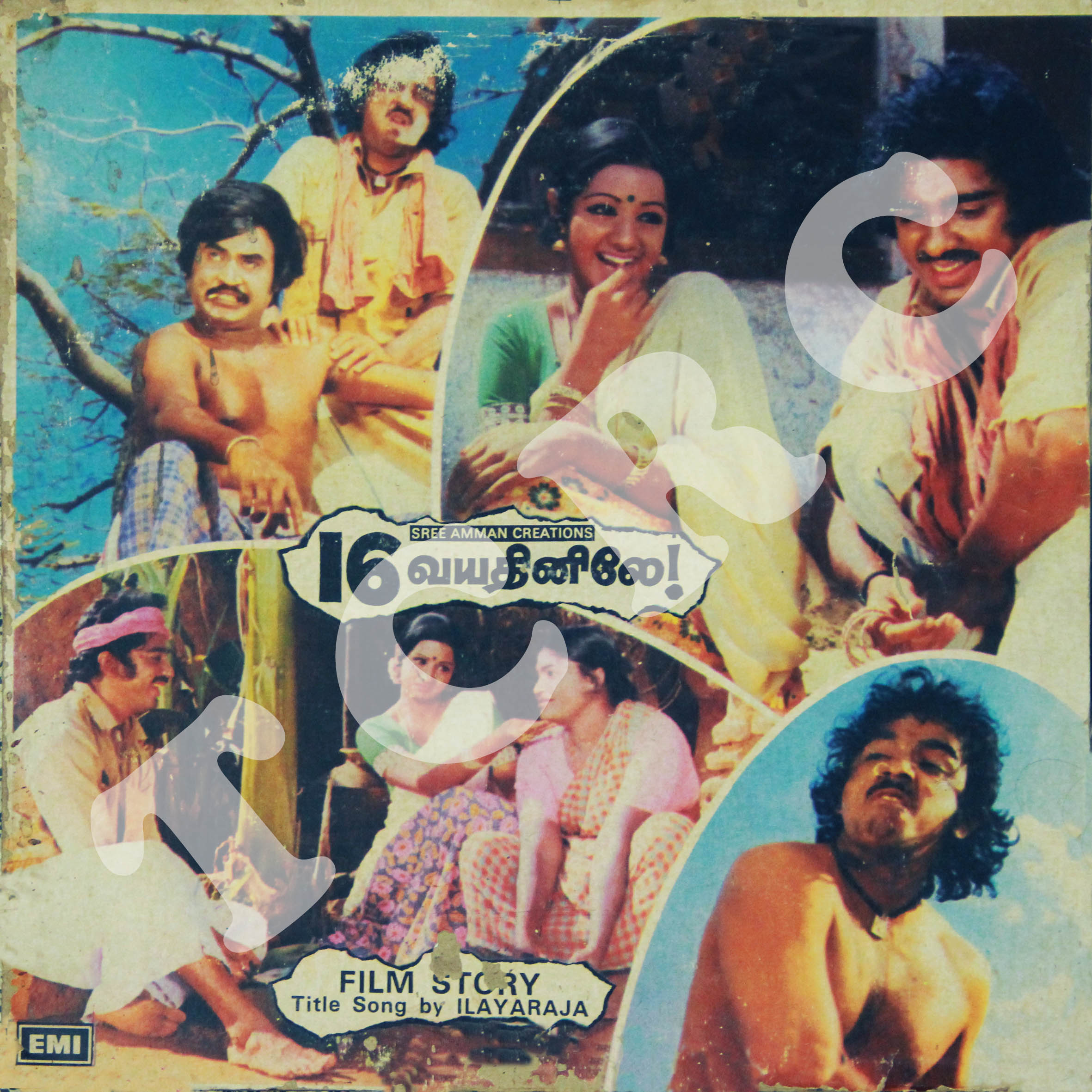
On 16th September 1977, Tamil film audiences watched their cinema change with the release of Bharathiraja’s debut feature film “16 Vayathinile” starring Kamal Hassan, Sridevi, Rajnikanth, Kanthimathi and Goundamani. The film is now considered to be a landmark venture in Tamil cinema, as it spurred numerous filmmakers to return to their roots and base their stories in the villages of Tamilnadu. At a time when films meant sets and studios, Bharathiraja is said to have shot all of “16 Vayathinile” outdoors. The movie also marked the debut of veteran comedian Goundamani and was Superstar Rajnikanth’s first colour film. It went on to win 4 Tamilnadu State Film Awards, 1 South Filmfare Award and 1 National Film Award, across various categories. Bharathiraja’s powerful depiction of village life was the highlight of his directorial debut, which is still remembered for Rajnikanth’s stylish portrayal of  the character ParattaiKamal’s heartwrenching potrayal of the character Chappani and Sridevi’s delicate performance as Mayil.

The film had a musical score composed by Ilaiyaraaja and singer S Janaki won a National Award for Best Female Playback Singer for her rendition of Ilaiyaraaja’s evergreen classic “Senthoora Poove.” Given below are the photographs of the original LP record of “16 Vayathinile.”

LP Record cover (front) of "16 Vayathinile"   | Tamil | 1977

LP Record cover (front) of “16 Vayathinile” | Tamil | 1977

LP record cover (back) of "16 Vayathinile" | Tamil | 1977

LP record cover (back) of “16 Vayathinile” | Tamil | 1977

In 1979, Bharathiraja remade the film in Hindi. The Hindi version was titled “Solva Sawan” and starred Sridevi, Amol Palekar and Kulbhushan Kharbanda.

Kamal Hassan, The Singer: “Paneer Pushpangale” in “Aval Appadithan” (Tamil, 1978)

We at TCRC have a large number of still photographs shot during the production of various films that have been made by Tamil filmmakers across the years. We are in the process of digitizing, sorting and cataloguing them. One of the films for which most of this work has been completed is C Rudhraiya’s “Aval Appadithan” starring Kamal Hassan, Rajnikanth, Sripriya and Saritha. In fact, the header image that you see at the top of this page is a production photograph from “Aval Appadithan,” which was released in 1978.

The movie, praised by many for being far ahead of its times in terms of both treatment and technique, had numerous English dialogues and frequently employed jump cuts (two or more shots taken from only slightly different angles being placed sequentially, so as to communicate the passing of time in an abrupt manner). Shot in black and white, “Aval Appadithan” had only three songs, all of which were composed by Ilaiyaraaja.

One of the songs, titled “Paneer Pushpangale,” was written by Gangai Amaren and was sung by Kamal Hassan himself. Now, we’re used to Kamal singing his own songs. But it’s quite refreshing to hear Kamal croon a ‘Raaja Sir’ (as Ilaiyaraaja is known in the Tamil film industry) number from that era. In fact, when we heard the song for first time, we couldn’t even identify Kamal’s voice. Check it for yourself. Here is “Paneer Pushpangale” from “Aval Appadithan”:

RARE: Original LP of Sivaji Ganesan’s “Gauravam” (1973), in which he plays a character called Rajnikanth!

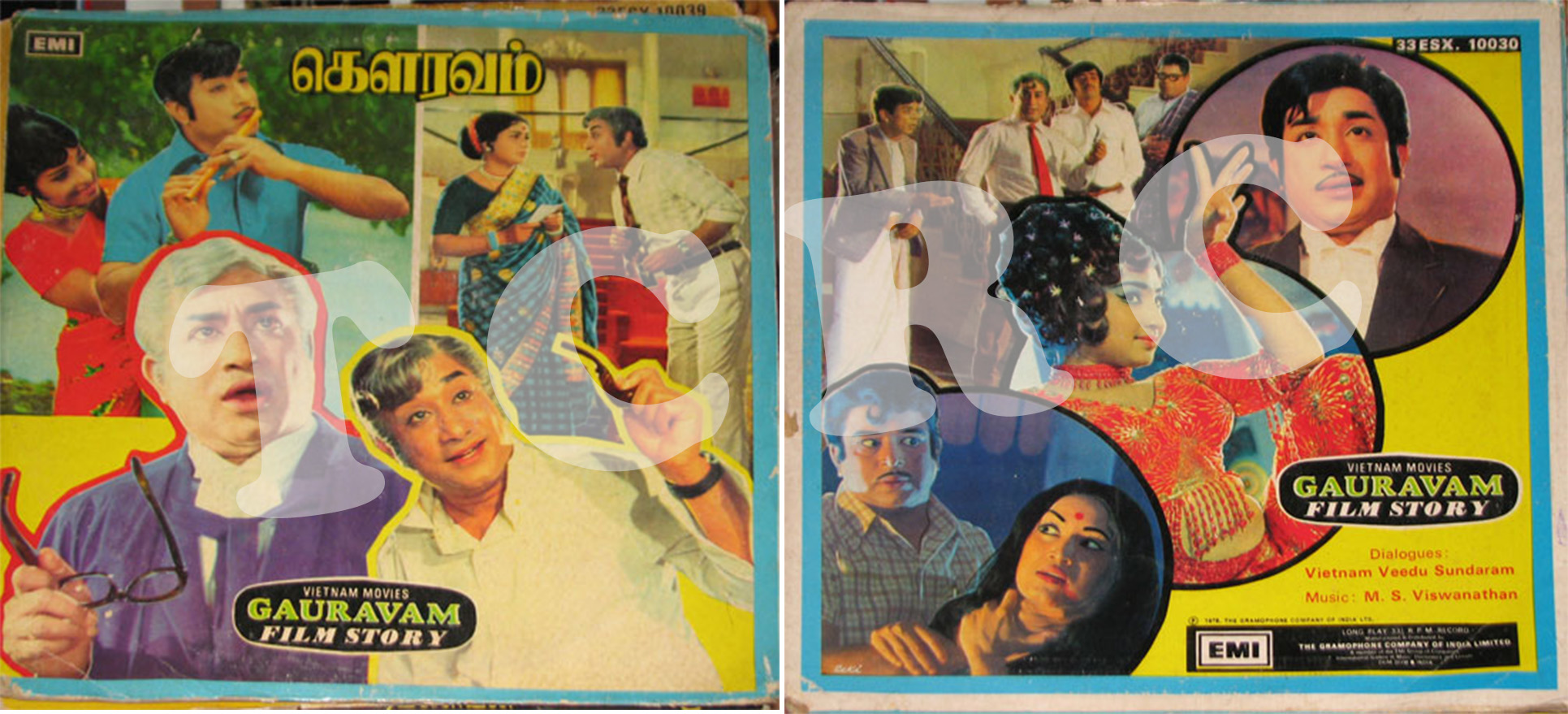
This week, we bring from you yet another gem from the TCRC archives. Given that the Prakash Raj-produced, Radha Mohan-directed “Gouravam” has just released, we thought it would be fun to revisit the original “Gauravam” starring Sivaji Ganesan, Nagesh and ‘Major’ Sundarrajan, which was released in 1973. Interestingly, in the old “Gauravam,” Sivaji plays the role of Rajnikanth, a senior lawyer. When seen against that fact that superstar Rajnikanth’s original name is Shivaji (Shivaji Rao Gaikwad), the nomenclature system seems to come fulls circle! Given below is the photograph of the original LP set of Sivaji Ganesan’s “Gauravam”:

"Gauravam"  |  LP Record  |  Tamil  |  1973

“Gauravam” | LP Record | Tamil | 1973

“Gauravam” was directed by ‘Vietnam Veedu’ Sundaram and the music was scored by MS Vishwanathan. “Vietnam Veedu” was Sundaram’s first  stage play for Sivaji Ganesan’s theatre company Sivaji Nataka Mandram. The play was staged for the first time in 1965 and was a massive hit. It was later turned into a movie as well.

The First Kannada Talkie: “Sathi Sulochana” (1934)

Keeping in line with our focus on the regional cinemas of Southern India, we at TCRC bring to you a piece published by The Hindu in 2004, where historian Randor Guy writes about the first ever Kannada talkie film, “Sathi Sulochana.” It was released in 1934 and featured Rattihalli Nagendra Rao and MV Subbiah, who were popular theatre artists at that time. The film was directed by Yaragudipati Varada Rao, who cast himself in  an important role in the movie. YV Rao was also the director of “Chintamani,” the record-breaking Tamil film that was released in 1937. YV Rao’s “Chintamani” was the first Tamil film to run continuously for a year and is said to have played an important role in catapulting actor-singer MK Thyagaraja Bhagavathar to stardom.

In his piece on Sathi Sulochana, Randor Guy offers some very interesting trivia about the production of the movie:

Sathi Sulochana” took two months to be completed. Shooting was done in natural sun light and by using man-made reflectors. Shooting with artificial lighting in that town was difficult. Mirrors were carried by camera-assistants on their shoulders to reflect sunlight onto the set to provide back-lighting and the men had to keep moving, shifting the mirrors to be in alignment with the moving sun! The sets had no ceiling and were covered by a white cloth.”

MV Subbiah Naidu in “Sathi Sulochana” (1934), the first Kannada talkie

We at TCRC are proud to feature such gems from our illustrious history of cinema. Please feel free to write to tcrcindia[at]gmail[dot]com with your feedback and suggestions.

RARE: Original LP record of Sivaji Ganesan’s “Thiruvarutselvar” (Tamil, 1967)

"Thiruvarutselvar"  |  LP Record - Front  |  Tamil  |  1967

“Thiruvarutselvar” | LP Record – Front | Tamil | 1967

"Thiruvarutselvar"  |  LP Record - Back  |  Tamil  |  1967

“Thiruvarutselvar” | LP Record – Back | Tamil | 1967

In our archives here at TCRC, we have the original LP records of numerous Indian films, right from the 50s to the 80s. Today, we share with you the photos of the LP record of “Thiruvarutselvar”, a Tamil film starring Sivaji Ganesan, Savitri, Muthuraman, KR Vijaya and others. It was released in 1967 and was directed by AP Nagarajan, the veteran filmmaker whose other hits include “Thiruvilayadal,” “Saraswathi Sabatham,” and “Thillana Mohanambal.” The music for “Thiruvarutselvar” was scored by KV Mahadevan and the lyrics were written by Kannadasan. Even today, one remembers P Susheela’s mellifluous rendition of “Mannavan Vanthanadi,” one of the most popular songs of the album.

In an interview with Mohan V Raman for The Hindu in April 2012, CN Paramasivan, the son of director AP Nagarajan had said that the overwhelming response to the re-release of “Karnan” was encouraging him to look into the restoration of some of his father’s films (click here to read that story). We at TCRC hope to see that happen.

Also, it must be mentioned here that the same team, i.e., actor Sivaji Ganesan, director AP Nagarajan and music director KV Mahadevan, came together for “Kandan Karunai,” which won KV Mahadevan the National Award for Best Music Direction in 1967, the same year in which “Thiruvarutselvar” was released. This was the first time that a National Award was constituted for the category of Music Direction. Since then, the most number of National Awards for Best Music Direction have been won by Ilaiyaraja and AR Rahman, i.e., 4 each.

T K Ramamoorthy of the Vishwanathan-Ramamoorthy duo passes away!

We at TCRC deeply mourn the demise of veteran violinist-composer TK Ramamoorthy. Along with MS Vishwanathan, he was responsible for some of the greatest songs produced by Tamil cinema, scoring music for evergreen classics such as “Kadhalikka Neramillai,” “Padagotti,” “Bale Pandiya,” “Karnan” and many others. The picture below is from an interview that he gave to The Hindu in November last year (click on the image to read that interview).

Violinist-composer TK Ramamoorthy. Photo Courtesy: The Hindu

May his soul rest in peace.

Missing PBS. Wishing Pran.

We at TCRC deeply mourn the demise of veteran playback singer PB Sreenivas. PBS’ lilting melodies, however, shall live on. Our favorite is “Kalangalil Aval Vasantham” from the 1961 Tamil film “Paava Mannippu,” which incidentally was the first South Indian film to win the National Award for the Second Best Feature Film.

At the same time, we at TCRC are glad to know that the Dadasaheb Phalke Award for Cinematic Excellence is being conferred on actor Pran this year and we extend our heartiest congratulations to one of Indian cinema’s finest villains. Given below is a compilation of some of Pran’s best moments on screen.


RARE: Production Stills from Mani Ratnam’s “Thalapathi”

Last week, we at TCRC had posted Arul Mani’s review of Baradwaj Rangan’s “Conversations with Mani Ratnam” and had promised to bring you some behind-the-scenes photos of the Rajnikanth-Mammootty starrer “Thalapathi.” So, here we go.

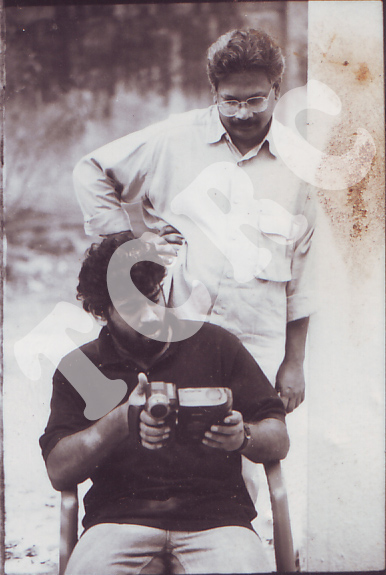
"Thalapathi" - Mani Ratnam with Santosh Sivan

Cinematographer Santosh Sivan with director Mani Ratnam on the sets of “Thalapathi.”

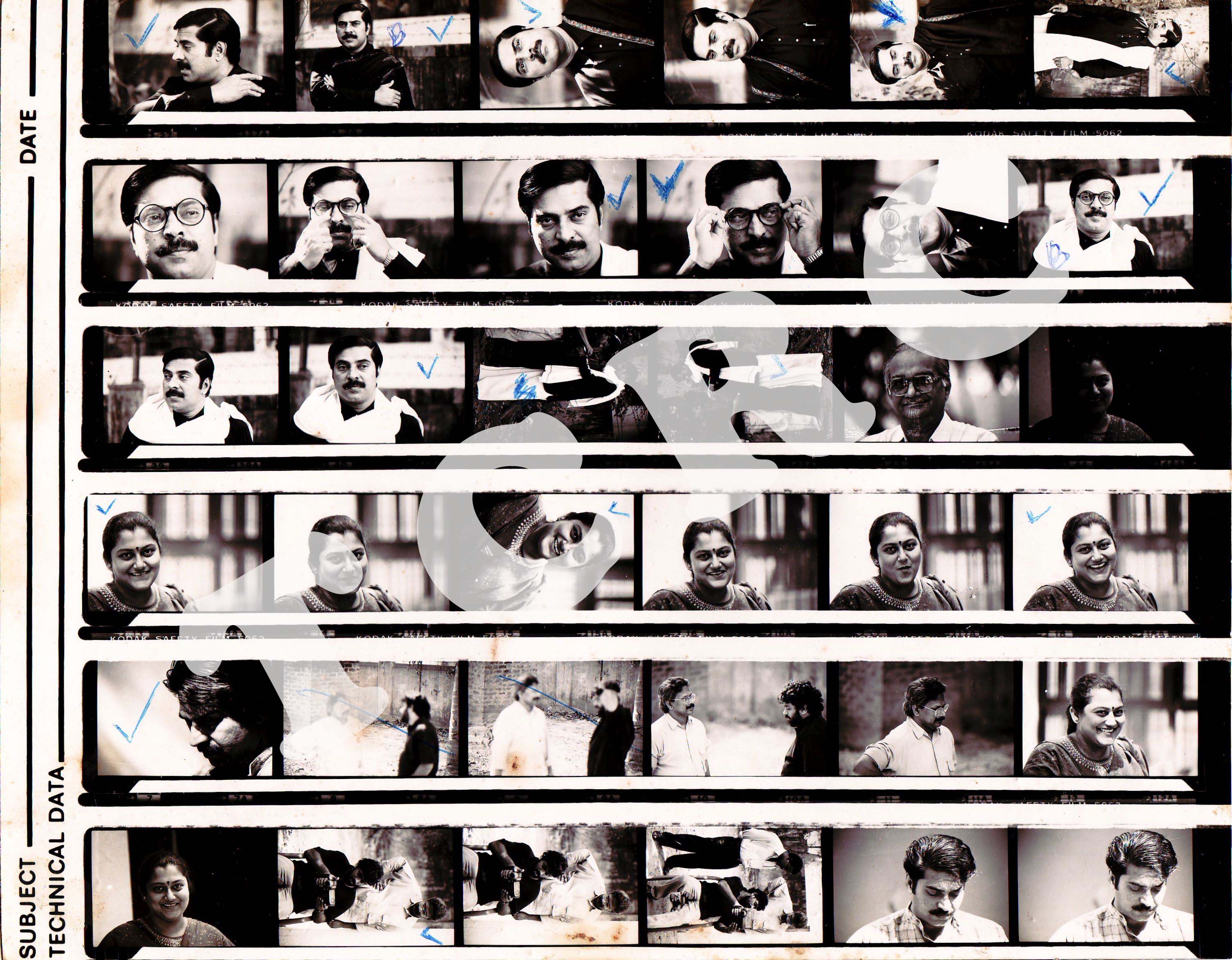
"Thalapathi" - Contact Sheet of Mamootty's Look Test

Contact sheet featuring Mamootty’s look test for Mani Ratnam’s “Thalapathi.”

Rajnikanth in an action sequence from Mani Ratnam's "Thalapathi."

Rajnikanth in an action sequence from Mani Ratnam’s “Thalapathi.”