Indie Film Screenings by Indiearth in association with TCRC in Chennai

Indiearth


Indiearth and TCRC brings an Evening of Short Films:
A collection of freshly picked award winning films from the Films Division that speak of the various interesting nuances of short film making and documentary cinema; generating profound interest in captive audiences who are either new or seasoned non-mainstream film buffs.

Also included are 2 latest shorts by upcoming filmmakers of today. The screening will be followed up by a discussion led by IndiEarth on “Why short films and documentaries are important; to be made and screened to audiences”.

THROUGH A LENS STARKLY
Kuldeep Sinha
Genre: Arts, Cinema
Year: 1992
Duration: 33 minutes
Language: English

During the 100 years of cinema in India, the documentary films have acheived a tremendous growth and Film Division has played a major role in the movement of documentary films in India. The film details the systematic growth of documentary filmmaking.

YES WE MAKE THEM SHORT
Baba Mazgavkar
Genre: Mass Communication Media, Cinema
Year: 1990
Duration: 13 minutes
Language: English

A film emphasising the importance of short films which generallyare not seen by the general audience. Short films can also beinterestingly made. It is through short films that cinema has undergone various innovations and experiments.

INDIA THROUGH THE LOOKING GLASS
Siddharth Kak
Genre: Arts, Cinema
Year: 1990
Duration: 33 minutes
Language: English

Here is a history of the Indian documentary film – from thecoming of cinema to India at the turn of the century to its present development. Excerpts of numerous documentaries areincluded. This is was the opening film at the Bombay International Film Festival

ALFIYA
Satyarth Shaurya Singh
Genre: Shorts, Social Awareness
Year: 2014
Duration: 15 minutes
Language: English, Hindi (English Subtitles)

This is a film that explores a single day in the life of it’s protagonist, Alfiya. The film follows an indefinite progression: an oscillation between the social world and the inner life. Alfiya, a young girl in her twenties, grapples with blurred lines of perception which as likely stem from a ‘ delusional disorder’, or a phobia, to an unshakable dream state.

SILENT NIGHT
Rajdip Ray
Genre: Short, Social Awareness
Year: 2014
Duration: 3 minutes
Language: English

Christmas is the season of joy and giving. But amidst all the happiness and brightly coloured lights are the hidden pangs faced by more than 11 million street children in the largest democracy of the world. Silent Night takes the viewer on a trip around the streets of Calcutta, with one such child, on Christmas eve.
End of an era: K.Balachander (1930-2014)

Indian Cinema lost one of its greatest contributors on December 23rd 2014, K.Balanchander or KB sir as he is fondly known to many. The recipient of the Dada Saheb Phalke award, his career spanned for over 45 years. Besides directing over 100 films, he has also donned the role as writer, producer and even an actor. Each of his films were ahead of its times with radical offbeat themes and with strong women characters. The same was true with the many serials that he had directed and produced for the small screen. He is known for launching and mentoring several top actors and technicians in Indian Cinema including Kamal Hassan, Rajnikanth and Sri Devi.

Here is what the national newspaper The Hindu  has to say about this great man.

http://http://www.thehindu.com/entertainment/he-took-tamil-cinema-beyond-herocentric-creations/article6719996.ece?homepage=true&theme=true

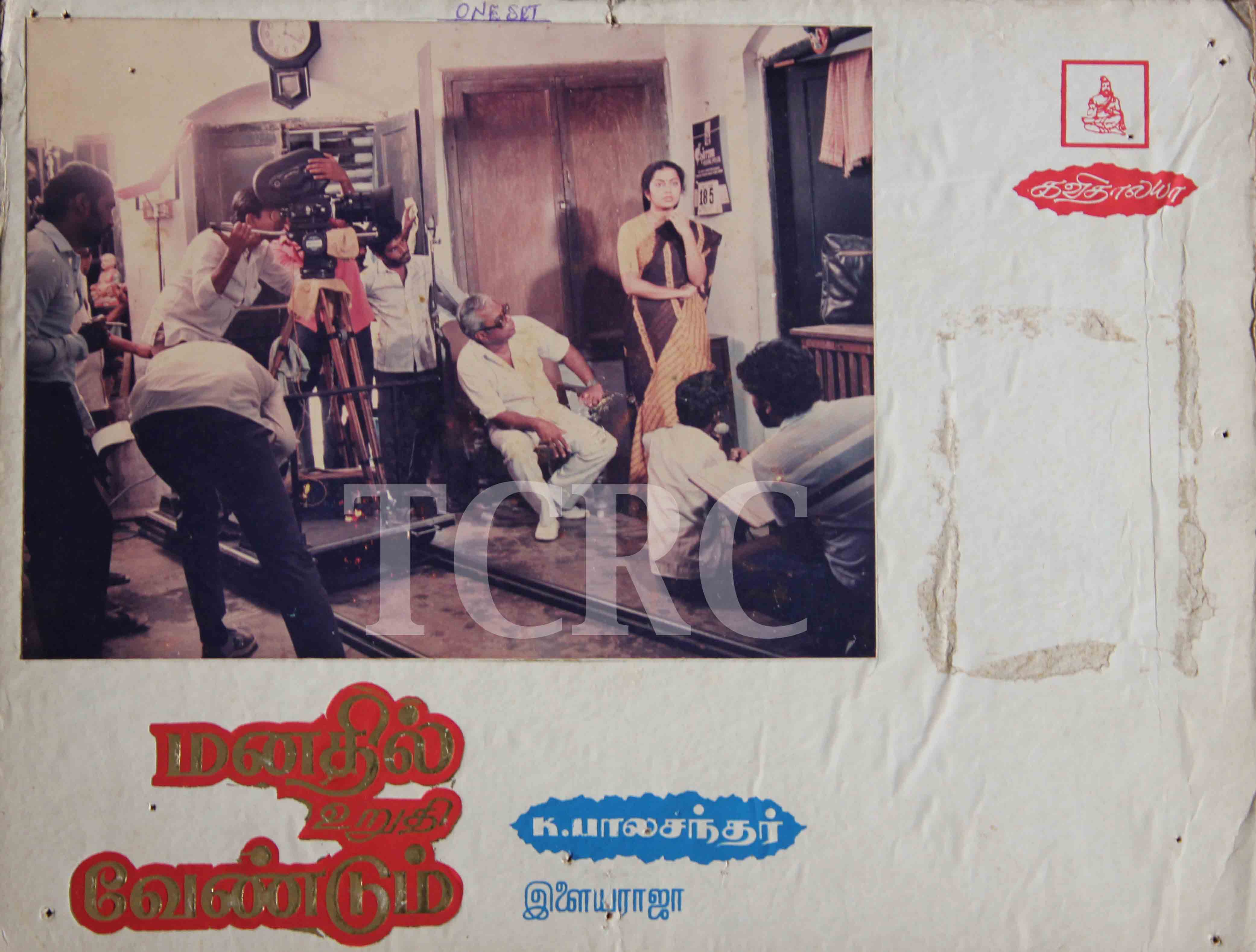
As our small tribute to KB sir we would like to share a lobby card from our collection. It is from the film Manadhil Uridhi Vendum (1987). The film revolves around the strong willed female protagonist Nandhini (played by Suhasini) who over comes many hurdles  and finally dedicates her life to her profession as a nurse.

The lobby card in itself is unique with the working still from the shoot as its image. We get to see the crew and the man himself directing the female lead Suhasini in this picture.

manadhi-urudhi-vendumTCRC


Happy Birthday Superstar


On this special day we would like to release a special image from our collection, a lobby card from the iconic film Baasha (1995) (Tamil)

Baasha-4
Suresh Krishna’s Baasha is an action thriller starring Rajnikanth, Nagma, and Raghuvaran. A loose adaptation of Amitabh Bahchan’s Hum, Baasha is the story of a man who becomes a mafia don and later tries to escape that life by adopting the identity of an autorickshaw driver. Needless to say, his past catches up with him. The film enjoyed a positive box office response and is considered one of Rajnikanth’s most commercially successful films. This movie won him multiple acting awards. 20 years on, Baasha’s autodriver character has been elevated to patron saint status by auto drivers in Chennai and elsewhere in Tamilnadu.


Celebrating Balu Mahendra

balumahendra

On February 13th 2014 we lost a man who has changed the language of Indian Cinema. Born Balanathan Benjamin Mahendran, Balu Mahendra started out as a cinematographer after graduating from the Film and Television Institute of India, Pune. He created a visual revolution with his unique style of cinematography. As a director, Balu Mahendra created a new wave in South Indian cinema by making films close to reality and handling them with sensitiveness that no other filmmakers could at that time. Handling the camera for every film that he directed added an element of poetry in every frame.

Here is an article by Kamal Hassan celebrating this great auteur’s life. http://www.thehindubusinessline.com/opinion/kamal-haasans-tribute-to-balu-mahendra/article5688417.ece

We, at TCRC will like to pay our tribute by highlighting the many ‘firsts’ that Balu Mahendra was associated with:

Kokila – Balu Mahendra debuts as a director. See a trailer of this path breaking film.

Mullum Malarum – Balu Mahendra handle’s the camera for yet another great film maker, Mahendran. Here is a very popular song from this film.

Pallavi Anu Pallavi – This Kannada film was Maniratnam’s debut. Balu Mahendra’s cinematography played a vital role in this film.

http://www.youtube.com/watch?v=rDX2F18-chM

Sadma – Balu Mahendra’s first Hindi film which was the remake of his own super hit Tamil film Moondram Pirai. See the heart wrenching climax of this film which is still talked about even today.

Thalaimuraigal – Released on December 20 2013, this was the last film directed by the stalwart. It was, at the same time, the first  film that he completely shot in digital and also the first time he faced the camera by playing one of the lead characters. By playing the grandfather in the film it could have also probably been the first time that the world would have seen him without his trademark cap. Here is a trailer from of the film.

Happy birthday Mr.P.C.Sreeram

pc sir

The Cinema Resource Centre would like to wish one of India’s finest cinematographers, Mr. P.C.Sreeram a very Happy Birthday. Here are some of songs that he has picturised over the years.

http://www.youtube.com/watch?v=s6PHPdYBAng

http://www.youtube.com/watch?v=csUXes0FkBc

http://www.youtube.com/watch?v=qWhWjiknKWk

http://www.youtube.com/watch?v=7Z0xFDMjj7c

http://www.youtube.com/watch?v=YHKf_HS9Puc

http://www.youtube.com/watch?v=Fme52RzRI-E

http://www.youtube.com/watch?v=0xA-oWnJAWA

The Extraordinary Adventures of Dadasaheb Phalke: The “Harishchandra” Story!

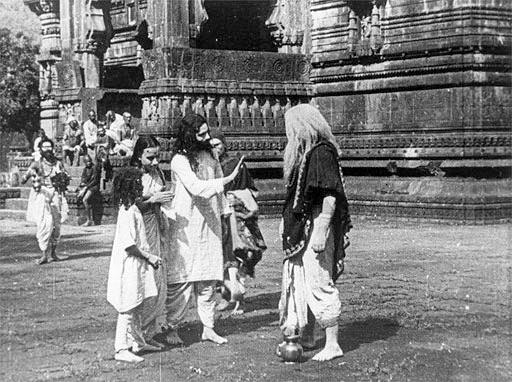
The ‘100 years of Indian cinema’ celebrations that are currently underway in various parts of India and also, the world, seem to be generating a lot of great content about the forerunners of Indian cinema. One such remarkable story is the Open magazine’s piece on Dadasaheb Phalke, in which Paresh Mokashi, the director of the award-winning Marathi film “Harishchandrachi Factory” based on the making of the first Indian film “Raja Harishchandra,” talks about the adventures of Phalke, the filmmaker, to Madhavankutty Pillai.

A still from "Raja Harishchandra" (1913). Photo Courtesy: Cineplot.com

A still from “Raja Harishchandra” (1913). Photo Courtesy: Cineplot.com

Phalke’s struggles, in many ways, seem to epitomize the hardships that are faced by anyone who is involved in a pioneering attempt. Check out this nugget narrated by Mokashi:

Phalke needed money to start the film and, as usual, he had nothing. To impress financiers he thought of novel tricks. He put a seed in a pot and filmed it for a couple of seconds every day over a period of 30-40 days. He made a film of that seed growing into a plant and showed it to people to impress on them the power of the new medium. There was no other way he could make people understand. Films, cinema—these are modern words. They were not at his disposal. Indians were only theatre-goers then.”

And apparently, Phalke was also a master at film promotion, much before the term was even coined:

After the movie released, the response to it was lukewarm for the first two or three days. Phalke then started introducing novel marketing techniques. He came out with funny descriptions of the film, announcing in crowded market places that it is a mile long strip of 58,000 little pictures put together. He offered prizes to ticket buyers. The audience started coming in and the movie went on to make money. He not only recovered the film’s costs, but made profits after paying his creditors. With the money, he made two more films, back to back. In one-and-a-half years, he completed three films—Raja Harishchandra (1913), Mohini Bhasmasur (1913) and Satyavan Savitri (1914).”

Mokashi also mentions the contribution of Saraswati Phalke, Dadasaheb’s wife, who shared his enthusiasm for cinema:

Even today, every first time filmmaker is a Phalke. He goes through the same difficulties—a shortage of funds, and making others believe in you to bring them on board. There is also the struggle within you, a creative struggle—will I be able to pull it off? What fascinates me most about the entire story is his wife’s contribution. We don’t know much about Saraswati Phalke, but she was a key element throughout the venture. In fact, Phalke even made a film on the making of Raja Harishchandra. I suspect that it was his wife who shot it, because in one frame of the making we can see the cameraman shooting the film. Saraswati was the only other person in the unit who knew how to wield a camera.”

He also talks about the difficulties faced by Phalke in finding woman actors and also, the bizarre issues that came along with experimenting with a new medium like cinema:

When he couldn’t convince his wife and no other woman was available, Phalke went scouting in red light areas to get a prostitute for the role. Most refused because they considered acting less reputable than their profession. One sex worker agreed and accompanied him home but a regular client of hers came and took her away. Finally, he had to go with a waiter after spotting him in a tea shop.

He asked the men who were playing women in the movie to clean, wash, cook and do all the things that a woman did. It was method acting much before the term was coined. The movie was shot between six to eight months. He built sets first and completed those portions. He then went outdoors to Wangni, on the outskirts of Mumbai, where there is a dense jungle and a river flowing—scenery important for the story. The cast, who had gone before Phalke, was arrested after the police mistook the actors for dacoits due to their costumes.”

We at TCRC salute the pioneering spirit of Dadasaheb Phalke, the man who is often referred to as the father of Indian cinema.

Also, if you haven’t watched Paresh Mokashi’s “Harishchandrachi Factory” (2009) yet, here’s a link to the trailer:

The ‘Epic’ Story of Indian cinema: Moving Beyond Hindi Films & Finding Aravindhan!

The ‘100 years of Indian cinema’ celebrations that are happening across the country is something that we at TCRC wholly welcome, notwithstanding the fact that a vast majority of them seem to interpret it as ‘100 years of Hindi cinema.’ Thankfully, there are voices out there calling for balance and recognition of the other film industries in the country as well. And among such calls, we found Salil Tripathi’s piece for Mint most refreshing.

He starts off by speaking about the influence of our epics, the Mahabharata and the Ramayana, on our cinema:

Indian cinema has always been utterly reliant on the power of a narrative, and which narrative has greater richness than the Mahabharata? After all for Ved Vyas it is said, “Vyasochishtam jagat sarvam,” or whatever you find said in the universe, Vyas has said it before. It is that easy familiarity with the story—or what the critic Ashish Rajadhyaksha called the power of the epic, in his biography of Ritwik Ghatak—that makes Indian cinema so accessible to so many, in a country divided by everything—language, class, caste and faith—but united by the fascination for a good story.”

And then, he makes the argument that we’ve been parroting all along:

 I love Hindi films too, but you don’t honour a national phenomenon by glorifying only one-fifth of it.”

Salil’s roundup of noteworthy cinema from the South of the Vindhyas was particularly interesting:

Moving south, there is so much to admire in Kannada cinema: two of U.R. Ananthamurthy works stand out. Girish Kasaravalli’s Ghatashraddha (1977) is about the outcasting of a pregnant widow. In Pattabhi Rama Reddy’s Samskara (1970), Girish Karnad’s Praneshacharya is a flawed progressive Brahmin who tries to do right, but succumbs to passion and is consumed by guilt. Karnad’s own Ondanondu Kaladalli (1978) was inspired by Akira Kurosawa’s samurai films.

Further south, in Adoor Gopalakrishnan’s Elippathayam (1981), the rat trap becomes the metaphor of the patriarchy of a closed society. His earlier film, Swayamvaram (1970), told the story of a young couple marrying against their parents’ wishes, moving to another town to start their life, and the inevitability of tragedy befalling them, and the determination of the young woman to cast her own lonely furrow. Another great film was G. Aravindan’s Oridathu (1986), which showed the transformation of a village’s life, and its people’s relationships, with the arrival of electricity. And the sheer melody of K. Vishwanath’s Telugu classic Shankarabharanam (1979).”

It’s not everyday that one finds a mention of G Aravindhan in a feature-style story about Indian cinema. Hailing from Kottayam in Kerala, Aravindhan was a cartoonist who later became a filmmaker. His debut film “Uttarayanam” was released in 1974 and won the National Award for the Best Feature Film on the 25th Anniversary of India’s Independence. Said to be be one of his finest films, “Uttarayanam” was set against the Independence movement and spoke of the opportunism and hypocrisy that existed during the time. The film is considered to have a played a key role in shaping the parallel cinema movement in Kerala.

Given below is Shaji Karun’s documentary on Aravindhan. Shaji is a National Award-winning filmmaker who used to be Aravindhan’s cinematographer. Shaji’s debut film “Piravi” (1988) won the Caméra d’Or – Mention d’honneur at the 1989 Cannes Film Festival and his 1994 film “Swaham” was the last competitive entry from India to be selected at the Cannes Film Festival.


25 Greatest Acting Performances in Indian Cinema: The Forbes List!

The Forbes India magazine recently put out a list of the 25 greatest acting performances in Indian cinema, 8 of which are performances in Telugu, Kannada, Malayalam and Tamil films.  Now, here at TCRC, we are always a little wary of lists such as these, fully aware that it’s incredibly hard to pick just 8 or 10 performances from over thousands of films made in the southern part of the country across the span of almost a century. But since this list is a part of their ‘100 Years of Indian Cinema’ set of features, we felt compelled to share this. Given below is an excerpt from the piece (click here to check out the entire list):

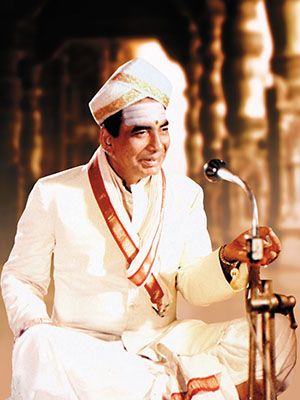
JV Somayajulu 
in Sankarabharanam (The Ornament of Shankara), 1980 
JV Somayajulu, an IAS officer in his 50s, plays a Carnatic musician, misunderstood for supporting the daughter of a prostitute, ignored by a society where classical music is in decline, and is being overtaken by pop music. It was a surprise hit. It opened to empty seats, gathered speed and, today, enjoys a cult status. Somayajulu played his part with such dignity and intensity that you can’t listen to any of its hugely popular songs without imagining him performing them as his sadhana.

JV Somayajulu in "Sankarabharanam" (Telugu, 1980). Photo Courtesy: Forbes India.

JV Somayajulu in “Sankarabharanam” (Telugu, 1980). Photo Courtesy: Forbes India.

“Sankarabharanam” turned out to be a cult film as far as Telugu cinema was concerned, after getting off to a slow start in the box office. Directed by K Vishwanath, the film is remembered for its music, scored by KV Mahadevan. The film was shot by cinematographer-turned-director Balu Mahendra, who later made “Moondram Pirai” with Kamal Hassan and Sridevi (“Sadma” in Hindi). The director of “Sankarabharanam,” K Vishwanath, went on to narrate yet another story revolving around an art form (classical dance) in “Saagara Sangamam” (“Salangai Oli” in Tamil). The film featured Kamal Hassan and Jayaprada in career-defining roles and like “Sankarabharanam,” it is said to be a musical success, with tunes composed by Ilaiyaraaja.

The story of Fatma Begum, India’s first woman film director

While pulling out playback singer Shamshad Begum’s version of Katiya Karoon, we at TCRC realised that she was one of the earliest female playback singers in the Hindi film industry. This set us off on a search for India’s first woman film director and led us to this interesting piece on Fatma Begum, written by Rohit Vats for IBN Live as a part of their “100 years of Indian cinema” series. Here’s an excerpt from that piece (click here to read the entire story):

Born in an Urdu speaking family, Fatma Begum was related to Nawab Sidi Ibrahim Muhammad Yakut Khan III. She was the mother of Zubeida, Sultana and Shehzadi, who were popular actors of the silent era. She started working in films in 1922 after getting trained in plays. Fatma worked with filmmakers like Ardeshir Irani and Nanubhai Desai before founding her own production company Fatma Films which was later rechristened as Victoria-Fatma Films. ‘Bulbul-E-Paristan’ that released in 1926, became the first Indian film to be directed by a female director. However, acting remained on her wish list and she continued to act till late 1930s.”

Ardeshir Irani, who Fatma worked with as an actor, incidentally is the father of Indian talkie films, having made both “Alam Ara” (in Hindi) and “Kalidas” (in Tamil, with songs in Telugu).

We also tried to find an image of Fatma Begum on the web. While we did come across few images, we couldn’t confirm the veracity of any of them. The Whistling Woods (a film school in Mumbai) blog, for instance,  features this picture:

Fatma Begum, India’s first woman film director.

Cineplot Enyclopedia, on the other hand, features this image:

Fatma Begum, India’s first woman film director.

Clearly different people, don’t you think? It is interesting (and worrisome) to note that the internet doesn’t  have a single undisputed image of the first woman director in one of the world’s largest film industries. On days like these, we at TCRC find renewed vigour in our attempt to archive cinema-related artifacts. Have you found other such examples with respect to information about the early days of cinema? Do share them with us by writing to tcrc.india[at]gmail[dot]com.

Ray’s 21st Death Anniversary: Revisiting ABP’s “No Ads, Please!” Tribute & The Films That Ray Would’ve Liked To Make

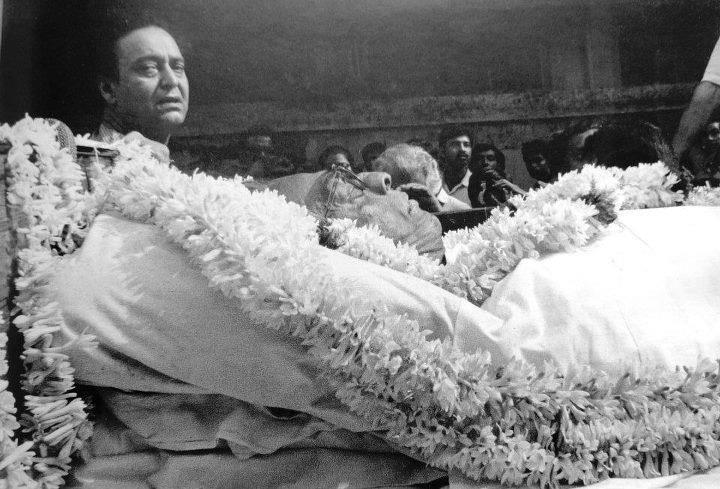
On 23rd April 1992, Satyajit Ray, one of India’s most celebrated personalities from the world of cinema, passed away in Calcutta. Twenty one years later, we at TCRC revisit some material on the illustrious life of the iconic Bengali filmmaker.

Satyajit Ray's funeral. Photo from the newspaper Anandabazar Patrika dated 24th April 1992.  Photography by Tarapada Bandopadhyay. Courtesy: Riddhi Goswami (found on the Facebook page "FeludaSeries"

Satyajit Ray’s funeral. Photo from the newspaper Anandabazar Patrika dated 24th April 1992. Photograph shot by Tarapada Bandopadhyay. Reproduction Courtesy: Riddhi Goswami (found on the Facebook page “FeludaSeries”)

The New York Times published a glowing obituary of Ray, the day after his demise (click here to read the entire obit).  The obituary, penned by Peter Flint, recounts how a three-member Oscar committee visited him at Belle Vue Hospital in Calcutta, a month before his death, to present him with the golden statuette for lifetime achievement in cinema. The presentation of the Oscar was filmed and his acceptance speech was screened two weeks later at the Oscars ceremony at the end of March that year.

The NYT obit also showcases a quote from Ray (given below), which beautifully captures how the auteur’s approach to mise-en-scene:

You had to find out yourself how to catch the hushed stillness of dusk in a Bengali village,” he said, “when the wind drops and turns the ponds into sheets of glass dappled by the leaves of the trees, and the smoke from ovens settles in wispy trails over the landscape, and the plaintive blows on conch shells from homes far and wide are joined by the chorus of crickets, which rises as the light falls, until all one sees are the stars in the sky, and the stars blink and swirl in the thickets.”

Interestingly, the Bengali newspaper Anandabazar Patrika didn’t carry a single advertisement on the day after Ray’s death as a mark of respect to the master filmmaker. Well, from where we see it, very few filmmakers today would even be considered worthy of such a tribute and fewer media outlets would be willing to pay such a tribute!

We also loved Dilip Basu’s biography of Ray for the Satyajit Ray Film and Study Center at the University of Southern California, Santa Cruz. Here’s an excerpt (click here to read the entire biography):

How he managed to make the film, pawning his rare music albums, his wife Bijoya’s jewelry and his mother, Suprabha’s networking in the Government circles in Calcutta, has now become a by-word in the annals of Indian film history. It also provides a paradigm on the “modes of production” in the kind of world cinema that stubbornly refuses to kowtow to commercial pressure. The paradigm required a perennial search for the elusive producer; an essential routine of most of Ray’s movie-making career. If he had access to funds for the kind of films he wanted to make on his fiercely independent and nonnegotiable artistic terms, the world would have seen more diversity and many more period pieces in Ray’s oeuvre: films based on ancient epics, the Mughals and the British Colonials. Instead, he limited himself to what was locally available and possible, refusing to stop or give in to commercial presuures. By 1992, the year he passed on, he had made forty films including shorts and documentaries. Some of these are all-time classics, great and near-great films. Unlike his illustrious contemporaries Antonioni, Bergman, Fellini and Kurosawa, for example he never made a film that can qualify as “bad” from the filmmaker’s standpoint.”