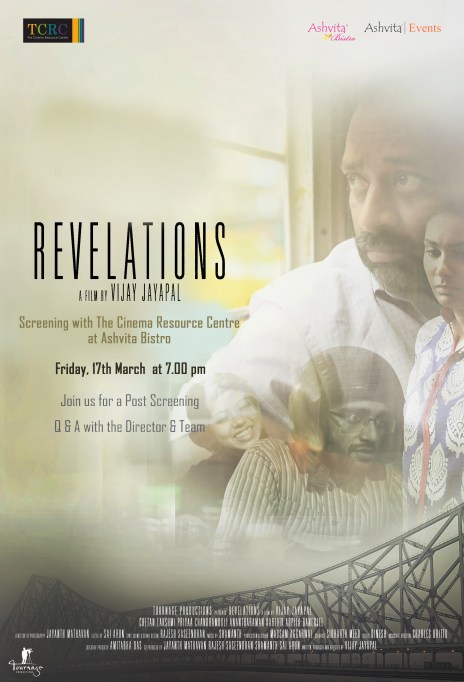
The Cinema Resource Centre in association with Ashvita Events is having a special screening of the critically acclaimed film Revelations at Ashvita Bistro on 17th of March at 7:00PM. There will be a discussion with the director and his team post the screening.
The film is about a young Tamil woman, grappling with unknown tensions in
her four year long marriage, develops a complex relationship with her new neighbor, a middle-aged man, who has a mysterious past of his own. This relationship soon begins to
unravel many secrets, which change their lives forever.Set in the fascinating city of Kolkata, the film tries to explore themes such as guilt, redemption and female sexuality in the context of an Indian marriage.
T S. Baliah, villain, comedian & character actor of the Tamil Screen of the yesteryears too started as a stage artiste in ‘Madurai Balagana Drama Company’ run by ‘Yadaartham’ Ponnusamy Pillai. He debuted his cinema career with Ellis.R.Dungan directed ‘Sati Leelaavathy’ (1936) as a villain.
Baliah mostly appeared in films as a villain, along with Heros such as P. U. Chinnappa & M.K.Thyagaraja Bhagavathar. Whereas in Modern Theatres produced movie ‘Chithra’ (1946), directed by Raza Wahab Kashmiri, Baliah was cast as hero with Vasantha pairing with him as heroine. However, as per Randor Guy “the movie did not do well mainly because of the wrong casting of Balaiah, who was famous for his roles as villain, as the hero.”
His track record consisted of over two hundred films. Some of his noteworthy roles were in the films: ‘Vellaikkaari’, ‘Oar iravu’, ‘Rajakumari’, ‘Madurai veeran’, ‘Mohini’, ‘Pudumai pithan’, ‘Thaaykuppin thaaram’, ‘Bagdad thirudan’, ‘Kaathavarayan’, ‘Anbu’, ‘Thookkuthookki’, ‘Nalla veedu’, ‘Thenum paalum’, ‘Thangaikkaaka’, ‘Thillaanaa Mohanaambaal’, ‘Thiruvilaiyaadal’, ‘Kaathalikka neramillai’ and ‘Bama vijayam’.
His stellar roles in Thiruvilaiyadal, Kathalikka Neramillai, Bhama Vijayam, Maragatham & Thillana Mohanambal are very memorable. Particularly, he excelled in a comedy role in Kathalikka Neramillai in the amazing direction of Sridhar.
Baliah died at his 61 in 1972 owing to heart attack.
Here is a song sequence from ‘Manamgal’ (1951) featuring Lalitha & Baliah. The voices belonged to M.L.Vasanthakumari & V.N.Sundaram.
T.S.Durairaj, one of the talented comedians of Tamil Cinema, was a contemporary of N.S.Krishnan with whom he often teamed on screen, though he came to lime light as a solo comedian later. He even donned comedian roles in films like ‘Meera’ & ‘Sakunthalai’ where M.S.Subbulakshmi starred. T.S.Durairaj too began with stage acting with one of the Boys Companies of his times.
As per Randor Guy, Durairaj’s acting prowess was such that during the shooting of a sequence with Durairaj on Adyar River for ‘Sakunthalai’ by the celebrated Director Ellis Dungan, its heroine M.S.Subbulakshmi could not control her laughter at the sequence, involving retakes. Such was the impact of Durairaj’s acting.
Here is a popular song sequence featuring T.S.Durairaj & Savithri from the film ‘Paanai pidithavaL Bhagyasaali’ (1958).
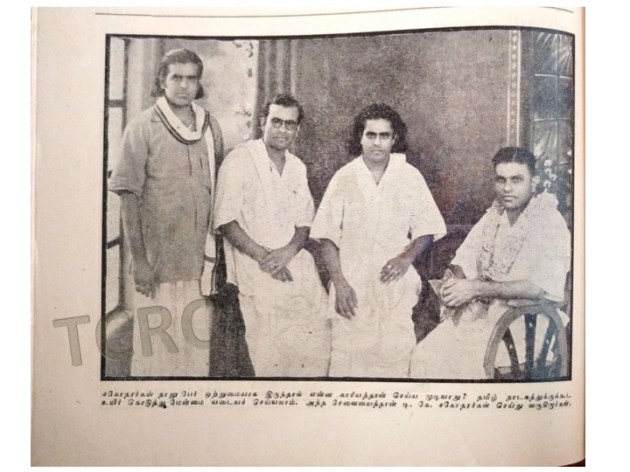
If we do not cover here about T. K. S. Brothers, who were a formidable name in Tamil stage, it would not be fair. The brothers comprising Sankaran, Muthuswamy, Shanmugam, and Bhagavathi were initiated as young boys into acting. The first three brothers joined Sankaradas Swamigal’s ‘Tattuva Minalochani Vidya Balasabha’ in 1918 and & received high acclaim from the Swamigal. After their stints, later, with the troupes of Krishnaswamy Pavalar and Kandaswamy Mudaliar, In 1925, they formed their own ‘Bala Shanmugananda Sabha’ in Madurai & staged their maiden play, ‘Gumastavin peNN’, which was filmed as Clerk’s Daughter in 1941. Other popular plays from them were Avvaiyar, Rajaraja Chozhan, Manidhan, Andaman kaidhi, Uyiroviyam, Kalvanin kadhali, Ratha Pasam and Tamizh Selvam.
A picture of the TKS brothers in Kalki Deepavali Malar 1942 PC: From the archives of TCRC
In 1950, they renamed the company as ‘T. K. S. Nataka Sabha’. The members of their Drama Troupe included big names such as N. S. Krishnan, S. V. Sahasranamam, K. R. Ramasamy, S. V. Subbiah, T. N. Sivathanu, A. P. Nagarajan, S. S. Rajendran, M. S. Draupadi, M. N. Rajam and even Kamalahasan. Their plays, for the first time, introduced female actors on the Tamil stage & toured India and abroad, staging over seventy productions between 1925 & 1972. Many of their plays were made into cinema.
Another singing star of the early Tamil cinema was K.R.Ramaswamy whose contribution to Tamil screen cannot be overlooked. He too started his career in theatre at a tender age of eleven when he joined Madurai Original Boys Company. While being there he met great actors such as P. U. Chinnappa, M. G. Ramachandran, Kali N. Rathinam & N.S.Krishnan. Later in 1928, he joined TKS Brothers’ ‘Sri Bala Shanmuganandha Sabha’. In the stage play “Menaka’ he was the ‘heroine’ as he donned the female role.
K.R.Ramaswamy’s debut film was ‘Gumasthavin Penn’ (1941). Subsequently, he set up his own Drama Company ‘Krishnan Nataka Sabha’ & staged, in 1946, C.N.Annadurai penned Play ‘Velaikaari, which performed at Tanjore for a full long year. When the same was made into a movie in 1949, KRR played the hero thereof.
However, KRR continued his stage career much after he became a popular screen hero too, staging the play ‘Oar Iravu’, also written by Annadurai. He was also in the film version of the same story. It would be interesting to note that Sivaji Ganesan played the female role in KRR’s play ‘Manohara’ (which was made into a film later, where Sivaji Ganesan played the lead). KRR passed in 1971, after a film career of twenty five films.
While talking of Tamil stage of fifties and before, it would be incomplete if we do not mention about T.S.Rajamanickam Pillai (TSR). Nawab T.S.Rajamanickam Pillai was a product of Kannaiah Company. He ran his own drama company called ‘Madurai Devi Bala Vinodha Sangita Sabha’. Sakthi Nataka Sabha was an offshoot of Sakthi Nataka Sabha, in whose plays Sivaji Ganesan acted in female character and became very popular.
In 1927, TSR played the Nawab in his play on ‘Bhakta Ramdas’ due to which his own name got the affix of “Nawab’ as an unique identification. He changed the conception by the elite that Tamil theatre was not respectable. TSR trained hundreds of pupils including some who became very famous actors on stage and screen.
TSR was popular for his mythological subjects like `Dasavatharam,’ `Sampoorna Ramayanam’ & `Ayyappan,’ complete songs and dances. In fact, widespread awareness of Lord Ayyappan happened in Tamil Nadu only sequel to the Ayyappan Play of TSR. Everyone knows that noted Tamil Film villain, (Late) M.N.Nambiar was a Spiritual person, making regular annual pilgrimage to Sabarimalai as ‘Guruswamy’. In fact, Nambiar started his maiden pilgrimage to Sabarimalai in 1942 with Nawab Rajamanickam as his Guru.
Of course, TSR did enact plays of social themes too. In one of these, where a wedding was shown on stage,TSR’s own Baby Austin was brought to stage as the wedding procession car! His plays used to be played on Wall Tax Road, next to Madras Central Station.
Nawab Rajamanickam’s company was popular for its magical spectacle, as It used science in presenting stunning visuals on stage such as birth of Lord Krishna associated with pouring rain or the snake providing the infant Krishna protection from pouring rains. Even Pammal Sambandha Mudaliar regarded the company of TSR with utmost regard. In 1934, Mahatma Gandhi blessed TSR on witnessing his Nandanar Play at Coimbatore.
But TSR was unable to keep the show going beyond the late Fifties. He passed away in 1974.
You will, however, appreciate that this Article was not about the various stage artistes past or present. On the other hand, we have tried to highlight as to how the stage has influenced the Tamil Screen in its pristine years, by discussing some of the individual senior artistes in Tamil screen. If some of the stage to screen personalities such as S.V.Sahsranamam, Sivaji Ganesan, M.G.R, S.S.Rajendran, K.A.Thangavelu, A.Karunanidhi, M.N.Rajam & few more are not covered here, it was not by oversight. Just that, we will have occasion to discuss them as appropriately in different facets of our future Articles in this series, Filmy Ripples.
You would have observed that the initial subjects for Tamil cinema were mostly from Mythology, Epics & History, though there were social plays. And slowly subjects associated with Indian Freedom struggle were also brought in as film subjects. Later big production houses such as AVM & Gemini were in the celluloid business more & more experimental subjects were brought under the fold of Tamil Cinema. By mid forties, Social issues of the society too were gaining momentum to be depicted through films with stories & screenplays by tall personalities of the order of C.N.Annadurai & M.Karunanidhi.
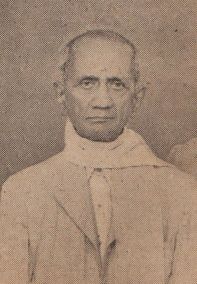
Pammal Sambanda Mudaliar, a qualified lawyer, founded Suguna Vilas Sabha, which is located even today next to the erstwhile Plaza Theatre near Cosmopolitan Club on Mount Road, Chennai. He wrote a hundred plays & staged them there. The title of Kamal Hassan’s film, “Pammal K. Sambandam” was his expression of tribute to this ‘Father of Tamil theatre’.
Pammal Sambanda Mudaliar PC: unknown
Sati Sulochana, Vedala Ulagam, Ratnavali, Manohara and Sabapathi, are some of the hundred and odd plays he wrote. The above mentioned plays were also made into successful films. Old Madras luminaries such as S. Satyamurthy, R. K. Shanmukam Chettiar, V. V. Srinivasa Ayyangar, C. P. Ramaswamy Aiyar, V. G. Gopalaratnam and M. Kandaswamy Mudaliar (the father of the famed actor M. K. Radha) have acted in his plays. The British Govt., honored Pammal Sambanda Mudaliar with coveted Rao Bahadur Title, later the Government of India honored him with a Padma Shri Title in 1963.
Kandaswamy Mudaliar was a well known Tamil dramatist and stage actor. When Pammal Sambandham Mudaliar founded the famous ‘Suguna Vilas Sabha’. He became a member of it and took active part in the running of the Sabha. Besides writing plays, he supported his guru Sambandha Mudaliar in the theatre activities of the Sabha.
S.G.Kittappa, trained in music and acting by Sankaradas Swamigal, was a Tamil classical singer and stage actor who was active in the pre-cinema days.
K.B. Sundarambal as a small girl was discovered while singing and begging for alms on trains by F. G. Natesa Iyer, a Railway official, who was also a stage actor, talent – scout and play producer. He introduced her to Tamil theatre. Soon her stage plays such as “Valli Thirumanam”, “Pavalakodi”, “Harishchandra” became great hits during those days
While on a tour of Ceylon she met singer-stage actor S.G. Kittappa to whom she got married and started acting in stage musical plays as pair. KBS and SGK acted in dramas like Thookku Thookki, Nandanaar, Dasavatharam & Aandaal staged by the Kannaiya Nadaga Company. Their fans showered silver coins on stage when they acted. The couple became cult figures. They also took active part in the Indian Freedom Movement. But Kittappa eventually died very young in 1933 at the age of 27 due to which, at this juncture, his young widow K.B.Sundarambal went into isolation.
When the owners of a Sindhi business house, Chellarams, wanted to produce ‘Baktha Nandanar’ they approached KBS who initially resisted the offer. Subsequently, she debuted in that very film in 1935, in the role of Nandanar, for which she was paid a whopping lakh of Rupees. the renowned Carnatic Vidwan Maharajapuram Viswanatha Iyer (father of late Maharajapuram Santhanam) too acted in the very film ‘Baktha Nandanar’ (not to confuse with the subsequently made ‘Nandanar’ featuring M.M.Dandapani Desikar). Having debuted in this film, KBS acted & sang in many movies, notable of which were Gemini’s ‘Avvaiyar’, A.P.Nagarajan directed “Thiruvilaiyadal”, Poompukar, Kandan Karunai & Karaikal Ammaiyar.
PU. Chinnappa, was a popular singer movie actor in Tamil screen from 1930s. At a tender age of 8, Chinnappa joined in Meenalokshani Vidvabala Sabha, run by one Palaniyapillai, under the tutelage of Sankaradas Swamigal. At that time T.K.S brothers were acting in this popular drama company at that time. From there P.U.Chinnappa joined Madurai Original Boys Company for a salary of Rs.15 with a 3 year contract. Chinnappa was very prolific in singing too. When Chinnappa acted as hero, M.G.Ramachandran, P.G.Venkatesan, Ponnusamy and Alagesan were acting as a female lead with him. Kali N Rathinam and M. G. Chakrapaniwere acting in supporting roles.
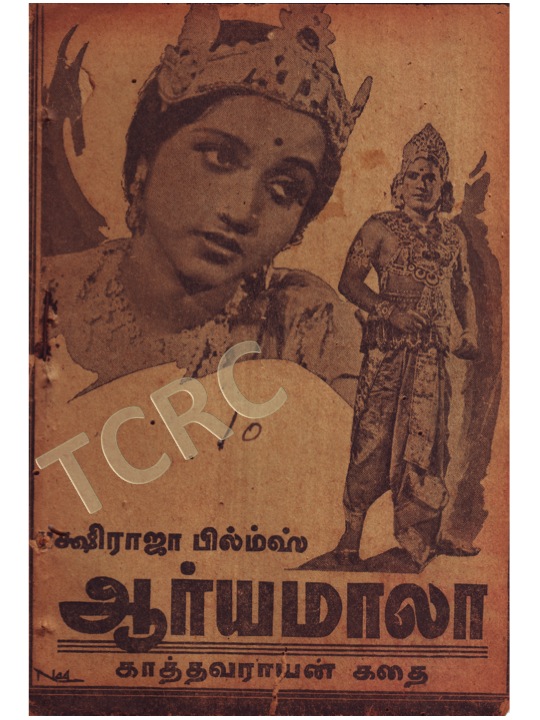
Chinnappa debuted in the movie Chandrakanta (1936) & continued his career in films like Punjab Kesari, Raja Mohan, Anadhai Penn, Yayathi and Mathruboomi. But the movie Uthama Puthiran was a block buster, catapulting the career of Chinnappa. His movies such as Aryamala & Kannaki made him a box office hero. Several other movies of him like Dhayalan, Dharmaveeran, Pruthivirajan and Manonmani too ran very successfully.
Song book of Aryamala PC: From the archives of TCRC
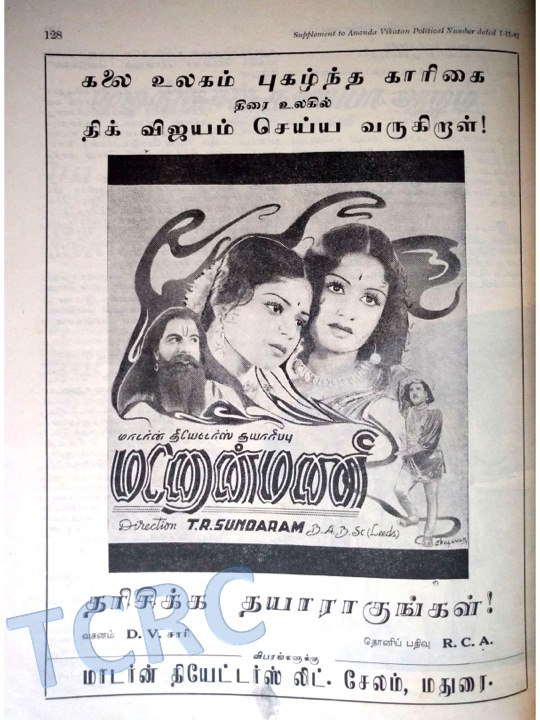
An ad of Manonmani in Ananda Vikatan Deepavali Malar 1942 PC: From the archives of TCRC
It was during this time, the professional competition between M.K. Thyagaraja Bhagavathar and Chinnappa became intense. Vanasundari, Ratnakumar and Sudarshan were the movies that Chinnappa acted last. He passed away in his late thirties in 1951.
One F.G.Natesa Iyer through his Rasika Ranjana Sabha, an amateur theatre group, introduced M.K.Thyagaraja Bhagavathar to Stage when MKT was in his pre-teen years. He also took professional training in Carnatic music. MKT teamed with S.D.Subbulakshmi toured even Ceylon & Burma to stage their dramas successfully.
MKT debuted in ‘Pavalakodi’ (1934), produced by Lena Chettiyar & directed by K.Subramanyam, in the music score of Papanasam Sivan.
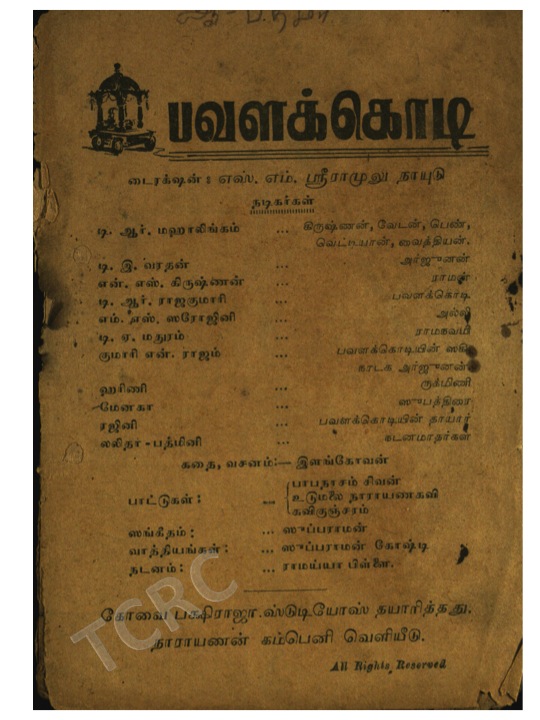
Inside the pages of Pavalakodi song book. PC: From the archives of TCRC
In all, he acted in 14 movies in his life most of which were record breakers. Thiruneelakandar, Ambikapathi, Chintamani were among the highly successful Tamil films. His film Haridas, released (1944) ran continuously for three years at Broadway Theatre, Madras. The super hit film ‘Chintamani’ (1937) lodged MKT firmly in Super Star status. During the period of World War II, MKT staged his plays & gave concerts to collect funds for Red Cross Society.
He was very popular in classical concert circuits when very many doyens ruled the roost in that field.
After ‘Haridas’ was released, MKT emerged as an unequalled singer-actor & in this pinnacle of his career he had to undergo a jail term of three years, along with N.S.Krishnan, though he had been booked for many more films by that time for which he had collected even signing amounts. When he was released from the jail by the higher court in London after three years of jail term, MKT started seeing decline. His own production ‘Rajamukthi’ also bombed. He passed away at his 49 in the year 1959.
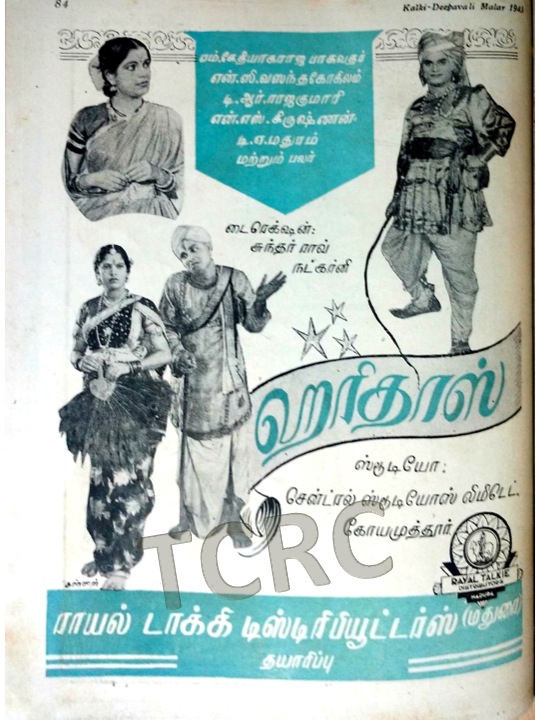
An ad for the film Haridas in Kalki Deepavali Malar 1943 PC: From the archives of TCRC
NS. Krishnan (NSK), the highly acclaimed ace comedian of Tamil Screen of forties & fifties, started his career too on stage. He joined The Original Boys Company in the year 1924, while he was very young. A year later in 1925 NSK joined the Drama Company, ‘Sri Bala Shanmukhanandha Sabha of TKS Brothers where he debuted in a play titled “Savithri”. Subsequently, he worked in various other dramas and donned a variety of roles.
His debut into cinema was through the film ‘Sathi Leelavathy’, produced by Gemini S. S. Vasan, as a comedian. However his debut film was released only in 1936, a year later than his second movie ‘Menaka’ (1935), in which TKS Brothers & K.T.Rukmini acted. ‘Menaka’, based on a play by TKS Brothers, was shot on a schedule of three months at Ranjit Studios, Bombay. Menaka was the first film to use a Bharathiyar song in a movie. The producers were bold to do that despite there having been a ban on Bharathiyar’s works by the British Government.
Soon in his life he added T.A.Madhuram, a co artiste of par excellence, as his spouse, during the shooting schedule at Poona of the film ‘Vasantha Sena’, directed by Raja Sandow. The rest was history with this couple acting together in over 120 movies, as a pair, between 1936 and 1957.
NSK & Maduram were both singing actors. Towards the later part of his career he too was implicated in the Lakshmikantan murder case along with M.K.Thyagaraja Bhagavathar & had to undergo a prison term of thirty months.
N.S.Krishnan produced & directed the movie “Panam” (1952), after his release from jail term, in which he paired music directors Viswanathan & Ramanoorthy first time. Though Ramamoorthy was senior to Viswanathan, NSK decided to have Viswanathan’s name first due to phonetic reasons. And it stayed so!
He passed away in 1957 & few of his films were released much after his demise.
Tamil cinema was literally born in 1910, with the release of the first silent ‘Tamil’ film ‘Keechaka Vadham’, produced, directed, shot and edited by R. Nataraja Mudaliar, known today as the father of Tamil cinema. The film was based on an episode from the epic Mahabharata & was received very well.
It is said that Nataraja Mudaliar met one Stewart Smith, a cinematographer from Britain who was then filming a documentary on Lord Curzon & learnt the basics of cinematography from him. Later, in 1915, Mudaliar also established South India’s first film studio at Purasawalkam, Madras. In this first silent Tamil movie, stage artistes of that time, Raju Mudaliar and Jeevarathnam played the roles of Keechaka and Draupadi respectively. The cost of this 600 feet length film is said to be Rs. 35,000, then considered expensive. The production was completed in just five weeks, with Pammal Sambandha Mudaliar writing the screenplay.
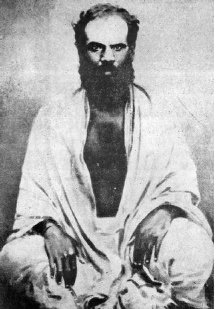
Nataraja Mudaliar PC: unknown
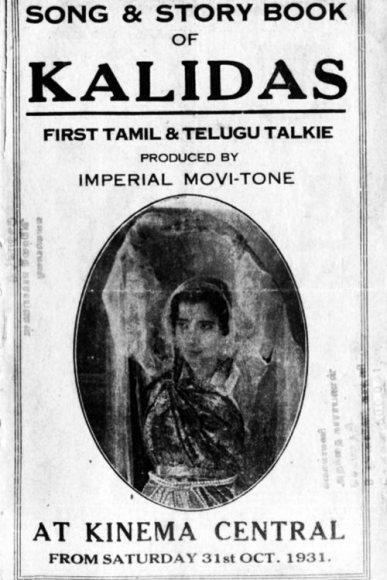
Some sixteen long years later, ‘Kalidas’ was the first Tamil Talkie film (shot at Bombay) to be released in October 1931 on Diwali Day, as produced by Ardeshir Irani & directed by H.M.Reddy. P. G. Venkatesan and T. P. Rajalakshmi did the lead roles in the movie, which, though principally in Tamil, also contained additional dialogues in Telugu and Hindi.
When the film reels arrived by train at Madras Central Station from Bombay, thousands flocked there to follow the reel box, showering flowers all the way to Kinema Central, the theatre where it was screened (later known as Murugan Theatre).
However, according to Randor Guy, Kalidas was a “crude experiment” with poor lip sync. Despite the numerous technical flaws the film had, it received critical acclaim & became a major commercial success. I understand, no print of this landmark talkie film is available now.
PC: unknown
It is a relevant point to ponder here, as to how, when the films took avatar as above, did the film ‘industry’ then get their actors! Well, the actors for cinema were sourced from stage plays. The evolution narrated below would explain the anthology in that regard.
The stage plays had their antecedent in street plays literally called ‘theru koothu’, which, as a form of entertainment, has its origins to the Sangam periods of Tamil Nadu & forms part of its ancient Tamil culture. The subjects of Koothu have been from religion or history. Even today ‘therukoothu’ happens in rural areas particularly on special days or during temple festivals. With Its informal dance structure, therukoothu depicted scenes with little dialogues but with abundant songs, often sung by Artists in their own voice. They were dressed in complex heavy costumes and bright elaborate makeup. Males often played even female characters.
Over the time, stage plays got evolved. In Tamil Nadu there were formidable stage play troupes some of which created artistes who became to be absorbed as cine actors, when cinema appeared. As such the early cine actors had the characteristic that profiled characteristic stage actors with stopping dialogue delivery, often loud. There seems to have been seamless supply of actors to cinema, this way, as there was no other institutionalized training places like Film Institutes!
In the bygone era, many renowned Drama Companies such as Madurai Bala Meena Rasika Ranjani Sabha, Sri Bala Shanmukananda Sabha, Kannaiyar Company, Madirai Sridevi Bala Vinodha Sabha, Tiruchi Rasika Ranjani Sabha kept the flag flying high in the field of Tamil Dramatics and produced great Artistes like S.G.Kittappa, K.B.Sundarambal, T.K.S.Brothers, N.S.Krishnan, KaLi.N.Rathnam, K.P.Kesavan, K.K.Perumal, K.P.Kamatchi, P.U.Chinnappa, M.G.Ramachandran, S.V.Sahasranamam, M.V.Mani, Thyagaraja Bhagavathar & many more.
There were personalities like Sankaradas Swamigal & Pammal Sambanda Mudaliar who brought dignity to stage plays, in which people from respectable backgrounds did not part take in the prior period. They gave grammar to the stage and in their own way institutionalized play stages with astute discipline.
Sankardas Swamigal PC: unknown
Sankaradas Swamigal, who is largely considered as the father of Tamil Theatre, started in 1910 his own drama company known as ‘Samarasa Sanmarga Nataka Sabha’. It was here that the legendary actor S.G.Kittappa learnt his ropes. Around this time, the concept of “Boys Company” – some sort of Gurukula System was slowly gaining popularity. In this system, boys stayed together residentially and learnt under masters of drama.
Sankaradas Swamigal was involved with Bala Meena Ranjani Sangeetha Sabha which had on its rolls several boys who would go on to become subsequently big names in the world of theatre and cinema, such as Nawab T.S.Rajamanickam, M.R.Radha, S.V.Venkatraman and K.Sarangapani. Swamigal thus had the privilege & distinction of having mentored several stalwarts.
In 1918, Swamigal with likeminded few started his own Boys Company, ‘Tattva Meenalochani Vidwat Bala Sabha’. It was here that the celebrated T.K.S. Brothers were brought under the tutelage of Swamigal. T.K.Shanmugam, who was later known as “Avvai Shanmugam’ (Lloyds Road was renamed after him as Avvai Shanmugam Road) was the favorite of Swamigal.
Swamigal maintained very strict discipline and kept vigil over his wards against any vices and any violators were reprimanded.
In short, Sankaradas Swamigal was a one man institution in those days, which, should we say, was unknowingly emulated by later institutionalized training formats such as Film Institute or other acting schools?
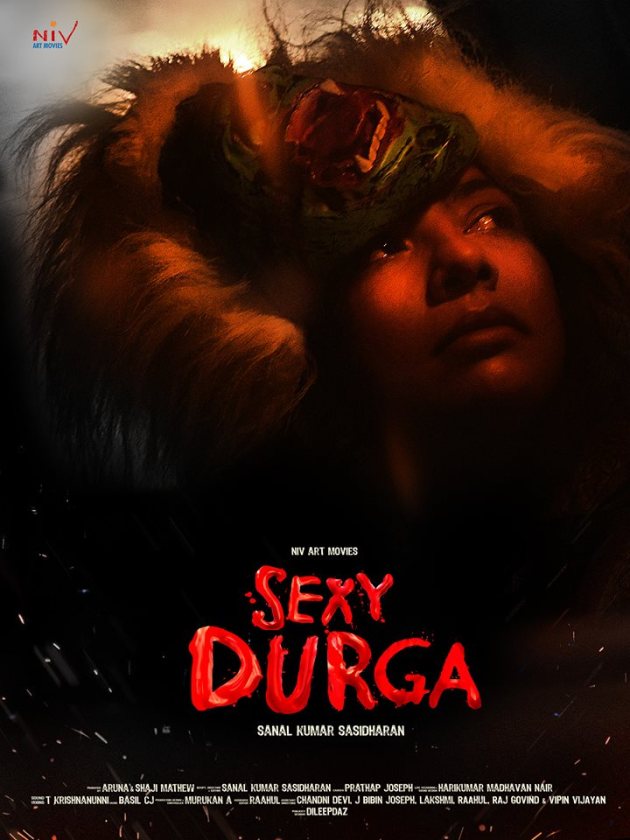
Sanal Kumar Sasidharan is back in India after his glorious win of The Hivos Tiger Award at the International Film Festival of Rotterdam 2017 for his latest film Sexy Durga. The director of Oraalppokkam and Ozhivudivasathe Kali takes time to interact with us at The Cinema Resource Centre (TCRC).
PC: Sanal Kumar Sasidharan FB page
Firstly, congratulations on this wonderful win! Was this kind of international recognition something that you had expected for Sexy Durga?
Thank you. I never expect anything except a good movie, while making it. But once it is made in the way I want to make it, I don’t hesitate to dream about its success. For me, film is not a local art. It has universal readability, so I naturally dream of international success. A dream is an expectation too.
How important are film festivals and these recognitions for an independent film maker?
Independent film makers are really very fragile in many respects. We have no stars, no money, no market and no popularity gimmicks. We have only a few openings through which we hope to reach audiences. One of the most important openings is film festivals. Film festivals play a great roles in bringing art house movies and indie film makers to the limelight. They are also important as they serve as forums for serious discussions about such films.
Tell us more about Sexy Durga and the team behind it.
Sexy Durga is an art-house movie that has many layers to it. It is very simple, yet complex. There is no ‘story’ in it. But you can attribute one to it though your experience of the movie.
Prathap Joseph, the cameraman did a good job with the many difficult camera movements the movie demanded. Murukan was the Art director, Harikumar Madhavan Nair was the sound recordist, and music was by Basil CJ. Editing was done by me. Murukan and Basil CJ have been working with me since my first film.
For the role of ‘Durga’ I wanted an actress who was fearless about using her body and was comfortable with her physicality. Rajshree Deshpande seemed the perfect fit for the part., and was sold on our idea of her character and thus, became part of the movie.
All other artistes are mostly new faces or non-established actors. The main artists are Kannan Nayar, Vedh, Bilas Nair, Arunsol, Sujeesh KS. Byju Neto and Nistar Ahammed, who acted in Ozhivudivasathe Kali, also essayed roles in the movie.
PC: Sexy Durga FB page
How is Sexy Durga similar to and /or different from your earlier films?
Sexy Durga is totally different in approach and the making from my earlier films. But all the films are socially rooted in the Malayali psyche.
Sexy Durga had no storyline or script. Most of the portions of the film were shot in midnight, in available light. The tough decisions involved in the making of the film gives it a unique feel.
From a lawyer to a film maker. How did this journey and the discovery happen?
I really only wanted to become a film maker since my childhood. But my family had a problem with my dream of becoming a film maker. My father was dead against my desire to apply to a film institute. So I was thinking about ways to infiltrate the film industry through the back doors. I approached several directors to take me on as an assistant director. Nobody was willing because I had no one to recommend me. Then I thought that if I had a professional degree and the kind of dignity that comes from it, people may accept my passion. But I was wrong. After my Law degree, I was forced to remain a lawyer. But I dropped the profession and escaped. I formed a film society named KazhchaFilm Forum and started making short films. In between, I worked other jobs, some of which I don’t even remember properly. In 2013, I made my first feature Oraalppokkam, produced by Kazhcha Film Forum, and that was the turning point
What is your typical pre-production process for your films?
Actually my films are simple for me. I don’t like much production set-ups, technical extravaganza and too many big artists in my film. I always wanted to keep the freedom and possibility to evolve even at a later stage of making. I don’t even like a concrete scripting process. The main part of my pre-production is dreaming and meditation. I think about the making pattern a lot. I rethink and rethink and keep all the options open. It may have its own drawbacks but I love it. Identifying location is the most important thing for me. Once I find a comfortable location, I feel relaxed. Finding actors is the next important step for me. If both are properly and satisfactorily done, I am sure that my film is done.
How much do you depend on your actors to take a scene forward and to decide the pace of the film?
I depend upon my actors a lot. Actually, I love to play with them. I put them in the location and let them freely do something. I only casually explain to them, so they may not even get a clear idea of what I have told them. In fact, I don’t even ask if they understand properly. But I make sure that they clearly know the situation and the political emotion behind the scene they are about to enact. Then I retreat and become a spectator. I get ideas as I see them acting out the given situation. I just shape it with gentle suggestions. It is like watching the movie while making it. I have a feeling that without my actors actively and freely engaged in the making, I can’t make a film properly
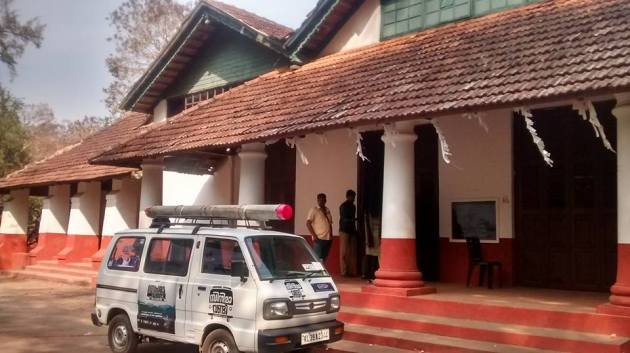
What are the release plan for Sexy Durga, or is it too early to talk about it? You and your team behind Kazhcha Film Forum took independent cinema to the masses with the concept of Cinema Vandi. You think Sexy Durga will also soon travel in the Cinema Vandi?
Sexy Durga is travelling all around the world now. It has just started leaving its footprints. Let it travel and come back. We will talk about the Indian release only after the censor board approves it without much harm. I want to release ‘my’ film, not the censor board’s film.
Cinema Vandi at a venue at Kottayam, Kerala. PC: Kazhcha Film Forum FB page
What is your take on independent cinema in India?
Indian independent cinema is establishing its presence very fast. The world has started recognizing it. As more and more people started thinking about this alternative space, more and more films will start coming out soon. I hope that we have a bright future.
Thank you for talking with TCRC. Before we sign off please let us know your opinion about the importance of preserving and archiving cinema heritage.
Cinema is history. It has importance not only in terms of art or commercial product. It has cultural importance also. It is very important to preserve our pathways to see how long we travelled and how difficult it was. It is very important that one look back to where one came from. Thank you
STAGE The “Boys’ Company” that Sankaradas Swamigal started became a cultural movement.
Trendsetter: Sankaradas Swamigal
Sankaradas Swamigal was one of the two founding fathers of the Renaissance of Tamil Theatre. A mighty creative soul, he lifted Tamil Drama out of the quicksand it had sunk into in the early years of the 20th century. He was not only a playwright. He was much more — stage actor, play producer and director and the guru of many theatre troupes. Many were his disciples who shone brightly in the stage and screen firmament. Above all he was an innovative trend-setter. He introduced a unique system named “Boys” Companies
It was a theatre troupe in which all roles — male and female, young and old, strong and weak were played by boys — mostly in their pre-teens. As a matter of principle no woman of…
A major, gory train accident happened in November 1956, in real life, involving Tuticorin Express at Ariyalur near Trichy. This left 142 passengers dead and 110 injured, with many more missing, their bodies never to be recovered. Torrential rains had swollen the river Maruthaiyar to a level where the waters almost touched the rails on the railway bridge near Ariyalur, causing flash floods.
In fact, Sri. Lal Bahadur Sastri, who was then the Railway Minister even resigned on moral grounds.
The filmmaker T. Prakasa Rao rushed his crew to the scene of Ariyalur train accident and shot much footage, which he included into his Tamil movie, ‘Madhar Kula Manickam’ (meaning ‘Gem among women’) starring Gemini Ganesan & Savithri in the lead, released the same year. This movie was based on Rabindranath Tagore’s story ‘The Wreck’. Later, S. S. Vasan remade this film in Hindi as ‘Gharana’ which turned out to be a big hit.
(Watch the real footage of the train wreck after the 39th minute in the below video from the film Madhar Kula Manickam)
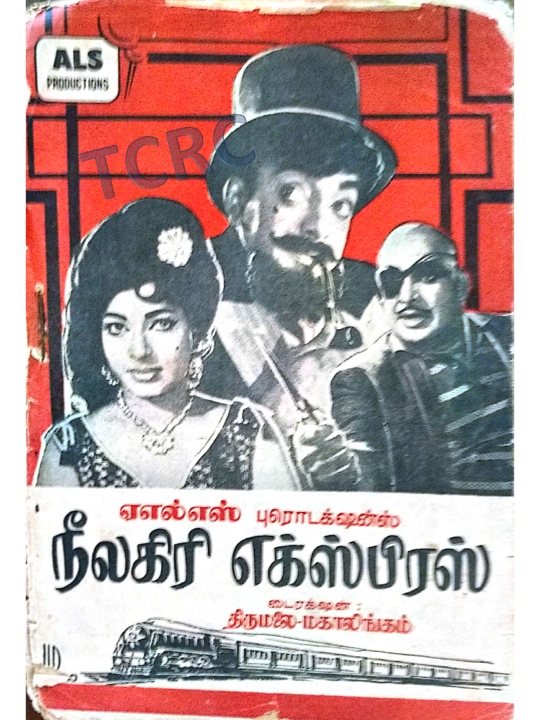
‘Neelagiri Express’ (1968) was a successful thriller movie involving a train journey, whose screenplay was written by Cho. Jayashankar, Asokan, Vijaya Laltha were among the prominent actors besides Cho. The movie was a remake of Malayalam movie ‘Cochin Express’, which was also remade in Telugu & Kannada. The Hindi version ‘The Train’ had Rajesh Khanna as its hero.
A song book of Neelgiri Express. PC: From the archives of TCRC
The scene in ‘Thillana Mohanambal’, where Sikkal Shanmugasundaram & Danseuse Mohanambal travel with their parties aboard a train cannot be forgotten. The old wooden coaches of Indian Railways featured in the sequence were fitting to the film, set to some early period in time.
The movie ‘Raman ethanai Ramanadi’ (1970) too had a song ‘Chithirai madham pournami neram’ by P.Suseela, filmed aboard a train by Director P.Madhavan. Penned by Kannadasan, the music for this song was set by MSV to the chugging of a steam train, complete with its long whistles.
Coming back, to later films you may recall the flash dance performed by Kamal Hasan and troupe in the Tirumayilai Rapid Transit Station in the film ‘Avvai Shanmukhi’ or the dramatic interactions in ‘Anbe Sivam’ between Kamal & Madhavan at Pollachi Junction? Who could forget those intense dramatic scenes shot in Railway Stations or Rail crossing gates (Moonram Pirai, Puthiya Paravai)?
Bharathiraja’s ‘KIzahkke pogum rayil ‘, which debuted Radhika, is still remembered for its hero and heroine communicating through their graffiti on the rear of the last van.
Song book of Kizhake Pogum Rail. PC: From the archives of TCRC
In the film Thalapathi the train played mother to none other than Superstar Rajinikanth, as Srividya abandoned her baby in a goods train, as the haunting melody ‘Chinna thaay aval, thanga raasa’ played off screen. The wailing whistle of the train in the opening of the song, indeed, added much dramatics to the pathos.
In another Mani Ratnam film ‘Alai Pauyuthe’, suburban trains and railway stations figure as major locations, as the hero waits at a railway station every morning to catch a glimpse of the heroine. In ‘Gentleman’, the song chikku bukku raile is dedicated to trains.
The ever popular ‘thaiya thaiya’ song & dance sequence filmed atop a moving Nilgiri Mountain Rail is ever remembered from the film ‘Uyire’.
In Gautam Menon’s ‘Vinnai thandi varuvaya’ the leading pair is shown to share their first moment of intimacy in a train journey. Even in the recent ‘Kakka Muttai’ the child workers are shown collecting coal pieces strewn around the Basin Bridge yard for a living.
The recent movie ‘Thodari’ featured Dhanush as a Railway pantry worker.
The list is endless, as many more instances of bondage of trains to Tamil films.
The Train related sequences dominated many Hindi films too, to name a few, in random order: Dil Se, Ajnabee (old), Chennai Express, Aashirwad, Dost, Kaala Bazaar, DIl tho Pagal Hain, Dilwale dulhaniya le jayenge, Kuch kuch hota hain, Bunty aur Babli, Julie, Sholay, Burning Train, Kitaab, Mera Naam Joker, Pakeeza, Professor, Waqt, Railway Platform, Toofan Mail (1934), Aap ki kasam, Coolie etc.
Some of the memorable songs that featured in old Hindi films were shot on trains, to name a few: ‘Uparwala jaan hain’ (Kaala Bazaar), ‘Main chali main chali’ (Professor), ‘Gaadi bulaa rahi hain’ (Dost), ‘Hum dono hain premi’ (Ajnabee). Whereas the immortal song ‘Chalte chalte’ rendered by Lata & filmed on late Meena Kumari (her last movie) in the cult classic film Pakeeza (1972), which was in production for sixteen years, had the hallmark wailing whistle call of a passing steam engine at the end of the song, bringing great emotions to the fore, as set in the storyline.
The Hollywood had its share of romance with trains & locomotives as the following long list of films would suggest: Skyfall, From Russia with Love, French Connection, Spiderman 2, Strangers on a Train, A Passage to India, Bowani Junction, Gandhi, Murder on the Orient Express, The lady vanishes, Arizona Express, Butch Cassidy and the Sundance Kid, Cassandra Crossing, Murder she said, 39 steps, North by North West, Von Ryan Express, The Taking of Pelham One Two Three, Bridge on the River Kwai.
The modern film making even permits the real bogey visuals being replicated by CGI (computer-generated imagery) capabilities. But that’s a different story.
There is an exclusive overseas company by name ‘train chartering’ which provides total solutions to film shoots, whether movie, TV or Ad. Films. They provide train and rail locations & offer consultancy for filming on a Train or Railway Station anywhere in UK, Europe & America, their services spanning Locations, Sourcing trains, carriages, delivering Train carriages to non-railway sites such as studios etc. They claim to have Trains and carriages from 19th century onwards.
The Indian Railways seem undeterred in encashing its popularity among filmmakers, as they recently hiked the hire charges on special trains (of four coaches and one Semi luggage van with a distance cap of 200 km) for film shooting purposes to a whopping Rs. 4.74 lakhs per day.
The obsession of film makers to trains will only continue to grow and, may be, in times to come, there may even be films shot on the ensuing Bullet Train in India!
The enduring allure of Trains is obvious to all, both young and old, as one can hear them much before actually seeing them. The romance and glamour of railways fascinate train enthusiasts everywhere. And when it is a steam engine, all the more its great hum pierces the stillness of the serene landscape, wheels screeching under the load of the grand locomotive.
The film makers always loved to use the drama associated with a train’s motion & sound, to express various emotions in film sequences, right from the silent film era. It is said that a train’s idea of an extremely compact space has appealed to filmmakers in generating dramatic tension, particularly when it is in motion.
A French short documentary film of silent film era, “L’ Arrivee d’un train a la Ciotat” (1895) (the title translates as ‘Arrival of a train at Ciotat’) is arguably the first movie to feature a train in a film, though for less than a minute duration. From that moment to date, as of writing this, even the latest released movies such as “Lion” & “Rangoon” have scenes involving trains!
Coming to Indian cinema’s connect with Railways, it has been very formidable from the age of steam locomotive to the era of electric hauled trains.
In some of the old movies, they also erected dummy bogies in the studio sets where the characters swayed deliberately to mimic the motion of the train. Sometimes, the studio hands back-projected the images of telephone poles and trees moving in the reverse direction to give that extra make belief effect. They even shook the dummy compartment rhythmically so that you & me would believe it is a real bogey. But often, they went for the big real trains or engines, paying enormous fee to Railways.
Trains have been romantic in movies. They have facilitated boy meeting the girl, helped them to trigger a love story. You may recall David Lean’s great classic, ‘Brief Encounter’ (1945) where a pair fall in love in a train station, with the story unfolding in the backdrop of the whistle of the engines and the clanging sound of the bogies till the affair disappears in the smoke of the locomotives.
In earlier Black & White Tamil films, when a character moved to another town, they invariably included a stock shot of a speeding train, as a symbolic communication. Or whenever they wanted to convey that the story was happening in Madras City, they would simply include a stock shot of the majestic Madras Central building.
When Rajesh Khanna rode a jeep, lip syncing ‘Mere sapnon ki Rani kab ayegi thu’ with his eyeballs set on a petite Sharmila Tagore on a hill train, ‘the film Aradhana’ created flutter in Indian Cinemas. The rest was history!
As kids, we have all played a train, tailing behind one another in a single file, mimicking a moving train, in the sheer fascination of rail. Particularly those burly, black, boisterous steam engines have always kindled our amusement, curiosity & fear as well, as they puffed along, emitting black clouds of smoke! Here is an old song, which used to be played often on Radio Ceylon during my child hood, featuring a song on a train game! The song was from ‘Vallyin Selvan’ (1955). The lyrics were by Kothamangalam Subbu & the music was by P.S.Anantharaman.
In a similar sequence in the film ‘Ashirwad’, Dada Muni Ashok Kumar lent his voice & acted too in the famous song ‘rail gaadi’. In fact this very song was interpreted in a creative way in a promo for Indian Railways.
The old black & white movie ‘Porter Kandhan’ (1955) showed many scenes intimately connected with railways. In the wholesome comedy ‘Missiyamma’ the comedy of errors begin with both Savitri & Gemini alighting from their train. The soul stirring number ‘Annai enbaval neethaana’ from the AVM film ‘Annai’ (1962) was shot in a sequence involving a moving train that added dramatics.
The whole story line of ‘Pachai Vilakku’ (1964) was interwoven, through the film, with the life of Hero, Sivaji Ganesan, playing a loco driver of a Steam Engine. The song ‘OLi mayamana edhirkalam’, involving shots of these artistes were filmed inside a moving ‘black beauty’ WP Canadian Engine. The shoot for the film was all over the yards of Basin Bridge Junction, with tight close ups, Pan shots, trolley shots and what not, involving Sivaji & Nagesh. Who can forget the song ‘Kelvi piranthathu anru’ shot outdoors, showcasing the various railway facilities?
In Anbu Karangal Sivaji Ganesan also donned the role of a benevolent Railway Station Master with Nagesh as a Station hand.
The song book cover of “Anbu Karangal’. PC: From the archives of TCRC
‘Onna irukka kathukkanum’ number rendered by TMS was filmed on Sivaji on a railway platform, with a vintage rolling stock waiting to leave the station. It was fascinating to view at the type of antique railway rakes with their wide, open windows, in this sequence.
All train travellers encounter people who seek alms in exchange of a song. While some of them could be physically challenged, some just take up this practice out of sheer poverty. But a study had revealed that many of these beggars are also musically trained or belong to families that have been practicing music for generations together. The Hindi song from the film ‘Dus Lakh’ (1966), “Garibon ki suni who thumari sunega’ was a favorite song by people begging on trains. Here is a Train singer seeking alms from the Movie ‘Vaazhvu en pakkam’ in the voice of Music Director M.S.Viswanathan. The song “Tirupathi malaiyil eruginraay” is set to the chugging rhythm of a steam train.
The voices of M.K.Thyagaraja Bhagavathar & Dhandapani Desikar need special mention here. The former was a Super Star of his time, with innumerable renderings to his credit, since his debut in ‘Pavalakodi’ in 1934. Half of his fourteen films were run away hits. His 1944 movie ‘Haridas’ ran for three years at Broadway Theatre, Madras. His well known songs include “Amba Manam Kanindhu”, “Soppana Vazhvil Makizhndu”, “Sathva Guna Bodhan”, “Krishna Mukunda Murari”, “Radhe Unaku Kobam Aagadadi”, “Vasantha Ruthu” and more. Convicted in Lakshmikanthan murder case, he later died after his release when he was just forty nine.
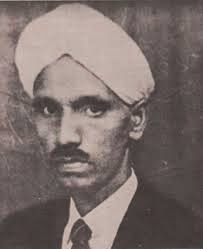
A photo of a young M K Thyagaraja Bagavathar in the 1937 edition of Cine Art Review Magazine. PC: From the archives of TCRC
Here is the visual of the ever green song ‘Vasantha Ruthu’by MKT in the film Sivakavi (1942).
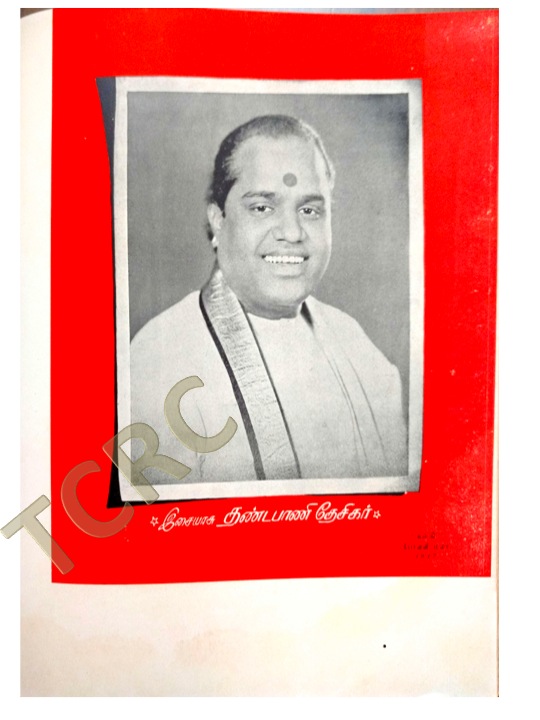
M.M.Dandapani Desikar was a great musicologist & composer. Songs such as ‘Jagat Janani’, ‘Inba kanavonru kanden, ”Thamarai pootha’ composed by him are hugely popular. His singing prowess was evident in ‘Nandanar’ (1942) produced by Gemini was a musical treatise, as he sang the compositions of Gopalakrishna Bharathi & Papanasam Sivan. Desikar also served as the HOD of Music Department of Annamalai University.
A photo of Dandapani Desikar from 1942 Kalki Deepavali Malar. PC: From the archives of TCRC
The below video features Sivan’s Composition Pirava Varam (from the film Nandanar) set in the unusual Lathangi raga, which is now a concert regular. The singer was MM.Dandapani Desikar
There was another singing star in the forties by name V.V.Sadagopan. He was a man of many parts, by being a university rank-holder, ICS aspirant, film actor, music teacher, performer and composer. He was a disciple of Ariyakudi Ramanuja Iyengar & Professor of Music in Delhi University till 1975. However, he went missing since he got off a train at Gudur in 1980, on his way from Delhi to Chennai. Since that none has information about him.
“Premaiyil yaavum matandhene” was a haunting romantic duet, based on Raga Desh, composed by Music Director S.V.Venkatraman, in the voice mellifluous voices of M.S.Subbulakshmi & G.N.Balasubramaniam. The movie was Sakunthalai (1941) , directed by Ellis Dungan.
D.K. Pattammal was inducted into playback singing in Tamil screen by the lawyer-turned-filmmaker cum director, K. Subramaniam, for ‘Thyaga Bhoomi’ (1939), at the instance of Papanasam Sivan. She only accepted songs of devotional or patriotic flavour and declined offers to sing romantic songs. She sang in many super hit films of the yesteryears. But there was a song ‘Sri Saraswathi’ which she recorded for Gemini’s ‘Miss Malini’ (1947), which was not featured in the film, though she was paid a handsome remuneration for the same.
M.L.Vasanthakumari was in the top amongst playback artistes of those times. In ‘Krishna Bhakti’ she even appeared on screen, rendering ‘Enta Veduko’ in a concert scene. N.S. Krishnan produced ‘Manamagal’ gave her the all-time hits ‘Ellam Inba Mayam’ and ‘Chinnanchiru kiliye’, which are being sung even by the kids in Super Singer reality show. There were many other memorable numbers of MLV such as ‘Konjum Purave’.
J.P.Chandrababu was a versatile actor-singer of his own unique style. He had an unique voice. In AVM’s ‘PeNN’ (1954) he even sang ‘Kalyanam..haha..kalyanam’ for S.Balachander, the actor-director-veena maestro. There are many memorable songs of Chandrababu to name a few: ‘Pambara kannale’, ‘Naan oru muttalunga’, ‘sollurathe sollipurren’, ‘Jolly life’, ‘Budhiyulla manithar ellam’. In fact his entry into the filmdom was very dramatic. While fishing for a film role, his life took through struggles leading to utter frustration that he attempted suicide in the premises of Gemini Studio in 1952, having failed to meet S.S.Vasan. Later, when Vasan came to know of this episode he gave him a small role in the film Moonru Pillaigal. Chandrababu rose to become a sought after artiste that in the film, ‘Sabhash Meena’ he commanded a remuneration that brushed past that of his co star Sivaji Ganesan. But in his later days he was broke and died penniless! This writer has seen him walking the Dr.Rangachari Road in his lesser fortunate days.
There were many other formidable ghost voices of those times which deserve detailing here. But for want of space in this write up we are constrained in not dealing with them. This does not in any way undermine their mighty contribution to Indian Tamil film music.
The magic of pre sixties’ Tamil film music, till recently, were available only on those old vinyl records. Now that the technology has brought them to us through other music formats, there no stopping to patronise these classic gems.
You cannot accept or even imagine Indian Films without songs. Whether it is a romantic duet or a parody number or song with some philosophy engrained in it or even an off screen rendering in the backdrop of a visual, songs have thrived,to the enchantment of the movie goer. There are instances where the songs have outlived the memory of a film in which they featured. In contrast, western films had limited number of musicals like My Fair Lady, Fiddler on the Roof, South Pacific where songs featured, as they were based on Broadway Musicals.
In the bygone days, the music came from those fragile vinyl records as they revolved under that magical pin! The success of Indian Cinemas’ music was amplified by the music companies such as HMV, Odeon, Columbia that published music, then. Out of these HMV fascinated me the most as a child, with its dog peering into the phonograph player, with inscriptions “His Master’s Voice”. In later adult years, I learnt that this logo was based on a painting by Francis Barraud, a Liverpudlian painter, with the same caption. Francis painted his late brother’s pet dog Nipper, as Nipper would run over to the phonograph and listen intently to the voice of his late master. In India, HMV became RPG when bought out by RP.Goenka Group and later came to be known as ‘Sa Re Ga Ma’.
In my childhood in the village, around late forties, I used to sprint to one of the neighbouring houses where a ‘thatha’ lived, to see & listen to his gramophone, as he played ‘oridam thannile’ song. Here is the video of the very song from the 1949 fim ‘Velaikkari’, sung by P.Leela & V.N.Janaki (wife of MGR) in the music of C.R.Subburaman & S.M.Subbiah Naidu.
In the initial days of Talkie Cinemas, it was a prerequisite that the main artistes had singing ability. Personalities such as M.K.Thyagaraja Bhagavathar, S.G.Kittappa, P.U.Chinnappa, Honnappa Bhagavathar, K.B.Sundarambal, M.S.Subbulakshmi, G.N.B, T.R.Rajakumari , T.R.Mahalingam, N.C.Vasanthakokilam were all singing stars. Most of them could travel to high altitude octave levels with ease. They had to be mostly loud in rendering as was the need of the recording technology available.
Somewhere, the play back artistes, who lent the actors their ghost voices, took avtar as a professional tribe in cinemas. That has a background too.
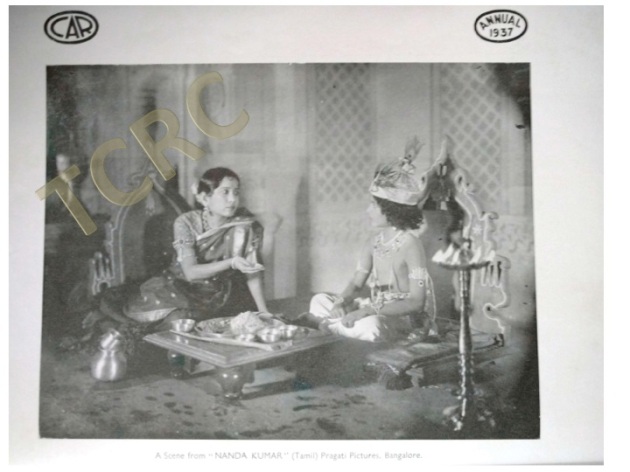
When AVM was making ‘Nandakumar’ he found a song rendered by the actress playing Krishna’s mother, Devaki was far from satisfactory. So he got an innovative spark of replacing the sound track of the song recorded by the actress with an external voice and shooting the song with the actress lips ‘sync’ing. And he got cracking with that idea which finally worked. AVM commissioned a then prominent Carnatic musician of Bombay, Lalitha Venkataraman, to render the song. It worked, as the song was re-shot with the actress moving her lips to Lalitha Venkatraman’s singing. This is the origin of the playback system in Tamil cinema. Necessity, sure, is the mother of invention! It was a major breakthrough in those times, which practice is continuing with great tradition & aplomb even into these days of state of the art sound engineering.
A still from a scene in the film Nandakumar published in the 1937 issue of Cine Art Review Magazine. PC: From the archives of TCRC
The current generation or even the immediately preceding one might not have had the opportunity of listening to the old Tamil film songs of fifties & prior, leave alone knowing the names of playback singers of those times? This writer has catalogued nearly seventy Tamil Film play back singers (some of them actors too) of sixties and the prior period extending back to thirties. These names, alphabetically, are: A.G.Ratnamala, A.L.Raghavan, A.M.Raja, A.P.Komala, A.S.Mahadevan, Balamurali Krishna, C.R.Subbaraman, C.S.Jayaraman, Chandrababu, D.K.Pattammal, G.N.Balasubramanyam, Gajalakshmi, Ganasaraswathi, Ghantasala, Hemant Kumar, Honnappa Bhagavathar, Jamunarani, Jesudas, Jikki, K.A.Chokkalinga Bhagavathar, K.B.Sundarambal, K.R.Ramasami, K.Rani, K.V.Janaki, K.Vijaya, Kanaka, Kothamangalam Seenu, L.R.Easwari, M.H.Hussain, M.L.Vasanthakumari, M.M.Dandapani Desikar, M.R.Santhanalakshmi, M.S.Rajeswari, N.S.Krishnan, Nagerkoil Mahadevan, P.A.Periyanayaki, P.B.Srinivas, P.Bhanumathi, P.Leela, P.Suseela, P.U.Chinnappa, Pazhani Baghirathi, R.Balasaraswathi Devi, Radha Jayalakshmi, Raghunath Panigrahi, S.C.Krishnan, S.M.Subbiah Naidu, S.Varalakshmi, Sarangapani, Sirkazhi Govindarajan, Srinivasan, Sulamangalam Jayalakshmi, Sulamangalam Rajalakshmi, Sundari Bhai,T.A.Madhuram, T.A.Mothi, T.M.Soundararajan, T.R.Mahalingam, T.R.Rajakumari, T.R.Ramachandran, T.S.Bagaavathi, T.V Ratnam, Thavamani Devi, Thyagaraja Bhagavathar, Tiruchi Loganathan, U.R.Jeevarathinam, Udutha Sarojini, V.J.Varma, Vasundara Devi, V.N.Sundaram, V.Nagaiah, V.T.Rajagopalan, V.V.Sadagopan. Huff….even reading this long enumeration of singers of yesteryears makes one pant!
Here is another popular song, in the lighter vein, “Oosi pattase” from the film ‘Digambara Samiyar’. (1950), in the voices of Gajalakshmi & V.T.Rajagopalan. The tune of this duet, between a young girl and her grandfather, was inspired by a popular Hindi tune ‘O…..dilwalo!’. The music directors G.Ramanathan & S.M.Subbiah Naidu.
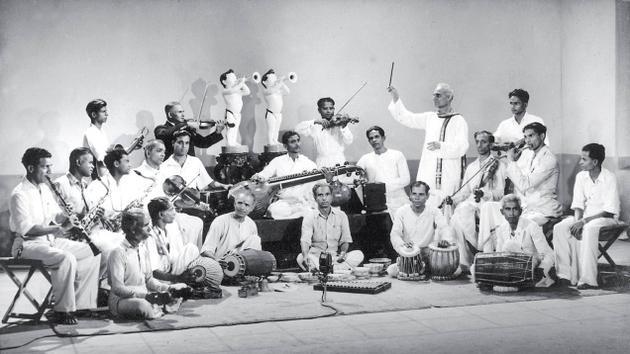
From the early talkie Tamil films and up till the fifties the film songs followed the classical Carnatic genre and there are gems among such compositions. Those days many senior music directors were employees of big Studios which owned orchestras.
Music Director MD Parthasarathi with his orchestra at Gemini Studios. PC: unknown
AVM’s orchestra was known as Saraswathi Stores Orchestra. Even though these orchestras had many Western instruments like Trumpets, Clarinets & French Horns, besides typical desi instruments like Jaltharangam, Veena, Morsing, Hormonium, they all played Carnatic tunes. To say it all, in those days even the Madras Corporation had a Band consisting of Western Instruments playing songs like Chakkani Raja or Nagumo! There was also a famous private Brass Band in the old Madras known as Nadhamuni Bros. Band, which was, out and out, a Carnatic music band. This shows how strong the classical music had influence on general public.
It was only at the advent of MSV-TKR in the early fifties the cine music assumed a light music genre, which is why they were called Mellisai Mannargal. In fact, MSV-TKR duo stepped into main stream music direction when C.R.Subburaman died abruptly leaving unfinished music assignments. The era of MSV-TKR heralded a new chapter in Tamil film music. It was also the induction of musical instruments like Accordion, Dilruba, Bongos, Grand Piano, Spanish Guitar, Mandolin and the like into orchestration. They experimented with numerous genre of music. You could spot jazz, blues, samba, rock, cha cha cha and what not in some of their compositions. Their music never drowned the lyrics. Together they created magic through the voices of living legends for decades well into seventies. You need a dedicated write up to discuss their music.
In the early days they used the lyrics of celebrated personalities like Bharathiyar , Gopalakrishna Bharathi, Thayumanavar et al. Then there were composers of the tall order of Papanasam Sivan, Bharathi Dasan, Kalki Krishnamurthy. There were other well known lyricists such as Udumalai Narayana Kavi, Aroordas, Maruthakasi, Kamatchi sundaram, Thanjai Ramaiahdas, Pattukottai Kalyanasundaram much before the later lyricists such as Kannadasan & Vaali.
Papanasam Sivan wrote many beautiful songs for films which are greatly remembered & revered. Mostly these were set to Carnatic tunes. Some of these, like ‘Maa Ramanan’ which was a cinema song, has come to be sung on Carnatic Stages even today. Papanasam Sivan’s Carnatic compositions were largely popularised by D.K.Pattammal & D.K.Jayaraman. Another interesting thing about Papanasam Sivan is, neither his name was Sivan nor was he from Papanasam. He was, in fact, born Polagam Ramaiah. His ‘mudra’ name in his compositions was ‘Ramadas’. He spent a lot of time in Papanasam, thereby adopting the “Papanasam” tag. Also, it was a tradition to address men of respect as Sivan in those days, this explains the suffix to his name. It is also said that there was lot of influence of Mahavaidyanatha Sivan, during his tenure at Trivandrum, on his compositions, thereby making Sivan as his second part of the name.
AVM used many songs of Mahakavi Subramanya Bharathi in their films such as Naam Iruvar, Vethala Ulagam, Ore Iravu, Vazhkai. The rights to Bharathiyar’s works were held by a gramaphone company owned by Surajmal & Sons which bought the rights for Six Hundred Rupees. Later AVM bought the rights from them for Ten Grand. It was at the instance of Omandur Ramasamy Reddy , who was the then Chief Minister of Madras Presidency between 1947 & 1949, AVM relinquished their rights.
Bharathidasan’s ‘Thunbam nergaiyil’ written by Bharathi Dasan as expression addressed to a child was used in AVM’s ‘Oar Iravu’ (1951) in the voices of M.S.Rajeswari & V.J.Varma and filmed in a situation of romance between lovers, played by Lalitha & Nageswara Rao






 The Cinema Resource Centre (TCRC)