Filmy Ripples – Exotic Instruments in Film music – Part 2

By P.V. Gopalakrishnan

In this second part on ‘Exotic Instruments’ that have been used in our film music, we would cover some more instruments.

Mandolin, a 17th century evolved Italian instrument, with traditionally four courses of double strings, had featured prominently in almost all film music compositions till late sixties.

Among the multitude of songs using Mandolin here is the popular song ‘Neela vanna kannane’ from the film Mallika (1957), in the music of T.R.Paapa.

Mandolin used to be in most of MSV-TKR compositions, having been played by the Legend M.S.Raju. M.S.Raju was a dominant & very senior member of MSV’s orchestra as the man of many parts as he played Mandolin & Santoor besides whistling & doing konnakol.

Listen to ‘Thangathile oru kurai irunthalum’ (Bagapirivinai – 1959) in the beautiful mukhda of the song, in M.S.Raju’s Mandolin.
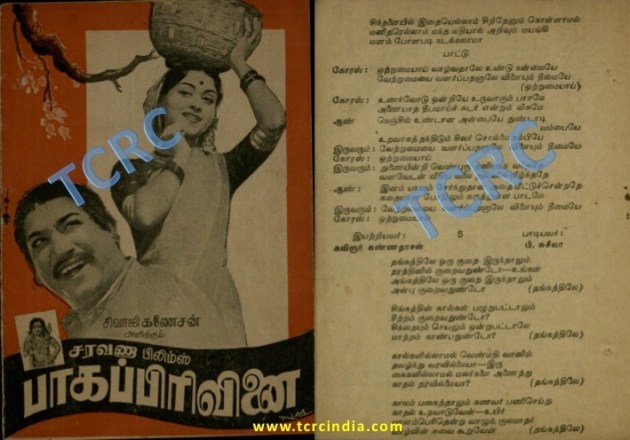
Bagapirivinai

Song book of Bagapirivinai with the page containing the song THANGATHILE ORU KURAI    PC: From the archives of TCRC

Santoor: is a Kashmiri instrument with seventy two strings and M.S.Raju as well as R.Visweswaran used to play Santoor for MSV.

It was Music Director Naushad, who made people to sit back & take note of this scintillating instrument in the song ‘Mere mehboob thuje’ from the film ‘Mere Mehboob’ (1963), when this instrument attracted attention of many.

The beautiful, reflective santoor used to be common in the BGM of many films, often as a gentle romantic hint in the score during the maiden romantic encounter.

Here is Santoor played by M.S.Raju in the song ‘Aaru maname aaru’ from ‘Andavan Kattalai’ (1964), in MSV-TKR composition.

You can also catch Santoor notes even in Ilayaraja’s ‘Chinna kannan azhaikkiran’ (Kavi Kuyil) in the opening BGM.

Sarangi, a bowed short-neck stringed instrument famed for its close imitation of the human voice, was rarely used in Tamil film songs. But wherever exceptionally used, they lent brilliant emotive grains to the song, as in ‘Ullathil nalla ullam’ from ‘Karnan’ (1964) in the composition of MSV-TKR. For this film MSV had brought musicians from the North.

There is an Instrument called Dilruba/Esraj, from Punjab, which sounds similar to the melancholic strains of Sarangi. The most famous exponent on Dilrupa in Tamil film industry was Dilruba Shanmugham who has played in-numerous scores for legends like MSV and Ilayaraja.

The lilting song, ‘Chinna thai aval’ from Thalapathi by Ilayaraja had Dilruba bits in it.

Sarod, a lute-like instrument from Afghanistan that rose to prominence in the Mughal courts too have featured in films, but exceptionally in Tamil films. The Sarod is highly versatile–when played quickly it can denote excitement and movement, and when plucked slowly it can touch your heart.

Here is a Tamil film song ‘Devan kovil maniyosai’ from the film ‘Mani osai’ (1963) in the music of MSV-TKR where Sarod appears twice in the song, post anthra, just after the flute.

The mesmerizing jugal bandhi between Sitar, Jaltarang and Sarod could be heard in the last portions “Madhuban Mein Radhika” (Kohinoor- 1960), composed by the legend Naushad.

Sitar, a multi-string plucked instrument that influenced the Western pop world in the 1960s (thanks to Pandit Ravi Shankar), when The Beatles and Rolling Stones adopted it. Tamil film music too has used it in songs & BGM.

Mr. Janardhan is a well known Sitar player who had played for film music too.

Sridhar’s ‘Nenjil oar Aalayam’ (1961) featured Sitar in its songs, in the composition of MSV-TKR.

Other notable songs in Tamil with Sitar notes included ‘Kettadhum koduppavane Krishna’ from Deiva Magan (1969) composed by MSV & ‘ennathan ragasiyamo’ from Idhaya Kamalam (1965) composed by K.V.Mahadevan.

Idhaya Kamalam

Song book of Idhaya Kamalam with the page containing the song ENNATHAN RAGASIYAMO PC: From the archives of TCRC

In Hindi, there are many songs featuring Sitar, one of which is the beautiful composition of Salil Chowdhri ‘Oh Sajna’ from the film Parakh.

Another classical based film song in Hindi featuring Sitar was ‘Tere bina zindagi main’ from Andhi composed by R.D.Burman.

Violin, a highly popular bowed four stringed Italian instrument with roots in 16th century Italy, has had global impact, including in orchestral performances of Indian film music, in a big way.

Violins are an integral part of film music orchestration. I’ve listed several songs that highlight its use as a solo instrument, or more commonly as part of a large orchestra seen in numerous Indian film songs.

In each cinema orchestra there will be a ‘First Violinist’ who leads the song along with the vocalist, without over powering the singer. Henry Daniels & V.S.Narasimhan were with MSV-TKR & Ilayaraja, respectively as First Violinists.

Then, of course, the cine orchestra would have a big collection of violinists.

Here are samples of how collective violin players contribute to the compositions. Here is ‘Poga poga theriyum’ from Server Sundaram where violin score has been very briskly & beautifully contrived by the music arrangers.

Shehnai, a double reeded wind instrument made out of wood with wooden flared bell at the other end, has been commonly used in Indian film music.

MSV-TKR had in their orchestra, Satyam whose delectable Shehnai notes could be heard in some of their compositions such as ‘Malai pozhuthin mayakkathile’ (Bagyalakshmi), ‘Avalukkum Thamizh enru paer’ (Panchavarnakili), “Alaya maniyin osaiyai naan’, ‘Ennai yar enru’ (Palum Pazhamum) ‘Kuthu vilakkeriya’ (Pachai Vilakku) & ‘Oru naal iravu’ (Kaviya Thalaivi).

Satyam was an asset to MSV-TKR. There was an episode when recording for Kaviya Thalaivi since MSV could not get what he wanted out of Satyam, resulting in multi takes, Satyam when he retired home after the work denied food from his wife & MSV had to call him up and cajole him!

Oboe, a double reed wood instrument like clarinet, but of treble range of musical notes, has also been used on & off in Tamil Film music.

A classic example is ‘Kanna karumai nira kanna’ from Naanum Oru Penn, in the composition of Sudarsanam in which oboe features.

Flute, an ancient instrument comes in different octaves as well as different pipe construction such as bamboo, metal etc. The traditional bamboo flutes of different sruthis (tonal variations) along with Piccolo Flutes (used in Symphonies) & Shakuhachi (Japanese Flutes) have been associated with pastoral compositions in Indian films.

MSV-TKR had an important orchestra member in Nanjundappa, the flautist. Listen to one of his chirpy works in the very beautifully composed melody ‘Indha manrathil oadi varum’ (Policekaran Magal).

In ‘Chingari Koi Bhadke’ – Amar Prem, composed by R.D.Burman, one can hear the rich & moving notes of a Bansuri flute of bamboo make usually used to signify a tragic or devotional flavours, transporting the listener to a different world.

Who can forget the beautiful flute piece in ‘Chinna kannan azhaikkiran’ (Kavi Kuyil) composed by Ilayaraja, as it seamlessly takes over from the Santoor bit & vioilin serande in the song.

‘Naan manthoppil’ by L.R.Easwari in the film ‘Enga veettu pillai’ (1965) features the shrill Picollo flute which has very high registry.

There are innumerable Tamil film songs embodying delectable flute notes, which are very pleasurable to listen but it would be impractical to mention all of them.

We will continue discussing more of the exotic musical instruments used in our films in our next posting too.
 

Filmy Ripples- Exotic Instruments in Film music – Part 1

By P.V. Gopalakrishnan

If you have found yourself listening to old Tamil film music and felt like you attain absolute ecstasy from the mosaic of sounds that the blend of various musical instruments produced, pleasing your eardrums, we know exactly how you felt!

From traditional Indian instruments to the exotic instruments from various parts of the globe, the music composers of Tamil screen composed their lilting music. In fact, by virtue of music composers like A. R. Rahman having become a global player, such globalization in music has brought some very exotic musical instruments such as Balalaika, Cajon, Harpejji etc to our door step.

The track record of Tamil film music goes much beyond the music directors & playback artistes who literally lived them. The immaculate talents of extremely talented musicians, who never were known to the listeners at large, deserved the credit of the lively compositions we cherish even to-date. The fruits of their creativity is an ever lasting a gift to the current & future generations of music-lovers.

In order that we appreciate those highly talented music makers of the Tamil screen, we must know about the various musical instruments they used in their breezy compositions, under the direction of music directors.

Here in this Article, we will have a ringside view of the various musical cine-orchestral music instruments along with links to videos and songs wherein these were used, particularly in Tamil films till the early seventies. However, we will eschew Accordion since we have already devoted a special Article on that.

Univox organ:

In old Tamil films the organs used to produce musical notes similar to the mighty church organs. Since then the organs have gone through a long history of evolving & development resulting in today’s one-man orchestra provided by the modern electronic keyboards.

Listen to ‘Ennai alum Mary matha’ by P.Leela from Missiyamma (1955), in the composition of veteran S. Rajeswara Rao, where the beginning music is of the organ.

 Bagpipes:

These are wind instruments using enclosed reeds, fed from a ‘bag’, which acts as the reservoir of air. The player keeps pumping air orally into the ‘bag’ as he plays. So, the difference between any wind instrument & bagpipe is that unlike the other wind instruments which are blown into with air directly from the player’s lungs, bagpipes receive air first into its bag from where it goes to the pipes. Though Bagpipe is predominantly seen as a Scottish instrument, bagpipes have been played for over a millennium throughout other large parts of the West.

I have not come across a bagpipe being used in any Tamil film songs. Though someone said, it has been used by K.V.Mahadevan in the song ‘Thottu vida thottuvida thodarum’, on a careful listening, I find, the bits resembling Bagpipes are in fact produced by the Organ of those times known as Univox.

As far as my information goes, Bagpipes were used only in the Raj Kapoor film Sangam (Music by Shankar Jaikishen) in the song ‘Bol Radha Bol Sangam’.

Banjo:

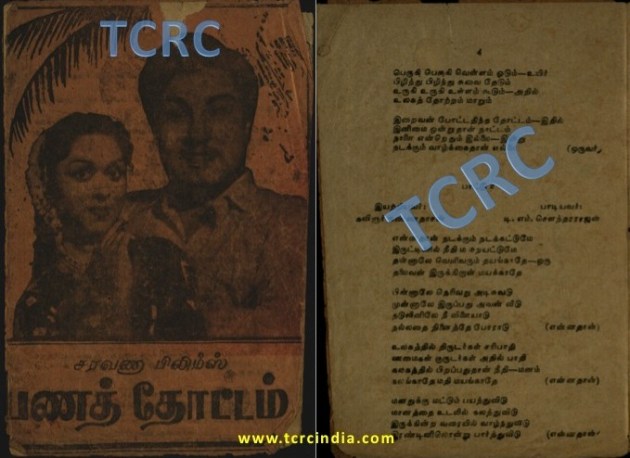
A plucked stringed instrument, which originated in Africa & got adopted in the country music of USA.  Banjo had not been very widely used in Tamil film music but there are specific songs where this has been used. For instance, MSV-TKR had used Banjo in few of their compositions & the one we have here for citing is ‘Ennathan nadakkum nadakkattume’, from ‘Pana Thottam’ (1963), where the string instrument you hear is a Banjo.

Ennathan nadakkum(Panathottam)

Song book of Pana Thottam with the page containing the song ENNATHAN NADAKKUM NADAKATTUME    PC: From the archives of TCRC

Bongos:

These are Afro-Cuban percussion instruments consisting of a pair of small, open bottomed drums of different sizes & played by fingers & palm.

Indian films till the sixties used this percussion instrument very frequently in the compositions. In fact instruments such as Accordion, Bongos & Mandolin ruled the roost In Tamil film compositions prior to seventies but became slowly extinct as there was a paradigm shift to the music genre & compositions. MSV-TKR had used Bongos in very many memorable songs. Ganesh (of Shankar-Ganesh Duo) who was a formidable member of MSV’s orchestra played Bongos.

Some of the songs using Bongos for percussion that deeply rooted in my mind include ‘Ullam enbathu aamai’, ‘Pesuvathu kiliya’, ‘Poga poga theriyum’ & ‘Silai eduthan oru sinna ponnukku’.

Here is ‘Pesuvathu kiliya’ from Deiva Thai, composed by MSV-TKR with the Bongo beats.

In ‘Silai eduthan oru china pennukku’ (Server Sundaram) too you get to hear percussion beats of Bongos.

Silai eduthan(Server Sundaram)

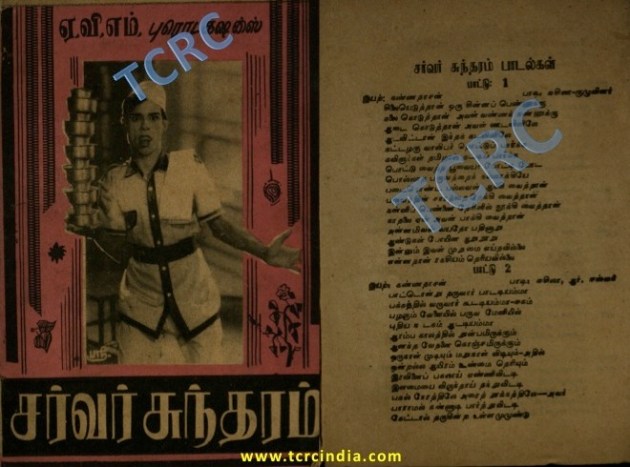
Song book of Server Sundaram with the page containing the song SILAI EDUTHAN ORU CHINNA PENNUKKU     PC: From the archives of TCRC

 Castanets:

 These are rhythmic percussion instrument comprising of a pair of concave shells joined on one edge by a string, originating from Turkey. O.P.Nayyar had used it often in his compositions. It is a hand held instrument used to produce clicks for rhythmic accents or a ripping or rattling sound consisting of a rapid series of clicks.

Here is a Tamil composition by MSV-TKR in the song ‘Pillaikku thanthai oruvan’ from ‘ Parthal Pasi Theerum’ (1962)., where you can hear the rhythmic wooden clap sounds produced by Castanets.

You can spot castanets in few other Tamil songs too such as ‘Kelvi piranthathu anru’ (Pachai Vilakku), the music director being MSV-TKR.

Kelvi Piranthathu(Pachai Vilakku)

Song book of Pachai vilakku with the page containing the song KELVI PIRANTHATHU ANDRU     PC: From the archives of TCRC

 Cello:

It is a four stringed bass instrument originated from Italy in 17th century, looking like a giant violin (held while playing against the seated cellist and traditionally played with a horsehair bow), has been used routinely in many Tamil Film Songs. However, due to its ‘Bass’ tone structure it has a low tonal registry & may not be heard separately unless played singly in the songs.

In ‘Silar sirippar silar azhuvar’ song from ‘Pava Mannippu’ (1960), composed ny MSV-TKR you can hear Cello.

In ‘Enge nimmadhi’ song  (‘Puthiya Paravai’ – 1963) too, one can distinctly hear Cello in the opening music just prior to the vocal of TMS.

Guitar:

A typically six stringed instrument with European roots with a multitude of incarnations from acoustic to electric, has featured commonly in many film songs.

Tamil Cinema has had amazing Guitarists such as Dhanraj Master, Philip, Ilayaraja, Chandrasekhar, Gangai Amaran & R.Visweswaran.  Of these, the last named late Visweswaran (husband of danseuse Chithra Visweswaran) was a close friend & college-mate of this writer. Visweswaran himself was an expert Guitarist who could play Flamenco genre music & had played for R.D.Burman.

Veteran Guitarist Philip debuted in the M.K.Radha starred Gemini produced film “Apoorva Sahodarargal’ (1949), introduced by the legendary Music Director S. Rajeswara Rao. Since that Philip had played for K.V. Mahadevan, Viswanathan – Ramamurthy, Sathyam and V. Kumar. Hindi music directors from Bombay such as Hemant Kumar, Madan Mohan, Chitragupta and Ravi wanted Philips to migrate to Mumbai. Philip, an autodidact, now in his eighties, was considered a genius. His guitar pieces were predominant in many Tamil film hits including  ‘Aha mella nada mella nada (Pudiya paravai), ‘Vannakili sonna mozhi’ (Deiva Thai), ‘Malar enra mugam onru’ (Kathalikka neramillai),  “Aval paranthu ponale’ (Paar magale paar), ‘Avalukkenna Azhagiya mugam’ (Server Sundaram), ‘Anubhavam pudumai’ (Kathalikka neramillai), ‘Aada varalaam’’ (Karuppu Panam).

In an Article by V. Balasubramanian titled “Harmony with strings” in The Hindu dated 27.4.2014, the author wrote “MSV during his heydays was a hard taskmaster who would leave no stone unturned till he gets what he wanted. During a particular recording, that started at 7 a.m, the work went on till next day morning. Philips pleaded with MSV to let him go but in vain. Finally, when it was pack up, Philips had to rush directly from the recording studio to the church where his wedding was to take place.“ This writer has had the opportunity of meeting this genius along with R.Visweswaran in early sixties.

“Ilaiya nila pozhigirathu” (Payanangal Mudivathillai) composed by Ilayaraja & rendered by SPB has ample guitar bits, played by Guitarist Chandrasekhar. As per an Interview by SPB, Ilayaraja had well over twenty retakes to get the Guitarist play those difficult Flamenco Notes to his full satisfaction. The results were obvious in the song!

We will continue discussing more of the exotic musical instruments used in our films in our next posting.

Filmy Ripples – Accordion in Film Music

  By P.V. Gopalakrishnan

In the early times when classical music was by far the stronghold in cinema, the orchestras, which were mostly owned in-house by Production Houses, comprised, mostly, traditional Indian musical instruments, including Harmonium & Jalatharangam.

Listen to this song by K.B.Sundarambal from the cult classic film ‘Avvaiyar’ (1953), in which Jalatharangam features along with violins.

Another old song where the BGM, which included Harmonium is minimalistic was from the film “En Manaivi” (1942), featuring Nellore Natesam.

Some of Western & African instruments were also in used in the Tamil movies produced prior to fifties, such as Clarinets, Trumpets, Violins, Piano et al.

Here is an old hit from Vazhkai, in which you could hear Clarinet dominantly in the BGM.

In fact, till much later, Clarinet solos featured in many Tamil film hits, like the song ‘Inbam Pongum Vennila’ from Veera Pandiya Kattabomman, composed by the legend G.Ramanathan. You can hear clarinet in this song in the opening music itself after Sitar, Violins & Univox, in that order.

The Magnum Opus production, “Chandralekha” (1948) by Gemini Vasan had its soundtrack composed by S.Rajeswara Rao with R. Vaidyanathan and B. Das Gupta collaborating with M.D.Parthasarathy  on the background score. In an old interview with ‘The Hindu’, Rajeswara Rao had recalled that it took him over a year to compose the music for the film, with much of the time being taken for the drum dance sequence. He stated that the music for the mammoth Drum Dance sequence they had used Trumpets, piano, many Double Bass violins and drums from Africa, Egypt, and Persia acquired from a visiting African war troupe. Cooling Rajiah played the Accordion & Piano in the gypsy song in the same film.

Chandralekha

A still of Ranjan from the Film Chandralekha directed by S.S. Vasan.
PC: From the Archives of TCRC

In the Post Independence era, the Tamil movies started seeing changes in terms of story subjects, the way dialogues were delivered & even the music compositions, in tune with the overall metamorphosis that was witness to the change of air, all around.

The music directors were ever ready to bring in new music instruments into film music.

Though Tamil Cinema, despite being the big brother of other Southern Regional Filmmakers, traditionally followed trends in Hindi film industry.

The sensational Rajkapoor film ‘Awara” (1951) had Musical notes that was thought to be Accordion notes, which distinguished the song “Awara Hoon” by Music Directors Shankar-Jaikishen duo, inspired by an old Turkish tune.

However, there is a theory that the notes were, in fact, not Accordion at all but was played on Harmonium by one Vistasp Balsara, who passed away in 2005. He claimed, in an interview to Calcutta Doordarshan, to have played such Harmonium pieces also in other classics such as “Yaad Kiya Dil Ne” (Patita, 1953) and “Aye Mere Dil Kahin Aur Chal” (Daag, 1952).

But Accordion has come to stay by then as an important cine instrument in Hindi. Here is another breezy number from another Rajkapoor starrer, ‘Dastan’, where notable Accordion notes by the player Goody Servai decorate the song composed by Naushad.

There were other noted Accordionists in Hindi Film Industry such as Kersi Lord (Roop tera mastana in Aradhana), Sumit Mitra (Har Dil jo pyar karega in Sangam) Enoch Daniels (Beqrar karke hame from Bess saal Baad). Of these we have to specially mention about Late Kersi Lord, who was a multi instrumentalist & who immortalized some of the Hindi film hits with his contribution. He was honoured with Dadasaheb Phalke Award in 2010, as a cine musician. He was the one who played the bells like sounding ‘Glockenspiel’ instrument in the famed song ‘Main Zindagi Ka Sath Nibhata Chala Gaya’ composed by Jayadev in ‘Hum Dono’.

The accordion thus became an oft-used instrument in Hindi cinema under legendary Music directors such as C Ramchandra, Naushad, Shankar-Jaikishan, Salil Chowdhury and S D Burman as they made it a part of their compositions.

It was in Pava Mannippu (1961) that MSV-TKR featured Accordion in ‘Athan….En athan’ composition & the  Accordionist was our own Mangalamurthy.

Accordionist Mangalamurthy was this writer’s craft teacher in the high school, in the late fifties, but owing to his parallel music career he was hardly seen in the school and was on long leave.

MSV had used Accordionist Mangalamurthy in many of his compositions. Some of the songs where Accordion has predominantly featured are “Avalukkenna” (server Sundaram), “Ulagam piranthathu enakkaga” (Paasam), ‘Kannirandum mella mella’ (Andavan Kattalai),  Ponaal pogattum poda (Palum Pazhamum), “Netryvarai nee yaro” (Vazhkkai Padagu), “Unga ponnana kaigal” (Kathalikka Neramillai), “Poranthalum ambilaiyaa” (Policekaran Magal), “Kan pona pokkile” (Panam Padaithavan), “Iyarkkai ennum ilaiya kanni” (Shanthi Nilayam), “Varavu ettana” (Bhama Vijayam), “Naalai intha neram parthu” (Uyarntha Manithan).

In the following video of Avalukenna song, Mangalamurthy features himself playing accordion, along with his other legendary co musicians, such as Philip (Guitarist) & Raju (Mandolin/Santoor/ Yodelling).

The accordion’s origin is said to be from Berlin & this heavy instrument, worn on the player’s chest, weighs about 7 kgs.

A R Rahman gave Accordion a home coming again & his accordion could be heard throughout the film Guru & even in his Tamil composition ‘Nenjukkulle’ from the film ‘Kadal’.

https://soundcloud.com/aruin/kadal-bgm-nenjukkule-accordion

We will talk about some more veteran cine musicians from old Tamil Films & their exotic instruments in our upcoming articles.

Filmy Ripples – Rise & fall of vamps (Part 2)

By P.V. Gopalakrishnan

Then the villis transformed into what were known as ‘vamps’. The dictionary definition of a vamp is “a woman who is conscious of and makes use of being attractive to men in order to get what she wants”, akin to a honey trap. In films, vamps somewhat resembled this description.

The vicious vamps curated by Hindi cinema were all repulsively seductive, and in short vamps were vain, symbolizing everything an ideal Indian woman was not. Instead, they profiled what dangerous women were like, in a country where women of virtue were revered equated to Almighty.

In Hindi we had vamps played by Bindu, Helen, Vaishali, Padma Khanna, Jaishree.T, Aruna Irani & Kalpana Iyer, wearing coloured wigs, contact lenses & skimpy dresses.

Talking of Helen who was a pioneer in this tribe, she was born in Burma to an Anglo Indian father & a Burmese mother, but migrated to India 1n 1942 on the invasion of Japanese army of Burma. She became a hit in Hindi screen with her item number “mera naam chin chin choo’ in ‘Howrah Bridge’ (1958). Immediately, the same year, the Tamil movie ‘Uthama Puthiran’ imported her into Kodambakkam, as she danced in the famed hit number ‘Yaradi nee mohini’, along with Sivaji Ganesan. She has since appeared in nearly seven hundred films with her item numbers in vamp roles. Her song & dance sequence in ‘Piya thu ab tho aaja’ song in Caravan (1971) is evergreen.

Here is a ‘club dance’ number from “Deiva Piravi” (1960).

The film ‘Karuppu Panam’ (1964) produced by Kannadasan had an ‘club dance’ sequence in the song ‘Aada varalaam’ filmed on Sheela, in tight (and perhaps even ill fitting) western outfits, though she already was a busy main heroine then in Malayalam. This song, set in western genre became an immortal hit.

Here is another instance of ‘club dance’ in the song ‘Uravinil fifty fifty’ where Rajeswari lays a honey trap for AVM Rajan in the film ‘Galatta Kalyanam’ (1968).

In our own Tamil screen we had an array of vamps, to name the prominent ones Jothilakshmy, Vijayalalitha, Jayamalini, Anuradha, CID Sakunthala, Disco Santhi, Silk Smitha.

Pattanathu Rajakkal

A still from the Film Pattanathu Rajakkal of SILK SMITH with Vijayakanth.
PC: From the Archives of TCRC

The vamps started donning wigs & minis as they danced, seducing the Hero in our films too, a departure from the run-of-the-mill villis with their rolling eyes & a vicious tongues, as seen in this video from the film “Sorgam” (1970) with Vijayalalitha & Sivaji Ganesan.

These vamps were either ‘one dance’ item number girls or some parallel running characters in the storyline.

Then Silk Smitha, introduced to Tamil screen by Vinu Chakravarthi, became the perennial item number girl and never came out of her image as femme fatale. Disco Shanti, Smitha’s contemporary also settled for the “item girl” tag. Here is a visual of the song ‘Nethu rathiri yamma’ song featuring the most popular vamp character playing Silk Smitha with Kamal Hassan in ‘Sakalakala Vallavan’ (1982).

But in due course, these specialist dancers meant for such vamp roles were slowly losing their relevance, partly owing to the subjects as well as the way films were made, as even new generation of actors took the center stage.

And a stage came when the heroines themselves started doing such dance numbers, sending home the breed of club dancing actors homeward, in retirement.

There was this slow acceptance that lewd lyrics & suggestive movements were no more in the exclusive realm of those who were once labeled as vamps and that the respected heroine could do it all.

This mindset of cine goers perhaps stemmed from the overall changes the current generation has witnessed & accepted arising out of education, liberated mindset, globalization etc.

As such the vamp has died a natural death in our cinemas, as the perception of them as a hugely negative clan and holding them in a water tight genre has changed along with the emergence of realizing a ‘vamp’ character is generally engrained in every ordinary living individual. That is why we see, in the soap operas on TV, normal woman characters being over dramatized as mega ‘villi’s with their ever scheming negative plans. This has becoming the major sell out of today’s TV serials!

Filmy Ripples – Rise & fall of vamps (Part 1)

By P.V. Gopalakrishnan

The early Tamil cinema was either associated with period of pre-independence or the post republic decades that succeeded. Then, the life in India, was relatively simple, with down to earth values and without much complications. There was less room for negative vibrations, cynicism or self doubt. This was replicated on the silver screen in its social subject movies. As such, the social movies were largely family subjects with love & romance, with only a loner villain who was usually a male character constantly raising his eye brows & gritting his teeth, in scheming an evil plan against the hero & his clan or against the society at large.

But, the negative characters are part of human evolution and are handed down from times of Epic, such as Ravana in Ramayanam or Duryodhan/ Sakuni in Mahabharatham. So the ‘villains’ became integral part of story lines in films too. In carrying the legacy of negative characters, there was a battery of this genre in Tamil screen, to name a few like M.N.Nambiar, P.S.Veerappa, R.S.Manohar, M.R.Radha, S.Ramdas, O.A.K. Thevar, T.S.Baliah, T.K.Ramachandran, Kallapart Natarajan, playing dastardly villains with raucous laughs, each with their own individual hall mark. Of course, some of them became character or comedy actors later as they had the dexterity to emote in such roles too. Such instances repeated later too with villains like Nasser & Satyaraj even transcribing into hero roles. There was also the reverse, as a hero like Jayashankar later came to shine in villain roles. Occasionally a well-accepted frontline hero such as Sivaji Ganesan or Kamal Hassan too appeared in negative roles. What about Nagesh in a negative role in Thillana Mohanambal where he excelled with a tinge of comedy?

Sigappu Rojakkal

A working still from the Film Sigappu rojakkal in which Kamal Hassan Played a negative role. PC: From the Archives of TCRC

Kanavane Kankanda Deivam

A working still from the Film KANAVANE KANKANDA DEIVAM of M.N. Nambiyar.
PC: From the Archives of TCRC

Soon, the female equivalent of a villain, colloquially called ‘villi’, also started appearing in films. This could be construed as an organic transition in the anthology of Tamil Screen as it evolved & got rediscovered with times. If there could be a negative character why would it be restricted to one gender alone? The logic worked!

To slightly digress, talking of evolution of cinemas, internationally, it was in early thirties that larger than life legendary characters like Superman & Batman were conceptualized more as an ‘escape into fantasy’ when the world was reeling under the world war.

Likewise, it was time for Tamil Screen too to have ‘villi’s in their shopping list! After all, even in Epics we have had villi like ‘Manthara’ aka ‘Kooni’! And the Tamil Screen has had villi like Sundari Bai, M.S.S Pakkiyam, C.K.Saraswathi, and M.N.Rajam. Their equivalents in Hindi were Nadira, Lalitha Pawar, Shashikala Leela Mishra & the like.

CK Saraswathi

The picture above is of C.K.Saraswathi as she appeared in ‘Thillana Mohanambal’, in the ever-watchful ‘madam’ character of ‘Vadivambal’ with whom T.S.Baliah, in his Percussionist role, used to display amorous overtures in the film.

Soon, the ‘terminology’ (if I may call it so), “Item Number’ came to be coined by Bollywood, in reference to songs made up of lyrics, so sleazy. Whereas they were traditionally synonymous with what was known as ‘club dances’ in Tamil screen in the past. M.S.S.Pakkiyam, who had done several villi roles, besides others, had done an ‘item number’ as early as 1947 in the film ‘Rajakumari’, as seen in the video below.


A sequence featuring Kumari Kamala as an ‘item number’ girl was in the popular song “Oh Rasikkum seemane vaa” from the film ‘Parasakthi’ (1952).


M.N.Rajam was always ‘the other girl’ in movies with a tinge of villainy. But here she features as a vamp in “Ratha Kanneer” (1954) in the popular song and dance sequence “aalai aalai parkkiraar”.


The following video shows Rajamani in a vamp role in the film ‘Paasa valai’ (1956), music by MSV-TKR.


(to be continued)

Filmy Ripples – Cars that added glitter to movies

By P V Gopalakrishnan

Vintage & classic cars are the cherished dreams of car enthusiasts & collectors worldwide, but have been routinely dubbed as ‘ottai’ car in the average common man’s lingo, where the Tamil word ‘ottai’ refers to a ramshackle one. As such we have not given enough attention to those timeless beauties, which had featured in our own old films, though they roamed the streets of this planet with great name & fame, at some points in time.

In Hollywood, there are specialized companies that provide the rentals of cars from a collection of older vehicles or broker the rental of privately owned vehicles to production companies. A vintage car owner can list his car with one or more of these companies that provide classic cars to the Film industry in USA. They call the owner when a need for his car arises.

Who can forget those cute Mini Coopers that appeared in ‘The Italian Job’?

As for Indian films, there are no catalogued sources of supply of old cars to films as Props. Therefore, the supply sources must be from various sources that are often gray.

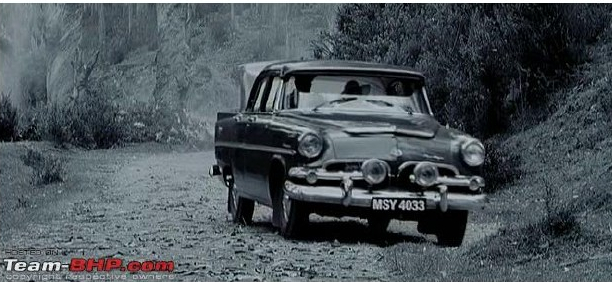
The following 1958 Model Chevrolet Impala Convertible featured in the film ‘Karagattakaran’ along with the team of Kaundamani & Ramarajan.

KARAGATTAKARAN-page0001

The Dodge Kingsway which appeared in the Malayalam Movie ‘in Ghost House Inn” (2010).

in-ghost-house-inn-page0001.jpg

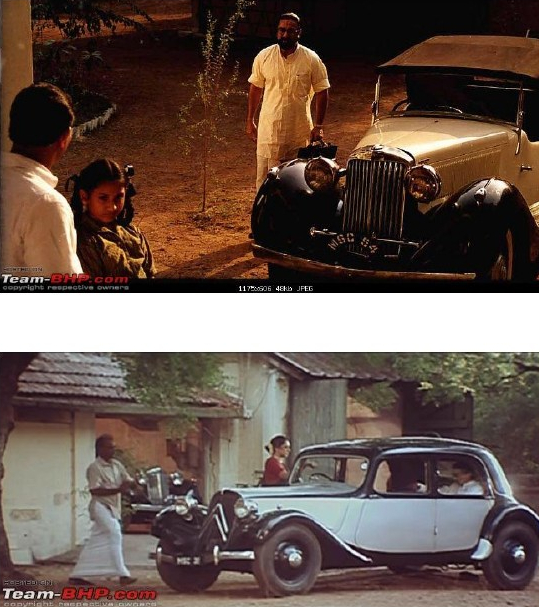
The following stills from Kamal Hassan’s ‘Hey Ram’ feature two of the exotic cars of yester years used in that period movie.

hey-ram-page0001.jpg

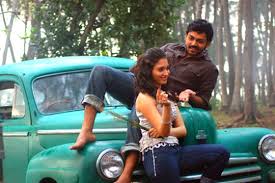
A Ford Super Deluxe Model of the Forties featured in Tamil movie ‘Paiyya’.

images.jpeg

The viewing of any old film that features cars gives us a peek of some of the lovely classic vintage beauties that the automobile world have had. Whether it is the Hero flaunting his car to his lady love or a group of spoiled brats roaming in a classic car or it is a hot chase scene or even a emotion filled scene with a car part of the scene, the Dodges, Desotos, Camaros, Plymouths, Pontiacs, Impalas, Studebakers, Oldsmobiles, Fords, Hillmans, Chevrolets, Morris Minors, Austins & Vauxhalls have had omnipresence on our silver screens.

Here is a scene from Sabapathy (1941), where T.R.Ramachandran rode a Morris 8 Cabriolet along with his consort, T.R.Padma, who was then the Brand Ambassador for Lux Beauty Soap, singing “Kadhal Vegam”.

Those days filming a moving car posed a lot of technical difficulties. As such, some long shots were used of the car in motion inter-cut with tight close ups of the artistes seated in the car. Some close ups of the car with the actors involved a stationery car being shaken manually as the actor in driver’s seat turned the steering wheel, while the back projection of trees moving in reverse direction added to reality.

Here is a song ‘Kada kada loda loda vandi’ from Samsaram (1951), music by Emani Sankara Sastry, filmed in a sequence where the automobile borne lady Vanaja & her sidekicks boo the bullock cart man Sriram.

Taking a romantic drive with a song, ‘Jagamathil inbam’ on their lips are T.R.Mahalingam & S.Varalakshmi in the movie ‘Mohana Sundaram’ (1951).

In the off screen song sequence from the movie ‘Yaar paiyan’ (1957), a emotion choked Gemini Ganesan transports the young Daisy Irani in his classic Fiat to abandon the child, despite his mind calling his action grossly unfair.

A break free Gemini Ganesan drives his classic vehicle around the town singing ‘Minor life romba jolly’ in the film ‘Illarame nallaram’ (1958).

The romance was in the air as Gemini Ganesan drove this beautiful Buick with his consort Savithri on the winding roads of a Hill Station in the film ‘Pasa malar’ (1961).

Now, let us Look at Sivaji Ganesan & friends expressing their ‘vagabondism’ in ‘Nichaya Thamboolam’ (1962) in the song ‘Andavan Padachan’ as they move about in their limousine.

In another boy meets girl episode, Muthuraman & Kanchana sing & dance in the then pristine Marina of the sixties from the iconic comedy film ‘Kathalikka naeramillai’ (1964). In this duet melody, ‘Enna parvai unthan parvai’, the pair drive off in a ship long luxury car, which once belonged to Padma Sri. Jothi Venkatachalam.

In the same movie, in a chivalrous situation in the song “Unga ponnana kaigal punnagalama’, Ravichandran teases the sisters Kanchana & Rajasree as he helps them inflate their the tyres of their Standard Herald car, before driving away in his Austin.

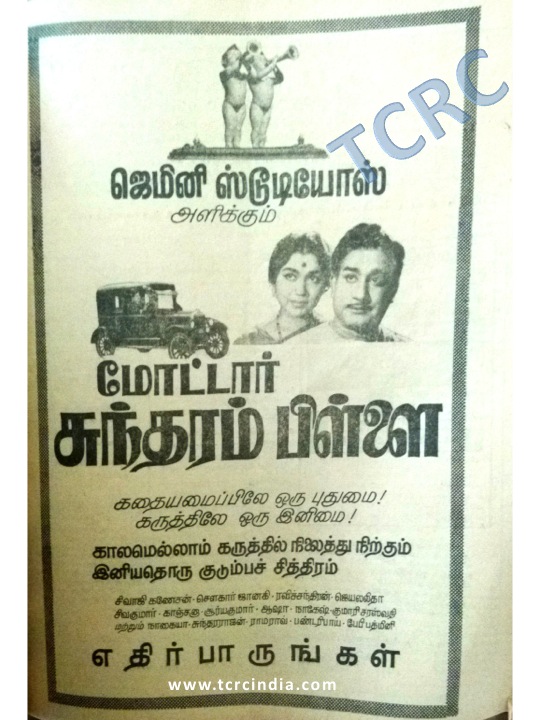
The Gemini produced ‘Motor Sundaram Pillai’ (1966)  featured Sivaji Ganesan driving what seems to be a real vintage & iconic T – Model Ford.

Motor Sundaram Pillai

An Ad for Motor Sundaram from Naradar dated 15.11.1965 PC: From the archives of TCRC

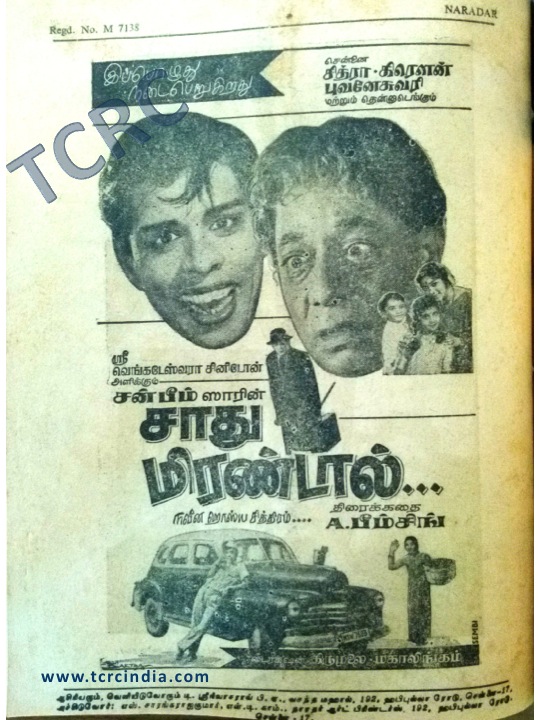
In the comedy film ‘Sadhu Mirandal’ (1966), Comedian Nagesh drove, as a Taxi Driver character, a 1947 Model Chevy Fleetmaster throughout the movie. Such cars were running in the streets of Madras till the sixties, as a left over legacy of British Raj. Those days, in the front parking bay of Madras Central Station you could witness a sea of such huge imported cars, bearing yellow & black colours.

Sathu Mirandal.jpg

An Ad for Sadhu Miranda from Naradar dated 01.12.1965 PC: from the archives of TCRC

The song ‘Azhagirukkuthu ulagile’ from the film ‘Anubhavi Raja Anubhavi’ (1967) has Muthuraman & Nagesh frolicking around in their car.

https://m.youtube.com/watch?v=jxS4aK3uYbU#

Sivaji Ganesan takes his wards on a city tour in his jalopy in the film ‘Enga Mama’  (1970)  with a song ‘Nan thannam thani kattu raja’.

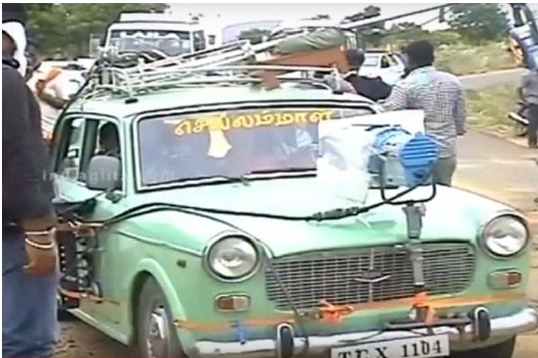
Contrast to the old techniques of filming car sequences, today the technology of lighting & camera has so much become advanced that filming the interior of a moving vehicle is relatively a cake walk. The following still shows the filming of car scenes in ‘Pannaiyarum Padminiyum’

PADMINI-page0001

The modern filming techniques of a car involve strapping the cinematographer in front of the moving vehicle as he operates his camera gliding on a railing back & forth from the bonnet side to side door windows.

In India, private owners parade classic cars in rallies conducted locally. Otherwise certain private collectors from the super rich and erstwhile royal families have them. However, the authentic supply of classic cars in India is not known by any documented & reliable source.

It is not as if we are in a country like Cuba where one could take a step back into automotive time, as Havana is rife with classic cars moving about its streets, literally, making Cuba a rolling car museum, thanks to the four-decade-long grudge the late Fidel Castro held against the United States, placing a ban on foreign vehicle imports.

As such the films do appease the vintage auto lovers by featuring them now & then in their productions.


Filmy Ripples – Fifty Shades of Lullaby

By P V Gopalakrishnan

A Lullaby, as per Cambridge dictionary, is “a quiet song that is sung to children to help them go to sleep”. Indeed, a down-to-earth meaning, as we commonly perceive them to be. It is said that when babies are disturbed by sudden movements or noises, their blood pressure and heartbeats shoot up instantly when a Lullaby could draw the disturbed child back to normalcy by calming them, in a jiffy. So, it is music therapy that is engrained in lullaby.

Ancient literatures have lullabies in them. Sages and ascetics have sung what are known as ‘PiLLai Thamizh’ in Tamil literature on Celestial Entities. Bhakthi has found its apt expression in the lullaby composition, ‘Mannu pugazh Kosalai thum mani vayiru vaaythavane’ on Lord Rama, by Kula Sekara Azwar.

The poignant lullaby “Omanathingal Kidavo”, had been composed by the famous Malayalam poet Iravi Varman Thampi as lullaby for the young Swathi Thirunal, strikes a tender chord as its soothing notes have lulled generations of children asleep.

Rhythmic usage of words like ‘Aararo’ and ‘thalelo’ are used in ancient Tamil lullabies, typically. Grannies used to twirl their tongue making phonetics to sound like ‘loLa loLa loLa aayeee’ to calm the child.

Lullabies are a part of the cultural legacy of humanity and they have always found a place, rightfully, in films.

The filmy lullaby has had even the proud history of being nominated to Oscar, with the Tamil lullaby, composed and sung by the popular Carnatic vocalist Bombay Jayashri in the Hollywood film ‘Life of Pi’ going for Oscar nomination!


Traditionally, Raga Neelambari is associated with lullabies. However, movie lullabies follow a freelance pattern and do not restrict only to Neelambari. The movie lullabies are set to soft music using music instruments such as pipo-fone, piano, flutes, sitar, bells, vibrafone etc. that produce baby friendly sounds, attributable to sleep mode. Listen to this beautiful Hindi lullaby, based on a Bengali tune, from ‘Sujata’.


Our own cinemas have featured many a lullaby, with various underlying emotions of the character that renders the lullaby song on screen. But the situations in which these lullabies were included in films had their own unique connotations, some sorrowful, some wishful about posterity, some tickling funny bones, some inspirational and some comical.

There have been innumerable lullabies on our Tamil screen & this writer could enlist about thirty of them in this write up, discussing some of them.

It is commonplace for a mother to sing a lullaby to her offspring, which is full of positive things as the child grows. She packs her natural love & affection into it that it is a form of maternal blessing, so to say, to the child, as it tries to catch forty winks.

The memorable songs in this ‘love & affection’ category include ‘Anbil malarntha nal roja’ (Kanavane Kan Kanda Deivam), ‘Kanne vanna pasunkiliye’ (Yanai valartha vanampadi), ‘Kannin maniye vaa’ (Valliyin Selvan), ‘Poonchittu kannangal’ (Thulabaram), ‘Thenral vandhu veesadho’ (Sivagangai Seemai), ‘Velli nila mutrathile’ (Vettaikaran) featuring either of the parents of the child, in the filmed sequence as rendering the lullaby.

The below video is of a beautiful lullaby from ‘Kanavane Kan Kanda Deivam’ (1955), filmed on Anjali Devi, was in the music score of Hemant Kumar & the singer was P.Suseela. The music arrangement is simple with violins & guitar as main instruments.


Another beautiful lullaby of classical base, whose video is below, ‘Kannin maniye vaa’ rendered by M.L.Vasanthakumari in ‘Valliyin Kanavan’ (1955) in the music of P.S.Anantharaman, has been filmed on a lactating mother, enacted by M.S.Sundari Bai.


Another very melodious lullaby rendered by twin singers, S.Varalakshmi & T.S.Bhagavathy, is in the following video. The moving music, full of classical flute notes, was by MSV-TKR from the Kannadasan produced ‘Sivagangai Seemai’ (1959).


A fatherly lullaby can be heard in the following video, filmed MGR. T.M.Sounderrajan has rendered it very movingly in the melodious soft music of K.V.Mahadevan from the film ‘Vettaikaran’.


Sometimes, the lullaby incorporates situational advice to cajole a crying child as was in the famous film lullaby ‘Chinna pappa enga chella pappa’ (Vanna KiLi), where the mother tries to administer normalcy in an otherwise tense situation.


Often the lullabies also have an intense reflection of pathos & suffering, as are reflected in Blues genre of Western Music. We may cite such songs in the examples of ‘Konju mozhi sollum kiLiye’ (Parasakthi), ‘Malarnthum malaratha’ (Pasa Malar).


There are also lullabies incorporating tinges of inspirational messages, as was in ‘Kaala magaL kaN thirappaL’ (Ananda Jothi), as the character played by Devika sang to the then child star Kamal Hassan.


Even in comedy situations films have featured a lullaby genre of songs, an example of which could be the parody number, ‘Appappa naan appan allada’ (Galatta Kalyanam), where the situation demands Sivaji Ganesan to bring home & tend a baby! The way he dances about the baby, it must have given colic pain to the bay! Then in the same comedy flavor was another lullaby ‘Budhi sigamani petha pullai (Iruvar Ullam), unusually filmed on M.R.Radha.


In stark contrast, there could be situations of utter frustration & sadness triggering a lullaby as in the famous  ‘Ean piranthay magane’ (Baga Pirivinai), where the handicapped hero laments about a son being born to him in the unfortunate ambience and ’Poo maalai puzhuthi maN mele’ (Parasakthi).


Of course, utter proudness & exuberance do not deter a parent from singing a lullaby, instances of which are too many in our films. ‘Athai madi methaiyadi’ from Karpagam, ‘Chella Kiligalam’ (Enga Mama) (it was a mass lullaby for a group of children under the hero’s mentorship), ‘Min miniyai kanmaniyay’ (Kannan en kadhalan), ‘Naan petra selvam from the movie of same title, ‘Nee sirithal naan sirippen’ (Pavai ViLakku), ‘Pachai maram onru’ (Ramu) are all classic instances.


When you listen to ‘Chellakiliye mella pesu’ (Petralthaan pillaiya), off screen, it is a perfect lullaby of melancholic strains. But when you see the visuals MGR has enacted the song totally in a happy situation.


The other reflectively rendered slow paced Tamil film lullabies are ‘Neela vanna kanna vada’ (Mangayar Thilakam), ‘Chinnanchiru kanmalar’ (Pathi Bakthi), ‘Araaro nee yararo’ (Rajamukthi), ‘Eazhu malai andavane’ (Kalyanam panni paar), ‘Ellorum unnai nallavan enre’ (Bagyavathi), ‘Kalamithu kalamithu kannunurangu’ (Chithi), ‘Kanne Kamala poo’ (Periya Koil), ‘Kannan Varuvan’ (Panchavarnakili), ‘Kanne Raja kavalai vendam’ (Bagyalakshmi), ‘Mannukku maram barama’ (Thai piranthal vazhi pirakkum), ‘Ore oru oorile’ (Padikkatha medhai) & ‘Pillaikku thanthai oruvan’ (Parthal pasi theerum).


The opportunity of watching a lullaby sequence in a film has greatly diminished these days & it could even become extinct some day, as the trend of movies have departed from the film subjects of the bygone days..

But the music directors of different times have gifted us with beautiful lullaby songs that enhance our listening pleasures, even today. We will cherish them forever, for sure!


Filmy Ripples – ‘Titled’ Film Artistes

By P.V.Gopalakrishnan

It is distinctive practice of Tamil Cinema and perhaps to an extent even Malayalam Cinema, to add adjectives to the nouns of its Artistes as ‘titles’, since times immemorial. I do not know about the other regional film Industries of the South. It seems not as widely prevalent in Bollywood either, though there are sporadic references to specific artistes such as “King Khan” or “Big B”, while they are not used as prefixes to the relevant names.

Some of the “titles” that the film industry had given its actors are either in recognition of their fine talents or out of sheer fanciful love & affection to them.

MGR got the ‘title’ of ‘Puratchi Nadigar’ from Karunanidhi in 1952 when the latter presided over a Stage Play of MGR. This title later became ‘Puratchi Thalaivar’, when MGR founded his own party.

MGR

A picture of MGR from the 1959 Deepavali Malar of the magazine Kalai. The write up next to the photo mentions him as ”Puratchi Nadigar”

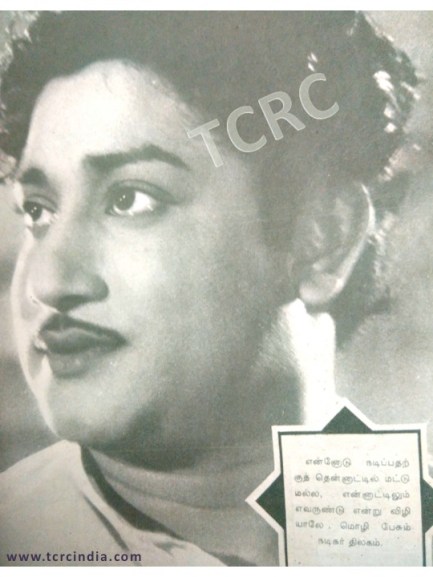
V.C.Ganesan became ‘Sivaji’ Ganesan when he shot into fame for his role as the Maratha Warrior King Sivaji in a Play penned by C.N.Annadurai. Later, Sivaji Ganesan was given the title “Nadigar Thilakam” in 1957, by the reputed ‘Pesum Padam’ film magazine & it was in the credit titles of ‘Ambikapathi’ film, released the same year, that his new title was first ever featured.

Shivaji

Sivaji Ganesan mentioned as Nadigar Thilagam in the 1959 Deepavali Malar of the magazine Kalai.

The prefixes such as ‘Sivaji’ (Ganesan) or ‘Bharath’ (Mamooty) to certain leading stars were rather ‘earned’ titles bestowed upon them by respectable institutions or the Government.

Gemini Ganesan acquired the prefix ‘Gemini’ in his name, owing to his earlier career as a Casting Director in Gemini Studios. He was later referred as ‘Kadhal Mannan’, a fond title given by his fans for his impeccable romantic roles.

Similarly, titles such as ‘Ulaga Nayakan’ (Kamal), ‘thala’ (Ajit), ‘ILaya thaLapathi’ (Vijay),  were conferred by their passionate fans, in decorating them affectionately.

Though such decorating titles were not as common for female actors, there were, of course, ‘Punnagai arasi’ (K.R.Vijaya), ‘Abhinaya Saraswathi’ (Saroja Devi), “Nadigaiyar thilakam” (Savithri), “Nattiya PerolI” (Padmini) and the like for a chosen few, based on certain USPs.

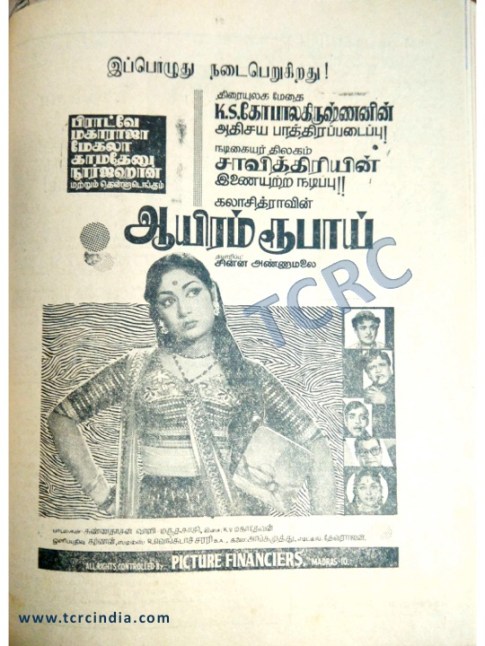
Ayiram Rubai

An ad for the film Ayiram Rubai from the December1964 issue of Naradar. Here Savithiti is mentioned as Nadigar Thilakam.

In 1963, the duo MSV-TKR was conferred the title ‘Mellisai Mannargal’, suggested by Kannadasan & conferred by Sivaji Ganesan at a star-studded function organized by Triplicane Cultural Academy at NKT Kala Mandapam, Triplicane. ‘Chithralaya’ Gopu, who a close pal of MSV, was instrumental in organizing the event, which was majorly supported by ’The Hindu’ newspaper.

Sometimes, adding a prefix (aka ‘title’) to an actor’s name was necessary in avoiding comedy of errors. In the bygone era of Tamil films, we had “Friend” Ramasami, “PuLimoottai” Ramasami,  “K.R” Ramasami, “V.K” Ramasami each ‘title’ making them distinct with their own ‘brand equity’ and avoiding the potential confusion as to which ‘Ramasami’ one is talking about. If two Gopus were there, one had to carry the ‘title’ of ‘typist’ while the other carried the prefix of ‘Chthralaya’. If Ganesans had to be distinct, one had to be ‘Gemini’ & the other had to be ‘Sivaji’. When two Balachanders were there, not withstanding their different time frames, their names were always referred with their initials & one was S.Balachandar & the other K.Balachander. The Varalakshmis were distinguished whether she was ‘S’ or ‘G’!

Some ‘titles’ of actors were linked to a character they had earlier played or the film in which they were debuted. Some of the actors who went by the names of movies that brought them to fore are ‘Vennira Aadai Murthy, ‘Nizhalgal’ Ravi, “Pasi” Narayanan, ‘Jayam’ Ravi & ‘Vietnam Veedu’ Sundaram. ‘Chiyaan’ Vikram was named so after the character he had played in the film ‘Sethu’ that made him a star.

Such practice extended to even stage artistes, as in, ‘Nawab’ Rajamanickam, ‘Cho’ Ramaswamy, ‘Kathadi’ Ramamurthy, ‘Typist’ Gopu etc. referring to their memorable characters in some play.

Then we had ‘Ennethe Kannaiah,’Gundu’ Kalyanam, ‘Oru viral’ Krishna Rao, ‘Thayir Vadai’ Desikan, ‘Omakuchi’ Narasimhan, ‘Major’ Sundarrajan,  ‘Galla Petti’ Singaram, ‘Loose’ Mohan, ‘Chattampillai’ Venkatraman, ‘Usilai’ Mani,  ‘Kakka’ Radhakrishnan, ‘Naradar’ Mahadevan, ‘Silk’ Smitha and the big names like ‘Danal’ Thangavelu, ‘Thai’ Nagesh & ‘Thengai’ Srinivasan. Of course, in Malayalam too you had/ have the likes of ‘IdaveLa’ Babu, ‘Oduvil’ Unnikrishnan, ‘Nedumudi’ Venu, ‘Kuthiravattam’ Pappu & ‘Jagathi’ Srikumar.

Many film artistes never shed their organic ‘initials’, without the inclusion of which we would never ever refer or even recognize them. In this regard, ‘T.M’ Soundarrajan, ‘U.R.’ Jeevarathnam, ‘S’Janaki, ‘P” Suseela, “S” Varalakshmi, ‘P.U’ Chinnappa, “M.S’ Viswnathan, ‘T.S’ Baliah, ‘M.R’ Radha, ‘M.K’ Radha, ‘M.G’ Ramachandran, “N.S’ Krishnan, ‘T.R’ Rajakumari, ‘SPL’ Jayalakshmi, ‘S.V’ Ranga Rao, ‘A.P’ Komala, “T.V’ Rthinam are few instances. However, the long list goes on!

Some became eternally iconic abbreviations like ‘MGR’, ‘MKT’ or ‘MSV’, which were Brands by themselves.

Some, preferred to be identified with the names of their native place such as “Pattukottai” Kalyanasundaram, “Kothamangalam” Subbu, “Kovai’ Chezhiyan.

For a chosen few only assumed names gave them recognition & reputation, like in ‘Kannadasan’ or ‘Vaali’.

We have stuntmen too with adjectives to their names, such as ‘Mafia’ Sasi, ‘Kanal’ Kannan, ‘Anal’ Arasu. ‘Super’ Subbarayan and what not!

After all, the individual actors or other film artistes are individually selling themselves as a product in a stiffly competitive industry called cinema. This makes a valid reason and absolute justification for such distinctive ‘titles’, as they constitute their market capitalization, in a way.


FIlmy Ripples- Inspired plagiarism in early music

By P V Gopalakrishnan

Music in a movie has so many sectionalized areas such as composing, arranging, conducting, re-recording etc. which are all attended to by different dedicated professionals in Hollywood. Whereas, largely, it is a one-man show, in the context of our movies where it is the responsibility of one individual, called “Music Director”, who is usually a brand name by himself, though he might have umpteen musicians specialized in some aspect or other, ably supporting him informally!

Often the Music Directors have strong lieutenants who are well versed in trained classical music to assist them, such as the late Pugazhenthi (of late K.V.Mahadevan).

We have, in the present days, a huge flock of Music Directors with their own creative talents. In stark contrast to this there were relatively few Music Directors in the past. However, those times, most of them were very strong in classical base, particularly in Carnatic Music. People like, Papanasam Sivan, C.R.Subburaman, G.Ramanathan, T.R.Pappa, S.M.Subbiah Naidu, Sudarsanam, M.D.Parthasarathi, Emani Sankara Sastri, Rajeswara Rao, Master Venu, S.V.Venkatraman and many more stood tall amongst the film music makers. Most of them have spent long internships with senior music directors of their times, worked alongside with them under their supervision and had learnt the ropes. They gave us outstanding music, which have withstood the efflux of time! In this context of comparison, the current music scenario seems a large departure.

There have been Tamil films with countless number of songs per movie. But you also had the AVM produced, S.Balachandar directed, thriller movie “Andha NaaL” devoid of any songs whatsoever, but with only background score.

Even in those days, with abundantly talented Music Directors around, there were films, which openly plagiarized western tunes or Hindi film music. These could have been plainly due to compulsion from the Producers or Directors. Or even introducing a new genre to cine goers as a marketing tool. After all, mimicking is a form of compliment to the original!

For instance, the AVM film ‘Oar Iravu’ (1951) had a hit song rendered by MLV, “Ayya Sami” under the baton of Music Director Sudarsanam. This song was based on the Hindi song “Gore Gore” from the film ‘Samadhi’, which was in turn based on the Latin American song “Chico Chico”, from the film “Cuban Pete”!

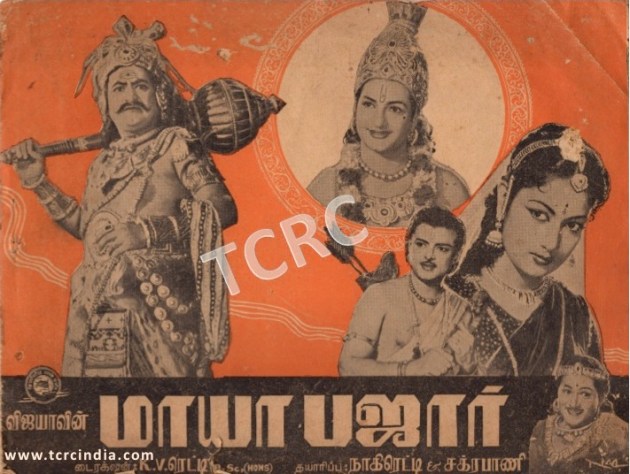
‘Kalyana Samayal Sadam’song from “Maya Bazaar” was inspired by the laugh tracks of the song “Laughing Samba”.

Maya Bazaar

Song Book of Maya Bazaar PC: From the archives of TCRC

I have read somewhere that some moviemakers in that era handed down a bunch of Western/Hindi film records to the prospective Music Director and advised them to adopt or at least adapt the tunes.

If a Hindi film was dubbed in Tamil, then there was the need to keep the orchestration & tune of original Hindi song, to be sung in Tamil by a local play back artiste. There were many Hindi films dubbed in Tamil where senior Tamil playback artistes were used to sing.

For instance, Vikki (G.Krishnaveni), wife of A.M.Raja, who had a long innings lasting over four decades & rendering thousands of songs in Telugu, Tamil, Telugu, Kannada, Malayalam, Hindi, and Sinhalese too, had sung in Raj Kapoor’s dubbed versions of  “Aah” in Telugu and Tamil. “Raja ke aayegi bharaat” (Shankar-Jaikishen) became “Kalyana oorvalam varum”.

Other than such dubbed versions, we have umpteen carbon copies of Hindi tunes.

Modern Theatres produced ‘Digambara Samiyar’ (1950) (Music: S.M.Subbiah Naidu – G.Ramanathan) had two popular songs based entirely on Hindi tunes. The run away hit song, ‘Oosi pattase vedikkaiyaka’ was lifted from the Hindi song “ Oh…dilwale” and “parudappa parudappa’ was a straight lift from Hindi ‘Laralappa laralappa’ from “ek thi ladki”.

In  ‘Avan Amaran’ (1958), Music Director T.M.Ibrahim set tune to the song sung by Sirgazhi & A.P.Komala, “Kalana minjathayya”, which was a carbon copy of from a popular Hindi tune “Ramayya Vastavayya” from Raj Kapoor’s Shri.420.

In fact one more song “Vaan mathi nee arivay” in the same film was also carbon copy of “Jaye to Jaye kahaan” rendered by Talat mehmood for Devanand in film Taxi Driver.

Another Tamil number sung by Jikki in the music of G.Ramanathan from ‘Komathiyin kadhalan’ (1955), produced by T.R.Ramachandran,“anaganai nikartha azhagan”, which was a straight lift of the very popular Hindi song of Music Director C.Ramchandra’s composition “dekh tere sansar kitna badal gaya Insaan” from the movie “Nastik” (1954).

G.Ramanathan was otherwise a very respected Music Director of repute, for his very popularly melodic carnatic based tunes.

Our highlighting such outright adoption of the then existing Hindi tunes is not to put down the concerned Music Director. This is simply to highlight a timeframe, in the anthology of Tamil film music, when such plagiarism was sometime routinely in vogue. If the Producer & Director insisted on copying an already popular tune those poor Music Directors never had a way out!

“Konjum Purave” by MLV was a clone of ‘Thandi Hawaain’ by Lata Mangeshkar, set to music by the legend S.D.Burman in the film ‘Naujawan’ (1951). The very same tune was lifted in Tamil film “Thai Ullam” (1952) as “Konjuum Purave”. Nevertheless the Tamil version became a huge hit, owing to the lovely tune as well as the silky voice of MLV. I remember having heard this song, as a child, being played all over in Madras, in the fifties. The music score was duo V.Nagaiah & Ramachandra Rao. Coming to the song, the “Konjum Purave” opens with the First violinst to the slow humming of MLV to the backdrop of vibrafone, but quickly transforms into a quick-beated foot tapper with its Dholak percussion . The intermittent BGM brings back the first Violinist’s melancholic strains before MLV goes on to her fast pace. Whereas S.D.Burman’s BGM arrangement is uniquely different, with Hawain Guitar for interludes in place of the Tamil version’s Violin. The young Lataji’s voice is more delicate than that of MLV.

M.S.Rajeswari rendered “Enni Enni Parkum Manam Inbam Kondaduthae”, composed by R. Sudarsanam. The identical tune was used in the song “Chup Chup Khade Ho Tho” sung by Lata under the baton of the duo Husnlal-Bhagatram, in the Hindi Film Badi Behen released in the same year. While Vazhkai was remade in Hindi only in 1951 as Bahaar, in which Vyjayanthimala made her debut Hindi films, it is not clear as to which version of the tune was the original.

Another interesting info: The Jewish Music Research Centre, Israel has published a CD containing the rare Jewish songs in Malayalam language representing the Jewish tradition that was in Kochi from where a lot of Malayali Jews migrated to Israel. One of the Malayalam songs in such CD “Enni enni tirttu dinam”  a Zionist song celebrating the Israeli independence from British, has been set to the tune of “Enni enni parkkum manam”.

Much later, Music Director Vedha was known in using popular Hindi tunes in his songs. His song “Oho ethanai azhagu irubathu vayathinile’ from Athey Kangal reminded you of ‘Pedal Pushers’ by Ventures.  Occasionally you could see even MSV using tunes from overseas in his songs. “Anubavam pudumai’ in Kathalikka Neramillai was based on Italian melody “Besame Mucho”. Puthiya Paravai’s ‘Partha gnabagam illaiyo’ reminded the American tune ”Sway with me”.

Even R.D.Burman’s ‘ Mil Gaya’ was a total lift from ABBA’s  “Mama Mia”. Shankar-Ganesh’s ‘Megame Megame’ too was a replay of the tune from a Ghazal by Jagjit Singh.

The list could be long.

For change there was also reverse copying, the popular American Hip Hop Band, “Black eyed Peas” took portions of Ilayaraja’s  “Unakkum enakkum anandam” by S.Janaki from ‘Sri Raghavendra’ and mixed it with one of their songs.

There have been Tamil film songs, which were kept as they were with little or no changes when the original Tamil movies were remade in Hindi. The instances are “Ilaya Nila” of Ilayaraja from Payanangal Mudivathillai was largely the same in Kalakar in the music of Kalyanji Anandji. “Muthu kulikka vaareegala” of MSV from “Anubhavi Raja Anubhavi” was retained by R.D.Burman in “Dho Phool”.

Adapting good musical notes from unknown cultures and blending it to our own music genres is after all is a creative service, I would personally opine. The outright lifting also perhaps served the same in times when Tamil films were not quite ‘connected’ with other languages and cultures, though within the country.

Ultimately, all songs have to be within the parameters of the seven musical notes, “Sa Re Ga Ma Pa Da Ni”!


Filmy Ripples:Nadaswaram in old Tamil films

By P V Gopalakrishnan

Nadaswaram played significant roles in some limited Tamil Films.

The nadhaswaram legend T. N. Rajarathinam Pillai, a major icon of those times, played an interlude in the movie Rajamukthi (1948), (Hero MKT & Heroine N. Janaki, later MGR’s wife). MGR, then a small time actor himself, was in a support role in this film. The film, made after the prison term of MKT, was shot in Prabhat Studios, Pune as MKT wanted to be away from the film circuit of Madras, in the aftermath of his release from prison. As such most of the technicians were Maharashtrians for this film. However, Rajamukthi, which was come back attempt for his film career, terribly bombed, witnessing MKT’s slide. (By the by, this film was the debut movie for M.L.Vasanthakumari as a playback artiste.)

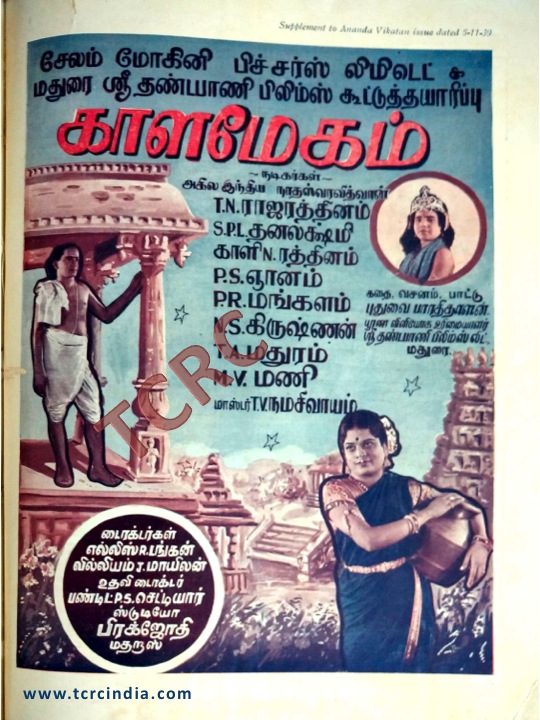
Talking of T.N.Rajarathinam Pillai, he himself acted as a Nadhaswaram player in a wedding sequence in the film Miss Malini (1936), paying Todi & rendering a song in Rithigaula. In “Kalamegham” (1940), written by Bharathi Dasan & directed by Ellis Dungan, he acted as a Nadhaswaram playing Hero, singing many songs.

Kala Megham

An ad of the film Kalamegham in Ananda Vikatan Deepavali Malar 1939 PC: From the archives of TCRC

Another leading Nadaswaram vidwan, Namagiripettai Krishnan played off screen, while the credit titles ran on the screen in the movie ‘Town Bus’ (1955) and not the usual film orchestra. It was in the beautiful Raga ‘Mohanam’.

Who can forget the iconic song, “Singara velane deva”, in the combo of S. Janaki’s voice & the Nadaswaram rendition of Karukurichi Arunachalam, another doyen of Nadaswaram world? It would be strange to learn that the full Nadaswaram tune, in AAbheri raga, by Karukuruchi Arunachalam was recorded at Madras for use in the film. On later thought the Director M.V.Raman decided to have also a song sequence using the already recorded Nadhaswaram tune. Then, the high-pitched S. Janaki was commissioned to sing by the Music Director S.M.Subbiah Naidu on the lyrics written to suit the tune. Janak’s vocals were recorded at Raman Studios, Bombay. In those days it was marvel that Sound Recordist Jeeva could manually inter-spread Janaki’s each line of singing to be succeeded by each line of the Nadhaswaram. Bravo on that!

Another song that copiously used Nadhaswaram in a film song was “ Vaaray en thozhi vaarayo” in the film “Pasamalar” by MSV-TKR, for a wedding sequence. It was an amazing blend of Nadaswaram with violins & mandolin in that number. Following this, wherever relevant the Music Directors have used Nadaswaram, such as ‘Oli mayamana ehtir kalam’ in ‘Pachai Vilakku’ (MSV-TKR) and ‘ Nadaswara osaiyile devan vandhu padugiran” in ‘Poovum Pottum’ (Govardhanam).

Pachai Vilakku(1).jpg

Song Book of the film Pachai Vilakku PC: From the archives of TCRC

However, when we talk of Nadaswaram with reference to Tamil films, perhaps, the immediate recall reference could be the iconic movie “Thillana Mohanambal”, a romantic story of a Nadaswaram Maestro Sikkil Shanmukhasundaram with a danseuse Mohana, written by Kothamangalam Subbu. The film is full of Nadaswaram music played off screen by the popular Nadaswaram duo M. P. N. Sethuraman and M. P. N. Ponnusamy from Madurai. In this film Sivaji Ganesan has no songs requiring play back support, as all his musical renderings were on the Nadaswaram, played by the duo.

Thillana Moganambal

The LP cover of Thillana Mohanambal PC: From the archives of TCRC

Director A.P.Nagarajan who had the opportunity of listening to MPN Bros, at a wedding in Karaikudi suggested them to Sivaji. Soon, the duo was in Chennai for their rehearsals at Music Director K.V.Mahadevan’s studio.

As per the MPN Bros, Sivaji Ganesan listened to them, as they rehearsed for the film, lying on Kannadasan’s lap and earned liberal appreciation from all before Director A.P.Nagarajan confirmed their selection for the film.

Asst.Music Director Pugazhenthi decorated the “Nagumomu” composition of Thyagaraja, a master piece in the film, with incredible sangathis. Impressed by their performance of Muthiah Bhagavathar composed English Notes at the 42nd birthday celebrations of Sivaji Ganesan, APN included that piece too in the film. The MPN Bros recalled that the scintillating ‘Nalandhana’ song took about nine takes.

The body language & acting of Sivaji Ganesan to the playing of Nadaswaram synced so well that nobody believed he was not playing it for real. In fact, when a Russian delegation met Sivaji Ganesan sequel to the film’s release, it was incredible for them to believe that he was only acting and not actually playing!

When the movie was released in 1968 in Madurai, the home town of MPN Bros, the brothers, the seventh generation players in their family, were literally lifted by the crowd for bringing immortal fame to the Temple City.

MPN Bros since played for major VIP functions & every invitation card used to specially feature their names as star attraction. Since Thillana Mohanambal the duo performed in only the film ‘Kovil Pura.’

After that M.P.N. Sethuraman passed away & in a gory accident. M.P.N.Ponnuswamy lost his jaw, besides his wife’s life.